Tsurugaoka Castle: Seven Centuries of Betrayal and Cherry Blossoms
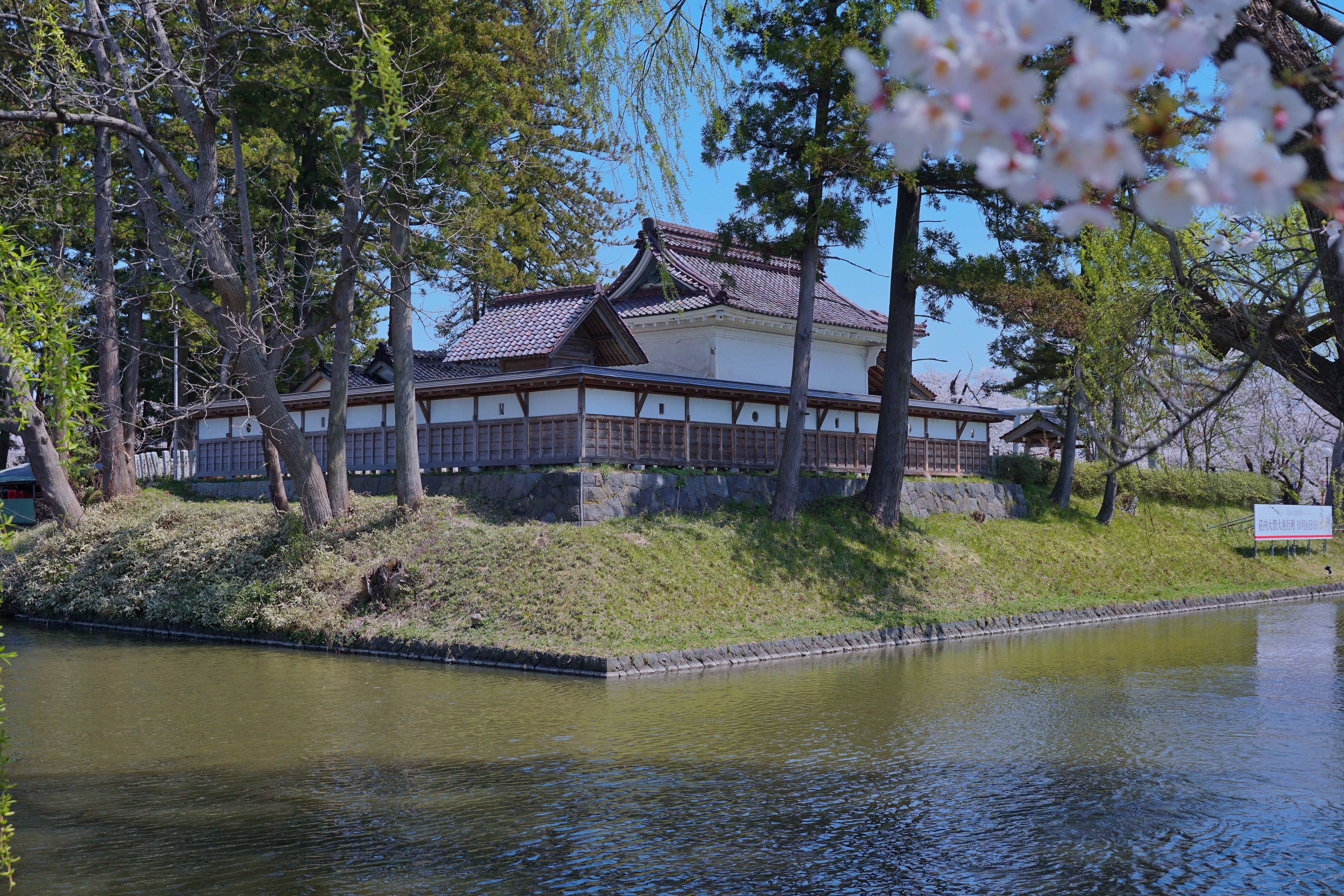
Daihoji Yoshiyuki thought he had a plan. From 1570, the young warlord launched an aggressive campaign to reclaim the territories his weakened clan had lost during the Sengoku period, enlisting the powerful Honjo clan as allies. But when the Honjo withdrew their support, one of Yoshiyuki's own retainers assassinated him. He was 32. The castle he had fought to defend -- then called Daihoji Castle -- would pass through two more clans before finding its permanent masters: the Sakai, who would hold it for 250 years and turn the surrounding flatlands into one of northern Japan's wealthiest rice-growing domains. Today, every trace of the castle's buildings is gone. What remains are moats, earthen walls, a Shinto shrine, and -- each April -- a spectacular eruption of cherry blossoms that draws visitors from across the Tohoku region.
A Castle Born in Turbulence
The fortress that would become Tsurugaoka Castle was built in the 13th century by the Daihoji clan, retainers of the Kamakura shogunate who had been dispatched to the Shonai region as local governors. They thrived during the Muromachi period, establishing themselves as regional warlords. But by the Sengoku era, internal disputes had gutted the clan's power, and they abandoned their castle for the more defensible Oura Castle, five kilometers north in the mountains. After Daihoji Yoshiyuki's assassination, the clan's territory was overrun by the expansionist Mogami Yoshiaki. The Mogami themselves were defeated at the Battle of Jugorigahara in 1588, and the Uesugi clan seized the region. The pendulum swung back after the Battle of Sekigahara in 1600: the Mogami recovered the territory. Mogami Yoshiaki renovated the castle, renamed it Tsurugaoka, and planned to retire there in 1603.
The Sakai Centuries
Retirement never came for the Mogami. When the clan was dispossessed of its holdings by the Tokugawa shogunate, the Sakai clan was installed as the new lords of Shonai. The Sakai were descendants of Sakai Tadatsugu, one of Tokugawa Ieyasu's four most trusted generals, and they brought stability that the castle had never known. Under their 250-year tenure, Tsurugaoka Castle was expanded into a formidable flatland fortification. Three concentric square enclosures ringed by clay ramparts and wet moats protected a central area roughly 200 meters on each side. Stone walls reinforced only the inner bailey -- a common feature of Tohoku castles, where earthquakes made heavy stonework risky. The castle never had a tenshu, the iconic tower keep. Instead, a two-story yagura watchtower in the northwest corner served as a substitute. A grand palace for the lord covered much of the central enclosure, while the vast third bailey housed retainer residences and the domain's han school.
A Crossroads of Commerce and Power
Tsurugaoka Castle's location was its greatest strategic asset. Sitting in the center of Tsuruoka city on the southern Shonai plain, it commanded the corridor between the Mogami River and the Sea of Japan. The castle controlled a major rice-producing region with river connections to the interior of Dewa Province and road links to Echigo Province, the Yamagata plain, and the Shinjo basin. The kitamaebune coastal trading network brought wealth through Sakata port, connecting this remote northern domain to the commercial centers of Osaka and Edo. Under the Sakai, the domain's real revenues approached 300,000 koku -- nearly double the official figure they reported to the shogunate. The castle was the nerve center of this carefully managed prosperity, housing both the military apparatus and the administrative bureaucracy that kept Shonai running.
Demolished Walls, Living Memory
After the Meiji Restoration of 1868, the new government ordered Japan's feudal castles abolished. Tsurugaoka's buildings were demolished entirely. The third bailey was sold off and swallowed by the expanding city. But the moats and earthen ramparts of the central and secondary enclosures survived, preserving the castle's footprint in the urban landscape. A Shinto shrine, the Shonai Shrine, was built within the grounds. The domain's han school escaped demolition and later became part of the Chido Museum, now a National Historic Site. Tsuruoka Park, occupying the old castle grounds, was selected as one of Japan's "100 Cherry Blossom Spots" -- and in April, hundreds of cherry trees transform the old ramparts into corridors of pale pink. In 2017, Tsurugaoka Castle was listed among the Continued Top 100 Japanese Castles. From the air, the concentric moats trace unmistakable geometric shapes in the center of the city -- a castle's ghost written in water.
From the Air
Located at 38.73°N, 139.82°E in the center of Tsuruoka city on the Shonai plain, Yamagata Prefecture. The castle's concentric moats are clearly visible from low altitude as geometric water features in the urban center. The broad Shonai plain stretches in all directions, bounded by the Sea of Japan to the west and the Dewa Mountains to the east, with Mount Gassan (1,984 m) rising prominently to the south. The Mogami River flows to the north of the city. Shonai Airport (RJSY) lies approximately 10 nautical miles to the north-northwest. Yamagata Airport (RJSC) is roughly 55 nautical miles to the southeast beyond the mountain range. In spring, the cherry blossoms in Tsuruoka Park surrounding the castle site create a visible pink canopy from low-altitude passes.