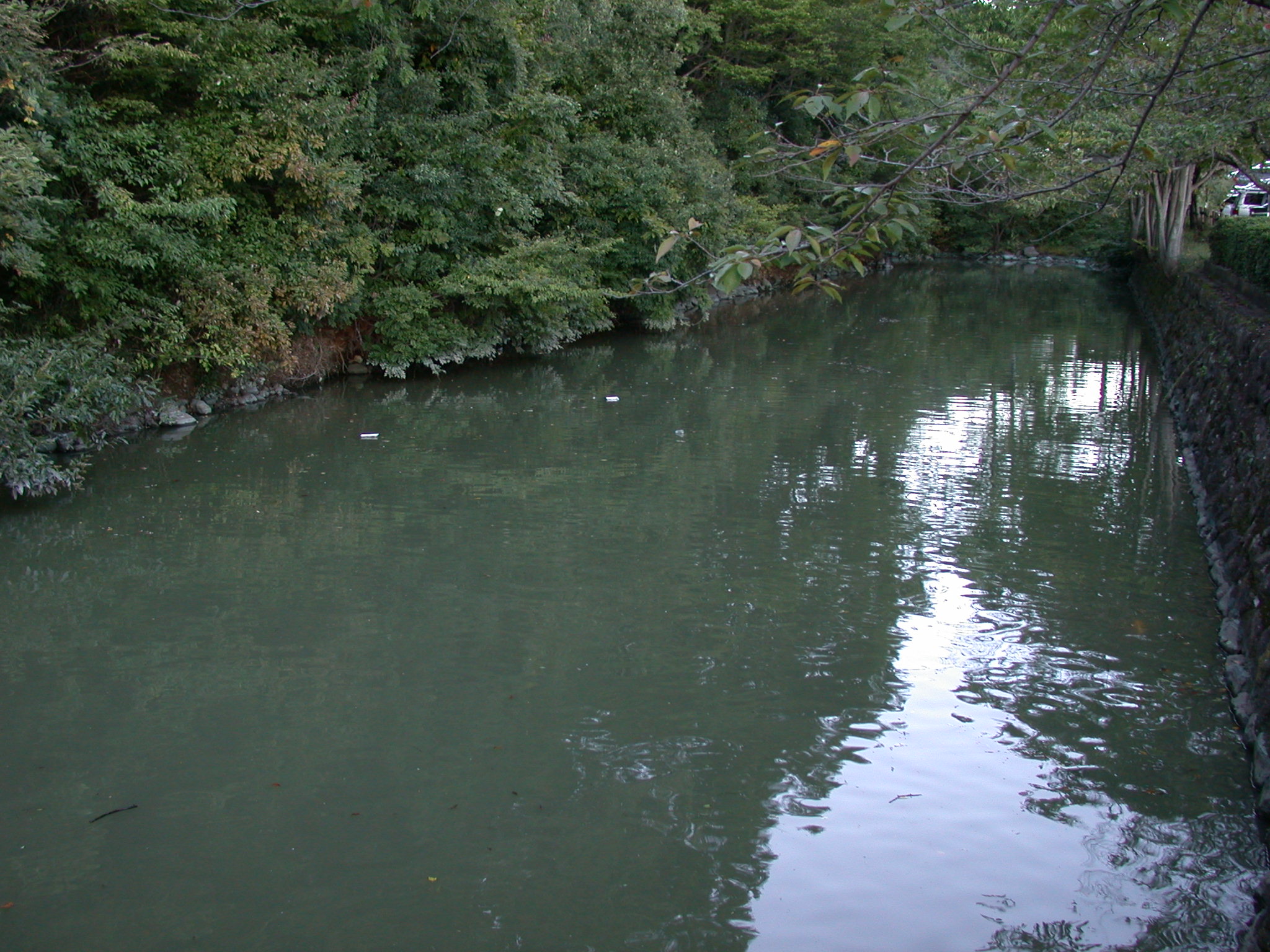
Tsutsujigasaki Castle
"Make men your castle, men your walls, men your moats." It is the most famous military maxim in Japanese history, and its author practiced what he preached. Tsutsujigasaki was not a castle in any conventional sense. While rival warlords of the Sengoku period fortified mountaintops with towering stone walls and deep moats, Takeda Shingen ruled one of Japan's most powerful domains from a residential compound on flat ground in the center of the Kofu Basin. The complex had moats, yes, and fortified gates -- but its location on an indefensible gentle slope was a deliberate statement. The Takeda trusted their soldiers more than their stonework. Despite this, the site is listed among Japan's Top 100 Castles, a paradox the Takeda clan would probably have enjoyed.
A Fortress on Flat Ground
In 1519, Takeda Nobutora chose this improbable site near the center of Kai Province for his new fortified residence and castle town. Contemporary military doctrine demanded high ground -- mountains, river bluffs, anything with natural defenses. Nobutora ignored the conventional wisdom. He built on a gentle slope in the Kofu Basin flatlands, creating a compound that was the largest residential complex in eastern Japan during the Sengoku period. The concession to practicality was Yogaiyama Castle, a mountain fortification built nearby as a fallback position. The central enclosure measured 200 meters square and housed the private residence of the Takeda lord. The western enclosure, 100 by 200 meters, served as the public administrative quarter, with umadashi-style two-story fortified gates guarding the north and south approaches. A triple series of moats -- two flooded, one dry -- surrounded the core, and secondary enclosures named Miso-guruwa and Baio-guruwa flanked the main gates.
Three Generations of the Tiger's Line
Nobutora built Tsutsujigasaki, but it was his son who made it legendary. In 1541, Takeda Shingen deposed his father and assumed control of the clan. From this unassuming compound, the Tiger of Kai launched military campaigns that would make the Takeda name synonymous with strategic brilliance. His war banner -- the four-character Furinkazan, drawn from Sun Tzu -- flew over armies that conquered Shinano Province and challenged the most powerful warlords of the age. His legendary rivalry with Uesugi Kenshin, the Dragon of Echigo, produced five battles at Kawanakajima between 1553 and 1564, engagements that still captivate Japanese military historians. When Shingen died in 1573, his son Takeda Katsuyori eventually built Shinpu Castle at Nirasaki and relocated there in 1581, abandoning the compound that had symbolized Takeda power for over sixty years.
The Fall of the Takeda
The end came swiftly. In February 1582, the coalition forces of Oda Nobunaga and Tokugawa Ieyasu destroyed the Takeda clan. Nobunaga's general Kawajiri Hidetaka briefly ruled Kai Province from Tsutsujigasaki, but after Nobunaga's own assassination later that year, the province passed to Tokugawa control. The completion of Kofu Castle in 1594 rendered the old compound obsolete, and it was abandoned. Centuries of neglect followed. The wooden buildings decayed, the gardens grew wild, and the compound that had once governed a domain stretching across five provinces became an archaeological whisper. What survived were the moats -- some still filled with water -- and fragments of stonework, silent reminders of the layout that once housed one of Japan's most powerful feudal lords.
A Hello Kitty Stands Guard
Today, the Tsutsujigasaki site is a National Historic Site, protected since 1938. The Takeda Shrine, completed in 1919, occupies the center of the old compound, dedicated to the deified spirits of the Takeda clan. A museum displays artifacts from the Takeda era, and to the right of the shrine entrance, an unexpected sentinel watches over visitors: a stone Hello Kitty, an improbable guardian that somehow captures the Japanese talent for holding deep history and pop culture in the same hand. The remaining water-filled moats trace the outline of the original fortifications, offering visitors a sense of scale that photographs cannot convey. Walking the perimeter, it becomes clear why this place made Japan's Top 100 Castles list despite technically not being a castle at all -- the story it tells about power, trust, and the philosophy of defense is more compelling than any stone wall.
From the Air
Tsutsujigasaki Castle ruins sit at 35.6867N, 138.5775E in central Kofu, Yamanashi Prefecture, essentially co-located with Takeda Shrine. The site occupies a flat area on the north side of Kofu's urban core within the Kofu Basin. From the air, look for the rectangular forested shrine grounds surrounded by the city grid. The moat traces are visible at lower altitudes. The nearby Kofu Castle ruins are visible to the south. Nearest airports: Matsumoto (RJAF) to the northwest, Tokyo Haneda (RJTT) to the east. Mount Fuji dominates the southern skyline. Recommend 2,000-4,000 feet AGL for best appreciation of the site layout within the basin.