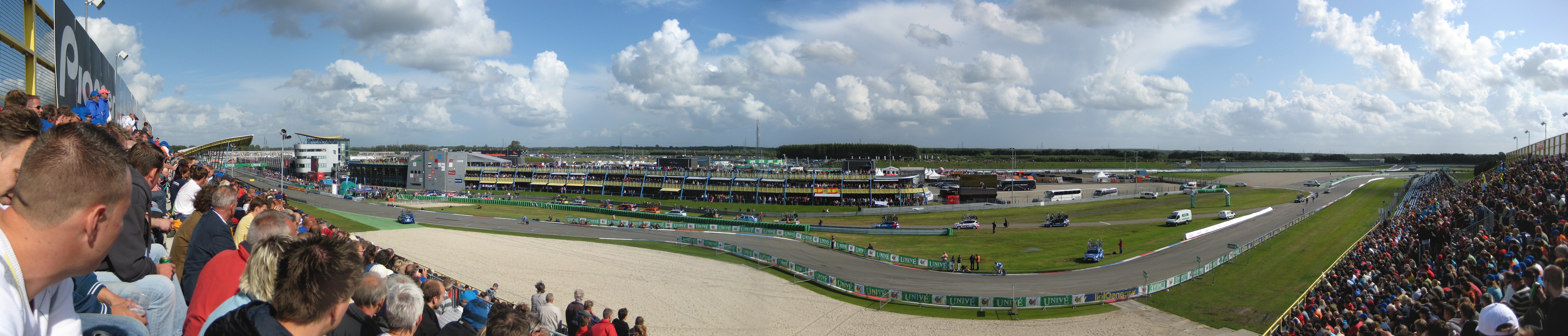
TT Circuit Assen
Motorcyclists call it the Cathedral of Speed, and they mean it the way Catholics mean cathedrals. Other tracks have history. Other tracks have legends. Only one has hosted Grand Prix motorcycle racing every year since the FIM world championship was born in 1949 - every year except 2020, when the COVID-19 pandemic cancelled the race for the first time in the modern championship era. The asphalt has been resurfaced, the layout redrawn, the grandstands rebuilt. But the finish line has not moved. When 100,000 fans pour into Assen each June for the Dutch TT, they come to a place where the rituals of motorcycle racing were not so much invented as canonized.
The Year It Started
It started badly, the way these things often do. In 1925 a group of local motorcyclists called the Motorclub Assen en Omstreken decided to run their own Tourist Trophy - the British TT on the Isle of Man being the template for every serious bike race in Europe. They picked a loop of country roads through the Drenthe villages of Rolde, Borger, Schoonloo and Grolloo, brick and gravel, dangerous as anything you could imagine on two wheels. The next year they moved to a different street circuit through De Haar and Hooghalen. Piet van Wijngaarden took the first Assen victory on a 500cc Norton, averaging 91.4 kilometers per hour around a 17.75-mile course. Nothing about it suggested a permanent venue. Yet something about Assen stuck.
Banking and Grip
The current circuit was carved out in 1955, three years before the original street loop was abandoned. The builders took roughly a third of the old roads, stitched in purpose-built sections, and produced something far closer to a modern racing course. What made Assen special then - what makes Assen special now - is the surface. The asphalt is famously grippy, and many of the corners were originally banked, sloped inward to let riders carry impossible speed through bends that would terrify them anywhere else. Italian Umberto Masetti hit 100.88 mph here on a Gilera in 1951. Geoff Duke pushed it to 106 mph three years later. Modern safety regulations have flattened most of the banking, but the legend of corners taken faster than physics ought to allow has never quite faded.
Twenty-Three Million Euros, One Finish Line
Between 1999 and 2002 the circuit's owners spent twenty-three million euros tearing apart and rebuilding nearly everything that wasn't the racing line itself. A new main grandstand. A new Race Control tower. Thirty-four refitted pit boxes, a media center, a medical center, a paddock enlarged from 40,000 to 60,000 square meters. The Veenslang and Ruskenhoek corners had to be reshaped. The main straight shifted east. Tunnels appeared underneath. In 2006 they did it again, redesigning the whole layout into what insiders call the A-Style configuration. Through every renovation, one rule held: the finish line never moves. The white stripe across the asphalt where the chequered flag falls in June 2026 is the same white stripe where it fell in June 1955.
The People Who Did Not Come Home
Speed always extracts a toll. In 1995 the Japanese rider Yasutomo Nagai died here during a Superbike World Championship round - a quiet, well-liked rider whose name is still spoken in the paddock. In 2004 the Italian Alessio Perilli was killed in a Superstock European Championship race. They are the official fatalities of the modern circuit, two names among thousands who have raced here, but every motorcyclist who pulls on a helmet knows the calculus the sport refuses to hide. The Cathedral of Speed earned its name partly through holy reverence and partly because cathedrals, like racetracks, are places where humans confront things much larger than themselves and do not always survive the encounter.
Why Assen Endures
The track holds 110,000 spectators, 60,000 of them seated. Every June the campgrounds fill, the bars overflow, the long Dutch evenings echo with two-stroke histories told and retold. Superbikes return in April. Sidecars, classics, Porsches, F4 cars, women's championships and rookies cups crowd the calendar from spring to autumn. But none of it matters quite like the MotoGP weekend, when the world's fastest motorcyclists ride a circuit their predecessors have ridden every year since the championship was invented. Assen has been part of every GP era. It is the only place that can say so. The cathedral is open, the bells are ringing, and the congregation has been gathering for a hundred years.
From the Air
TT Circuit Assen sits at 52.96 N, 6.52 E just north of the city of Assen in Drenthe. Cruise at 1,500-2,500 feet for the clearest view; the track's distinctive looping layout - longest straight 560 m, total length 4.555 km - is unmistakable from the air, a pale grey ribbon set in green farmland with the enormous grandstand at the Geert Timmer corner standing out clearly. The huge paddock area to the south is also easy to spot. Nearest airport: Groningen Airport Eelde (EHGG) about 20 km north, the obvious choice for arrivals. During the Dutch TT weekend in late June, expect significant temporary airspace activity, helicopter traffic, and TFRs around the venue.