Tulsa: The Oil Capital That Buried Its Massacre
Tulsa was the 'Oil Capital of the World' - the city where the discovery of oil at Red Fork in 1901 and Glenn Pool in 1905 created fortunes, where the Art Deco skyscrapers that oil money built still define the skyline. But Tulsa was also the site of one of America's worst racial massacres. In 1921, white mobs attacked the Greenwood District, destroying what was known as 'Black Wall Street,' killing hundreds of Black residents, leaving 10,000 homeless. Tulsa buried the history for generations; the mass graves weren't acknowledged; the massacre wasn't taught in schools. The reckoning has finally begun - the mass graves are being excavated, the history is being told - but the century of silence shaped a city that's still learning to face what it did.
The Massacre
On May 31-June 1, 1921, white Tulsans attacked the Greenwood District - the prosperous Black neighborhood that Booker T. Washington had called 'Black Wall Street.' The trigger was a rumor that a Black man had assaulted a white woman in an elevator; the result was airplanes dropping incendiary devices, mobs burning 35 blocks, the National Guard marching Black residents to internment camps. The death toll is unknown - estimates range from 100 to 300 - because the city covered up what happened. Insurance claims were denied; the survivors were silenced; the history was erased from textbooks. For decades, Tulsans grew up not knowing the massacre happened.
The Oil
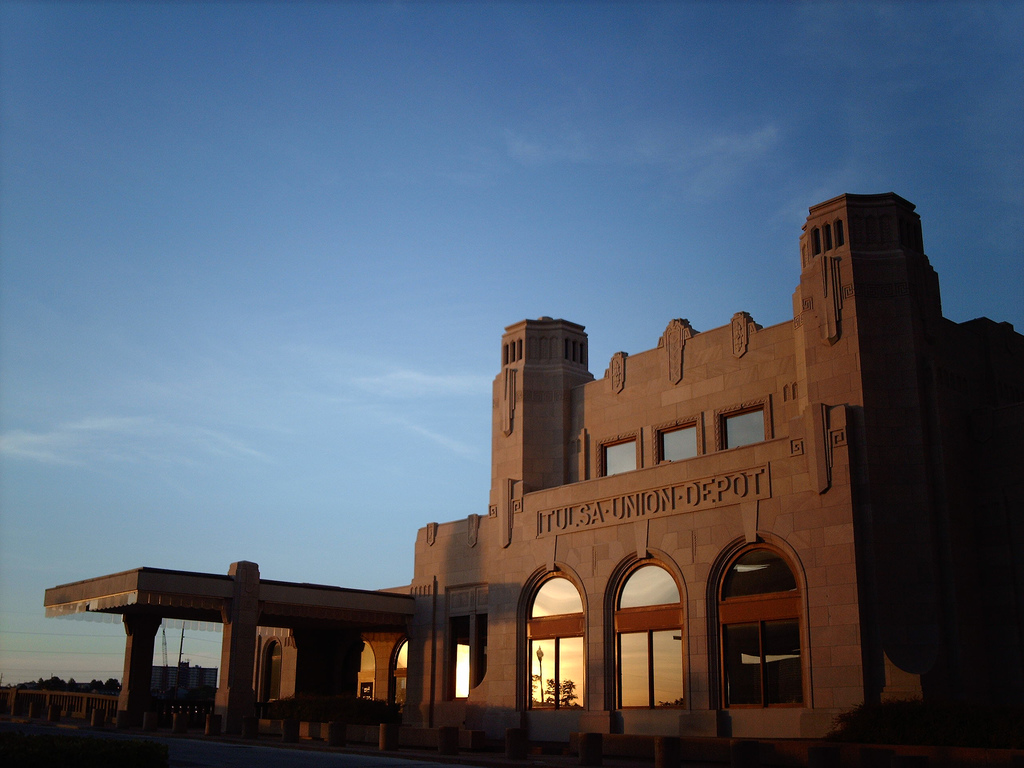
Oil made Tulsa rich. The discovery of the Glenn Pool field in 1905 was the world's largest at the time; the oil companies headquartered in Tulsa; the millionaires built mansions and downtown towers. The Philbrook Museum is an oil baron's mansion now open to the public. The Art Deco architecture - the Boston Avenue Methodist Church, the Philtower Building, the Tulsa Club - shows what oil money built in the 1920s. The industry has declined, but the wealth it created persists in endowments and architecture. Tulsa's oil heritage is more complicated than the buildings suggest.
The Greenwood
The Greenwood District that was destroyed in 1921 was rebuilt by its survivors - less prosperous, segregated again, but alive. Urban renewal in the 1960s and highway construction destroyed much of what remained, the familiar pattern of Black neighborhoods sacrificed for white commuters. The Greenwood Cultural Center and the John Hope Franklin Reconciliation Park now tell the history. The excavation of mass graves began in 2020, finally accounting for the dead. Greenwood today is mostly empty lots and rebuilding attempts, the district still bearing the wounds of 1921 and 1960s urban renewal both.
The Woody
Woody Guthrie was born in nearby Okemah but came of age in Tulsa, witnessing the inequality that shaped his music. The Woody Guthrie Center in the Tulsa Arts District preserves his legacy - the notebooks, the lyrics, the guitar that said 'This Machine Kills Fascists.' Guthrie's Oklahoma wasn't the romantic version; his songs addressed the Dust Bowl refugees, the exploited workers, the America that official culture ignored. The center that honors him in Tulsa acknowledges the city's more complicated native son, the one who saw clearly what needed changing.
Visiting Tulsa
Tulsa is served by Tulsa International Airport (TUL). The Philbrook Museum - the oil baron mansion with exceptional gardens and collections - is essential. The Woody Guthrie Center tells his story. The Greenwood Rising history center opened in 2021 to tell the massacre story. The Gathering Place, a 66-acre park, shows contemporary Tulsa's aspirations. The Art Deco architecture rewards walking downtown. For food, Tulsa has developed a restaurant scene; the barbecue is Oklahoma style. The weather is Oklahoma: extreme in both directions. Tulsa rewards visitors who engage with both the oil wealth and the violence it funded.
From the Air
Located at 36.15°N, 95.99°W on the Arkansas River in northeastern Oklahoma. From altitude, Tulsa appears as urban development in the river valley - the Art Deco downtown visible, the Greenwood District visible as a gap in the urban fabric, the Arkansas River threading through. What appears from altitude as Oklahoma's second-largest city is where Black Wall Street was destroyed - where oil built the Art Deco towers, where the 1921 massacre was buried for a century, and where the reckoning has finally begun.