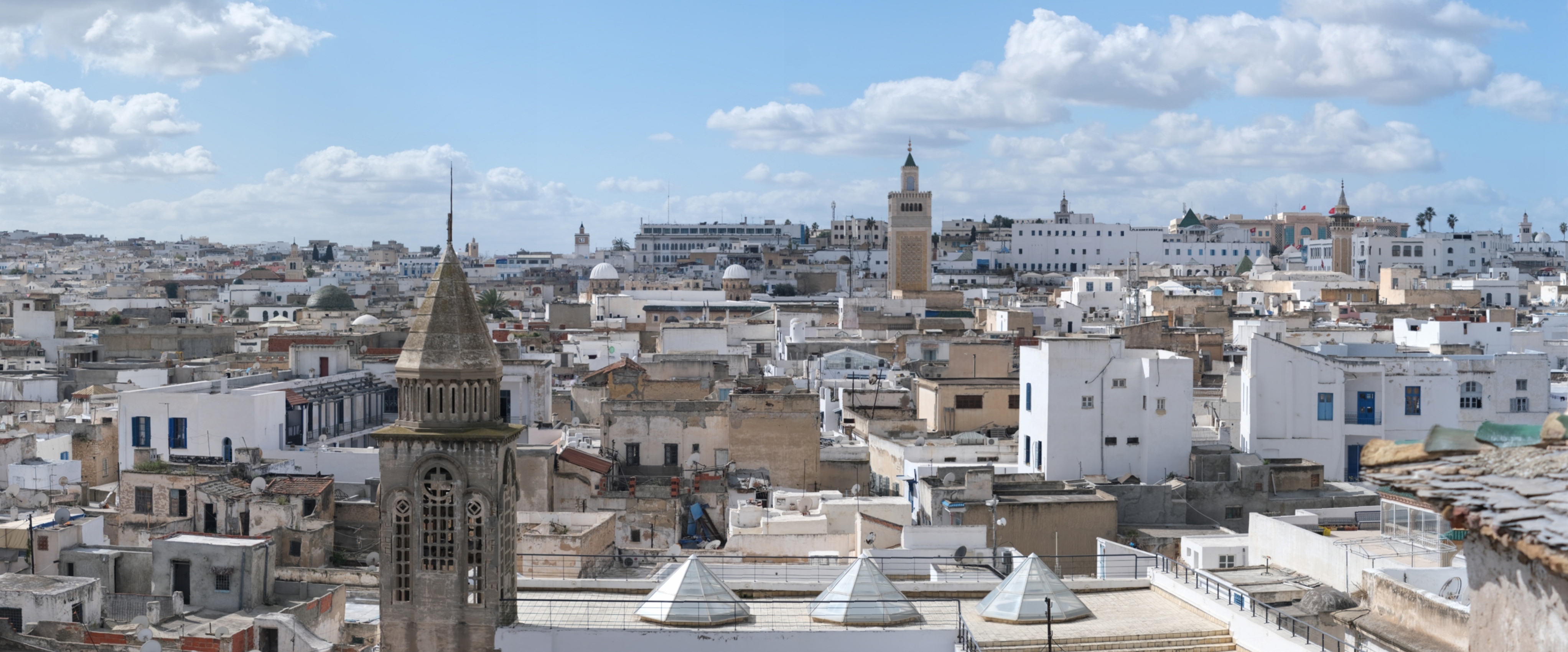
Tunis
Tunis sits on the Mediterranean coast where the Lake of Tunis meets the sea, ancient Carthage visible from its hills, French colonial architecture lining its boulevards. The city is capital of Tunisia, the small North African nation that sparked the Arab Spring in 2011 and has since pursued democratic transition with more success than its neighbors. Tunis holds 2.4 million people in the metropolitan area, a city that bridges Arab, Berber, French, and Mediterranean identities in ways that larger nations cannot manage. The medina that UNESCO recognized, the Carthage ruins that attract archaeologists and tourists, the cafes where political discussion never stops - these define a capital city that has always been meeting point.
The Medina
The Medina of Tunis, established in the 7th century around the Zitouna Mosque, became one of the wealthiest and most important cities in the Islamic world. The souks that radiate from the mosque sold goods from across the Mediterranean and Sahara; the madrassas trained scholars who spread across North Africa; the palaces housed rulers whose influence extended far beyond Tunisia's current borders. UNESCO recognized the medina in 1979, the preservation spurring restoration that continues.
The medina remains inhabited, its narrow streets holding residents alongside the shops that serve tourists. The distinction between authentic neighborhood and tourist attraction blurs - the same door might lead to family home or boutique hotel, the same cafe might serve locals or visitors. The medina is smaller than Fes's, more manageable than Marrakech's, more genuinely integrated into city life than either.
Carthage
Carthage was Rome's great rival, the Punic empire that Hannibal led across the Alps, the city that Rome destroyed so thoroughly in 146 BC that salt was supposedly sown in its soil. The ruins that remain - the Antonine Baths that Romans built over Punic foundations, the Tophet where child sacrifice may have occurred, the ports from which fleets sailed - attract visitors who have read of wars fought over 2,000 years ago.
The archaeological site spreads across hills that now hold wealthy suburbs, the ruins interspersed with villas and embassies. The Carthage that tourists seek requires imagination to reconstruct from fragments; the museum that holds artifacts provides context that scattered ruins cannot. Carthage is Tunisia's ancient claim to significance, the reminder that this coast shaped Mediterranean history before Arabs or French arrived.
The French City
The French protectorate that ruled Tunisia from 1881 to 1956 built the Ville Nouvelle, the new city that extends from the medina toward the sea. The Avenue Habib Bourguiba, named for the independence leader who became Tunisia's first president, is the boulevard that defines this district - the cafes where intellectuals gather, the theaters and hotels that represented French investment, the promenade where Tunisians walk and demonstrate.
The French architecture creates a cityscape that looks more Mediterranean than Arab, the balconies and facades familiar from Nice or Marseille rather than from Cairo or Damascus. The ambiguity is intentional - Tunisia has cultivated European connection while maintaining Arab identity, the French buildings representing a colonial past that Tunisia selectively remembers. The Avenue Bourguiba is where the 2011 revolution played out, the protesters filling a boulevard the French built.
The Arab Spring
The Arab Spring began in Tunisia in December 2010, the self-immolation of a street vendor sparking protests that toppled President Ben Ali within a month. The revolution that followed inspired uprisings across the Arab world, most of which failed or devolved into violence. Tunisia's transition has been different - the democratic government that emerged has survived challenges, the constitution that was adopted represents genuine compromise, the politics remains contentious but civilian.
The transition is not complete. The economy that drove discontent has not improved enough; the security situation that terrorism has threatened remains fragile; the politics that democracy enables produces governments that struggle to govern. Yet Tunisia remains the Arab Spring's success story, the demonstration that Arab democracy is possible even when neighbors suggest otherwise. Tunis is where that experiment continues.
Sidi Bou Said
Sidi Bou Said is the village above Carthage that attracts visitors with its blue and white buildings, its views over the Gulf of Tunis, its cafes serving mint tea to tourists who photograph the famous blue doors. The village has been artist colony and tourist destination since the early 20th century, its aesthetic preserved by laws requiring the distinctive color scheme. The charm is genuine if the experience is packaged.
The village represents what Tunisia offers - the Mediterranean beauty, the Arab architecture, the accessibility that allows day trips from the capital. Sidi Bou Said is overwhelmed with visitors in summer, quieter in off-season, always photogenic. The tourism that has made it famous has also transformed it, the boutiques and galleries replacing the fishermen and artists who first made it attractive.
From the Air
Tunis (36.81N, 10.18E) lies on Tunisia's Mediterranean coast on the Gulf of Tunis. Tunis-Carthage International Airport (DTTA/TUN) is located 8km northeast of the city center with one runway 01/19 (3,000m). The medina is visible as a dense area near the Lake of Tunis. The Carthage ruins spread along the northern coast. Sidi Bou Said's white village is visible on the heights. The Lake of Tunis separates the city from the sea. Weather is Mediterranean - hot dry summers, mild wet winters. Sea breezes moderate summer temperatures. Good flying conditions predominate.