Tupelo: Where Elvis Was Born in a Two-Room Shotgun House
On January 8, 1935, in a two-room shotgun house in East Tupelo, Gladys Presley gave birth to identical twins. The first, Jesse Garon, was stillborn. The second, Elvis Aaron, survived - the only son who would grow up to transform American music. Vernon Presley had built the house himself for $180, borrowing the money from his employer and paying it back over time. The family attended the Assembly of God church, where young Elvis first heard the gospel music that would shape his sound. He listened to WELO radio, to the blues coming up from the Delta, to country music from the Grand Ole Opry. In 1948, the Presleys moved to Memphis seeking better opportunities, but Tupelo had already formed Elvis - the church music, the poverty, the Southern working-class culture that he'd carry into Sun Studio and onto the Ed Sullivan Show. The shotgun house where he was born is now a museum; the town where he first sang is now a pilgrimage site.
Elvis Birthplace
The two-room shotgun house where Elvis was born still stands on what's now Elvis Presley Drive, preserved exactly as it was in 1935 - 450 square feet of clapboard, a front room and a back room, no indoor plumbing, heated by a coal-burning stove. Vernon Presley built it himself on land owned by his employer; when he couldn't make payments, the family was evicted and the house sold. The Elvis Presley Birthplace museum complex now includes the original house, the church where Elvis first sang (the Assembly of God moved from its original location), a museum exploring his Tupelo years, and a memorial chapel. The statue of young Elvis captures him at thirteen, about the age when the family left for Memphis. This is where it started - poverty, music, and the twin who didn't survive casting a shadow over the one who did.
The Tornado and Hard Times
On April 5, 1936, when Elvis was fifteen months old, one of America's deadliest tornadoes struck Tupelo - 233 people killed, the downtown devastated, the black neighborhood of Mill Village nearly destroyed. The Presley home survived, but the tornado shaped the family's memory of hardscrabble times. Vernon Presley was jailed briefly for check fraud when Elvis was three; the family moved frequently, always poor, always struggling. Elvis attended Lawhon School and Milam Junior High, unremarkable except for a fifth-grade talent show where he sang 'Old Shep' and won second place. The teachers at Milam remember a polite, quiet boy who carried a guitar to school. Tupelo Hardware sold him that first guitar - his mother wanted a rifle, but the $7.75 guitar was cheaper, and the rest is history.
Musical Roots
Elvis's sound emerged from Tupelo's musical landscape. The Assembly of God church, with its exuberant gospel singing, gave him his vocal style - the emotional delivery, the relationship between singer and congregation. He listened to WELO, Tupelo's radio station, where Mississippi Slim hosted a country music show; young Elvis appeared on the show as a schoolboy. The blues came up from the Mississippi Delta, sixty miles west, where Highway 61 ran from Memphis to Clarksdale. Country came from the Grand Ole Opry broadcasts that reached every Southern home with a radio. Elvis absorbed all of it - black gospel and white gospel, Delta blues and country, the sounds of the segregated South that he'd fuse into something new. By the time the Presleys left for Memphis in 1948, Elvis was already listening to the music that would make him famous.
Modern Tupelo
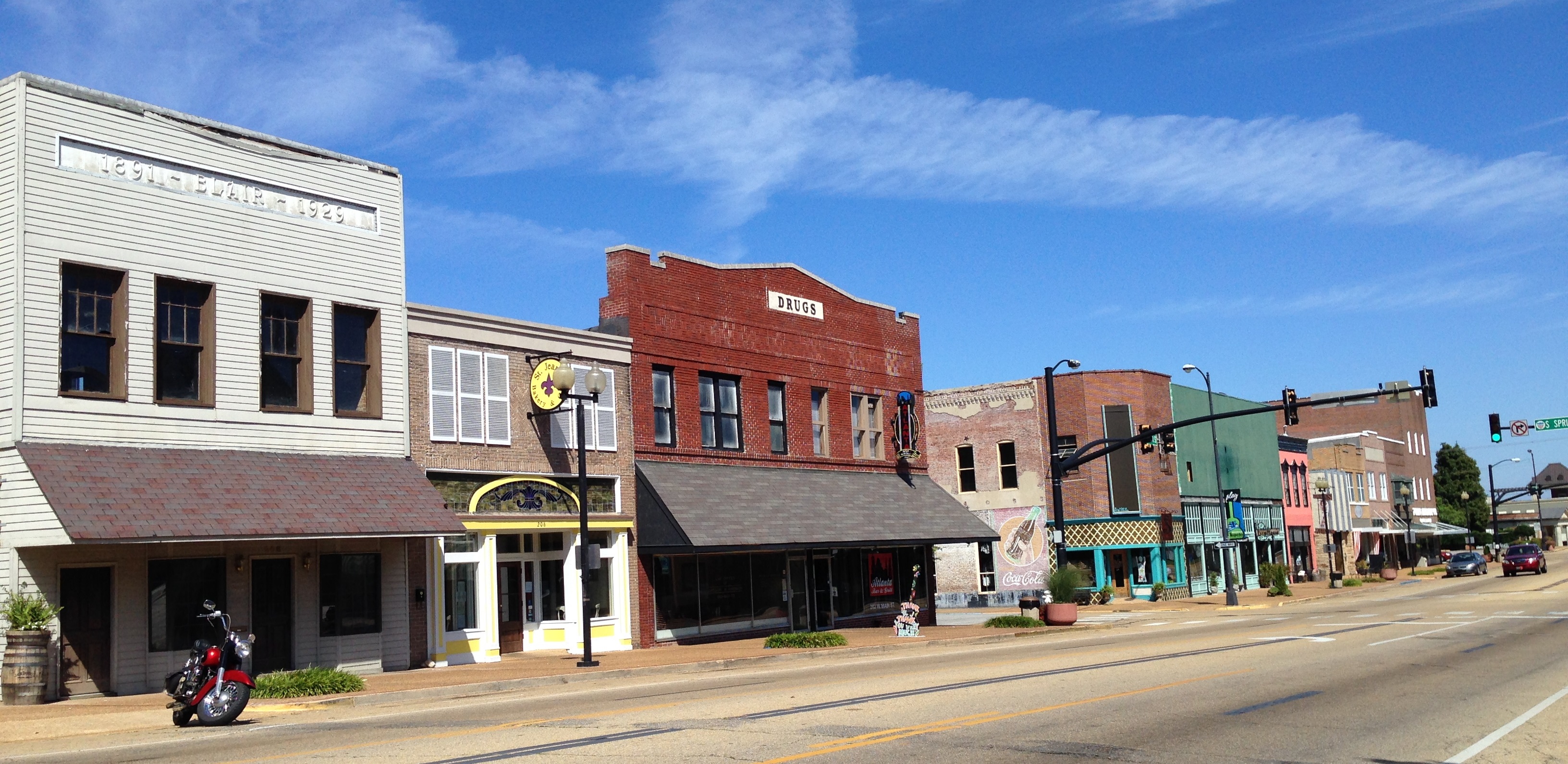
Tupelo has grown from the Depression-era town of Elvis's childhood into a regional center of 40,000 people. The Natchez Trace Parkway passes just west of town, the historic route from Nashville to Natchez now a scenic parkway. The Tupelo National Battlefield preserves the Civil War site where Union forces repelled a Confederate attack in 1864 during Sherman's Atlanta campaign. Downtown Tupelo has revived with restaurants and shops; the furniture industry that once dominated has declined, replaced by automotive manufacturing and healthcare. The Elvis Festival brings tribute artists and fans each June; the birthplace draws 100,000 visitors annually. Tupelo has learned to leverage its most famous native son, even if he left at thirteen and never really came back except for concerts.
Mississippi Hills Position
Tupelo has no commercial airport; Memphis International (90 minutes northwest) and Birmingham-Shuttlesworth (2.5 hours southeast) provide airline service. US-78 connects Memphis and Birmingham; the Natchez Trace Parkway runs south to Jackson. Oxford, home of Ole Miss, is 45 minutes west; Memphis's musical legacy is within easy day-trip range. The city sits in Mississippi's Hill Country, the northern uplands that differ from the flat Delta to the west. From altitude, Tupelo appears as development along the highway corridors, the Natchez Trace a ribbon of parkland curving past. What appears from the air as a modest Mississippi city is where Elvis Presley was born in poverty, where he first sang in church, and where the two-room house where it all started still stands.
From the Air
Located at 34.26°N, 88.73°W in the Hill Country of northeast Mississippi. From altitude, Tupelo appears as a regional center with the Natchez Trace Parkway curving past to the west. What appears from the air as a modest Mississippi city is the birthplace of Elvis Presley, who was born here in a two-room shotgun house in 1935 before moving to Memphis at age thirteen.