Turkish and Islamic Arts Museum
The grand vizier Pargali Ibrahim Pasha was Suleiman the Magnificent's closest friend, his brother-in-law, and ultimately - in 1536, after thirteen years of unprecedented power - a man whose ascent ended with a bowstring in the night. The palace he had built for himself in 1524 on Istanbul's Sultanahmet Square outlived him. Five hundred years later it still stands across from the Blue Mosque, its honey-coloured stone facade running along the eastern edge of the old Roman Hippodrome. Inside, since 1983, lives one of the most important collections of Islamic art in the world: more than forty thousand objects, including some of the oldest and finest carpets ever woven and roughly a quarter-million Qur'anic fragments rescued in the early twentieth century from the Umayyad Mosque in Damascus.
The Building
Ibrahim Pasha Palace is one of the few civilian Ottoman buildings of its scale to survive from the sixteenth century. The structure runs along the western side of what was once the spina of the Byzantine Hippodrome - the spine around which chariots once raced. Built in 1524 of cut stone in the restrained civic style of Suleiman's reign, it has been almost everything across its long life: a grand vizier's residence, a barracks, an embassy, a registry office, a Janissary band-house, a sewing workshop, and at one point a prison. Each function left its marks. The historic stone shell was carefully repaired between 1966 and 1983 to receive the museum collection, with the central ceremonial hall - originally where Ibrahim Pasha would have received Suleiman himself - now serving as the main carpet gallery. The building's restraint outside, contrasted with its scale, is part of what makes it specifically Ottoman: power expressed through proportion rather than display.
The Carpets
Walk into the great hall and the wood floor disappears under wool. The collection holds Seljuq carpets from the Alaeddin Mosque in Konya - thirteenth-century pieces that are among the oldest surviving knotted carpets in the world. There are Holbein carpets from the Bergama region of western Anatolia named after the painter who put them in his portraits of European royalty, since for centuries the only place a northern European could see such a carpet was draped beneath a king. There are Mamluk carpets from Cairo, Safavid pieces from Iran, Caucasian rugs that link the museum's holdings to the wider weaving traditions of Central Asia. What unites them is age and pedigree - many came from imperial mosques and royal tombs across the former Ottoman empire, gathered together by Ottoman Endowment surveys in the late nineteenth and early twentieth centuries to preserve them when their original mosques could no longer maintain them. The museum was the first in Turkey to assemble Islamic art under one roof, and the carpet collection remains the standard against which every other carpet collection in the world is measured.
Three Thousand Qur'ans
Beyond the carpets, the museum holds more than seventeen thousand Islamic manuscripts and three thousand complete Qur'ans, ranging from Kufic-script copies on parchment from the early Abbasid period to lavishly illuminated Mamluk codices from fourteenth-century Cairo and Ottoman calligraphy by masters like Sheikh Hamdullah and Ahmed Karahisari. The most extraordinary holding is technical: roughly two hundred and fifty thousand Qur'anic fragments salvaged from the genizah-like store at the Umayyad Mosque in Damascus, where worn-out Qur'an pages had been deposited for centuries because Islamic practice forbids their casual disposal. Ottoman authorities transferred a large portion of this collection to Istanbul in the late nineteenth century, and they remain one of the largest collections of early Qur'anic material outside the cave finds at Sana'a. Each fragment is small - a verse, a folio, sometimes a single word - and together they document the textual transmission of the Qur'an across more than a thousand years and four continents.
What the Second Floor Holds
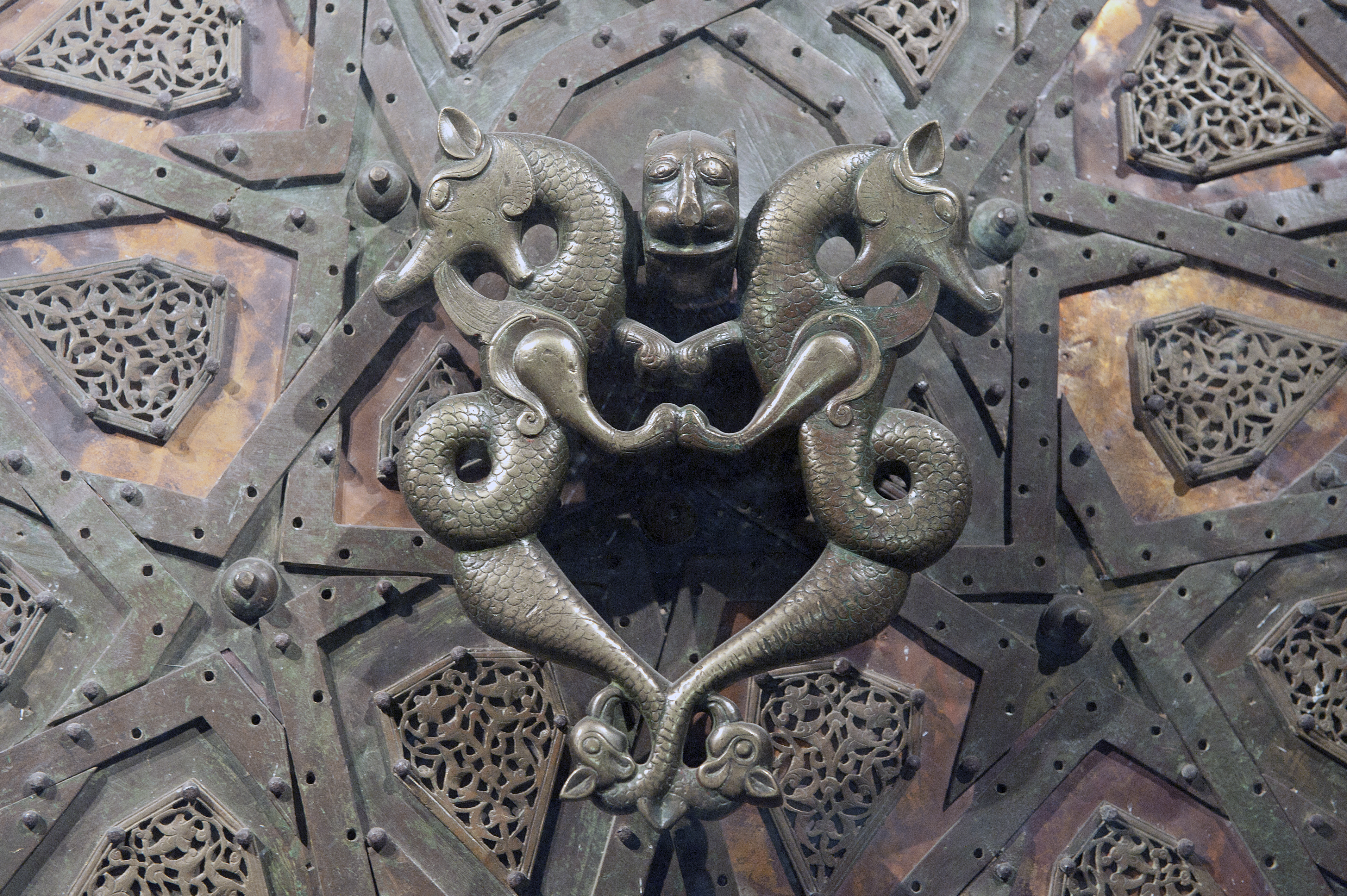
The first floor of the museum is given over to ethnographic displays of traditional Turkish life - reconstructed Anatolian rooms, a black tent of the Yorukler nomads, a rural courtyard with its loom and cooking fire - with the kind of careful staging that lets a visitor walk into a setting rather than past a vitrine. Upstairs, the great Ottoman objects: the marble cenotaph of Ozdemir Bey, the Mamluk governor of Aleppo who died in 1493; doorknobs from the Cizre Mosque from the early thirteenth century, in the form of paired dragons whose tails knot in mirror image; tile panels showing the Kaaba in elevation, made for pilgrims who would never reach it; an Ottoman qiblanuma from 1738, a portable astronomical instrument that points the user toward Mecca from anywhere on the earth. In 1984 the museum received the European Council's Special Jury Award for Museum of the Year, and decades later that recognition still feels accurate. Ibrahim Pasha's house, which was once an instrument of Ottoman power, now keeps the things that power produced - and the things that survived it.
From the Air
The museum stands on Sultanahmet Square at 41.006°N, 28.974°E in the Fatih district of Istanbul, on the western edge of the historic Hippodrome of Constantinople. From the air, the museum building sits between the Blue Mosque immediately east and Hagia Sophia 300 m northeast, on the headland of the Old City where the Bosphorus, Sea of Marmara and Golden Horn meet. Nearest airport: Istanbul Airport (LTFM) about 38 km northwest, or Sabiha Gokcen (LTFJ) on the Asian side. Recommended altitude: 3,000-5,000 ft for the Sultanahmet ensemble, or 8,000-10,000 ft to take in the entire Istanbul skyline and the strait.