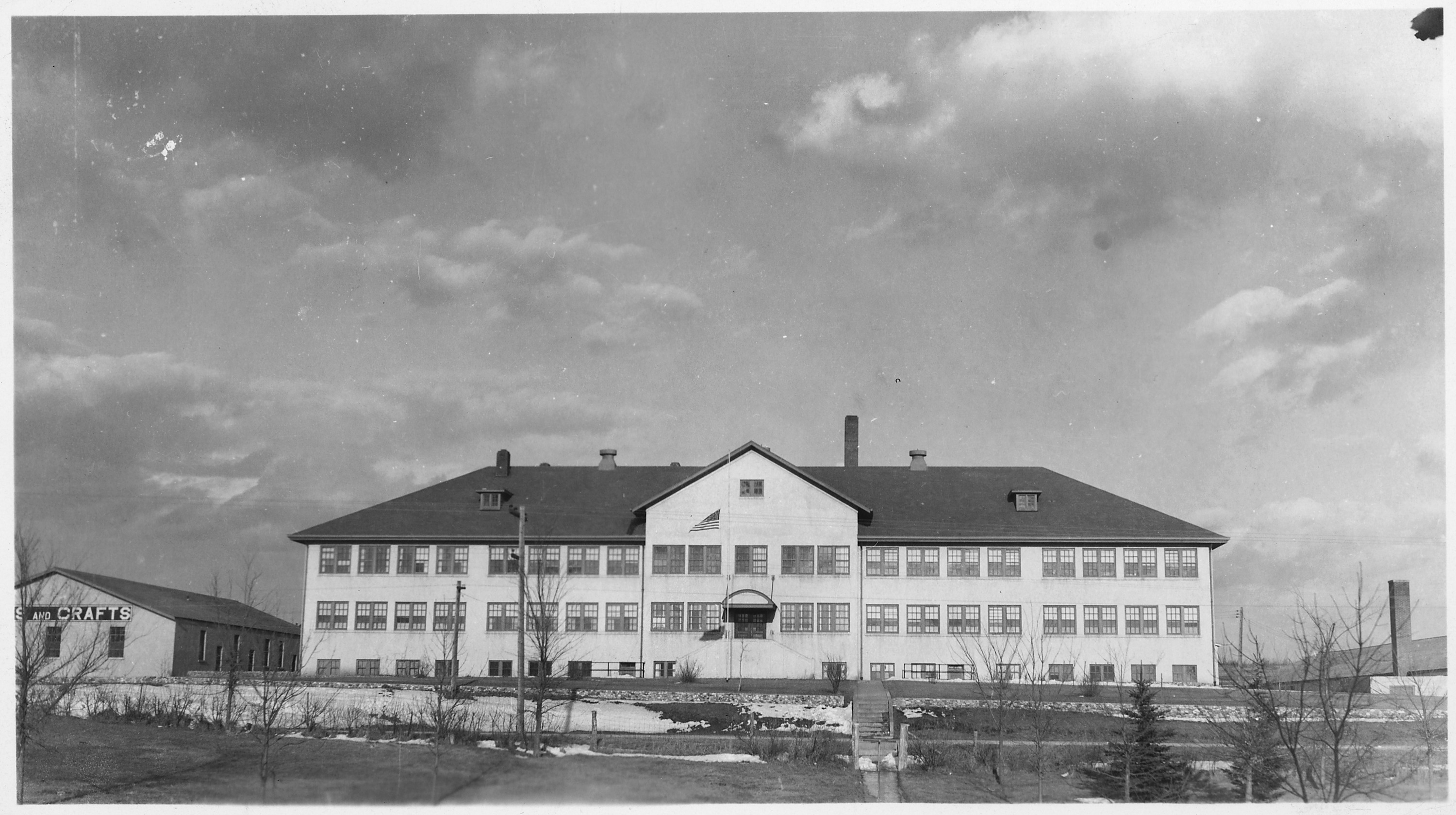
Turtle Mountain Indian Reservation
They called it the Ten Cent Treaty. In 1892, the United States government offered the Turtle Mountain Band of Chippewa Indians roughly ten cents per acre for nearly ten million acres of their homeland across North Dakota. Chief Little Shell III refused to sign, calling the deal an insult. The government responded by striking him and several hundred of his followers from the tribal rolls, rendering them landless in their own country. That act of defiance and its consequences still echo across the rolling hills of northern North Dakota, where the Turtle Mountain Indian Reservation sits just miles from the Canadian border, one of the most densely populated reservations in the United States.
The Ten Cent Treaty
The Turtle Mountain Band of Chippewa controlled nearly ten million acres when federal negotiators arrived in the early 1890s. Chief Little Shell III held firm: the land was worth far more than what Washington offered. When talks stalled, the government bypassed him entirely, handpicking thirty-two other Chippewa to negotiate in his place. They signed the McCumber Agreement, ceding the vast territory for one million dollars. Little Shell and his councilmen filed a formal protest with Congress in October 1892, but ratification proceeded without them. The people who had resisted were simply erased from official rolls, left without recognized tribal membership or any claim to the land their ancestors had inhabited for generations. It took more than a century for the federal government to finally grant recognition to Little Shell's descendants.
A Crowded Homeland
What remains of that original ten-million-acre territory is a reservation of roughly sixty-eight square miles in Rolette County, North Dakota. The math is stark: the Turtle Mountain Reservation has one of the highest population densities of any reservation in America, with thousands of tribal members living on a fraction of their ancestral lands. The town of Belcourt serves as the community's center, home to the Turtle Mountain Community School, jointly operated with the Bureau of Indian Education. Winters here are punishing, with temperatures dropping well below zero for months at a stretch, and summers are brief and warm. Despite the constraints of geography and climate, the community endures with a resilience shaped by centuries of adaptation.
Bison, White Buffalo, and Living Culture
Drive along Highway 281 through the reservation and you may spot a herd of seventy bison grazing beside the road, a living connection to the animal that once sustained the Plains Ojibwa and Metis peoples who converged at Turtle Mountain. The bison's decline in the mid-1860s devastated the Metis economy, which depended on the animals for trade, sustenance, and cultural practice. That history makes the tribe's recent events all the more resonant. In April 2021, a local ranch gifted the Turtle Mountain Band a rare white buffalo, an animal of profound spiritual significance across many Native American traditions. Then in June 2022, the tribe welcomed the birth of a white buffalo calf on the reservation itself, a moment the community interpreted as a sign of hope and answered prayers.
The Reservation's Literary Voice
Louise Erdrich, the daughter of an Ojibwe mother and a German-American father, is an enrolled member of the Turtle Mountain Band of Chippewa Indians. She grew up in Wahpeton, North Dakota, where both her parents taught at a Bureau of Indian Affairs school, but spent formative time visiting extended family on the reservation. An enrolled member of the Turtle Mountain Band, Erdrich has drawn on the landscape, history, and people of this place throughout her career, most notably in her novel The Night Watchman. Based on the life of her grandfather, Patrick Gourneau, who served as a tribal chairman at Turtle Mountain, the novel tells the story of a Chippewa council member fighting a 1953 congressional termination bill that threatened to dissolve tribal rights. The Night Watchman won the Pulitzer Prize for Fiction in 2021, bringing Turtle Mountain's story of resistance and perseverance to a national audience.
From the Air
Located at 48.85N, 99.78W in Rolette County, northern North Dakota, just south of the Canadian border. The reservation covers approximately 68 square miles of gently rolling terrain characteristic of the Drift Prairie. The nearest significant airport is Minot International (KMOT), roughly 70 miles southwest. At cruising altitude, look for the Turtle Mountains, a low range of wooded hills rising from the surrounding prairie that gives the reservation its name. The town of Belcourt is the main community visible from the air.