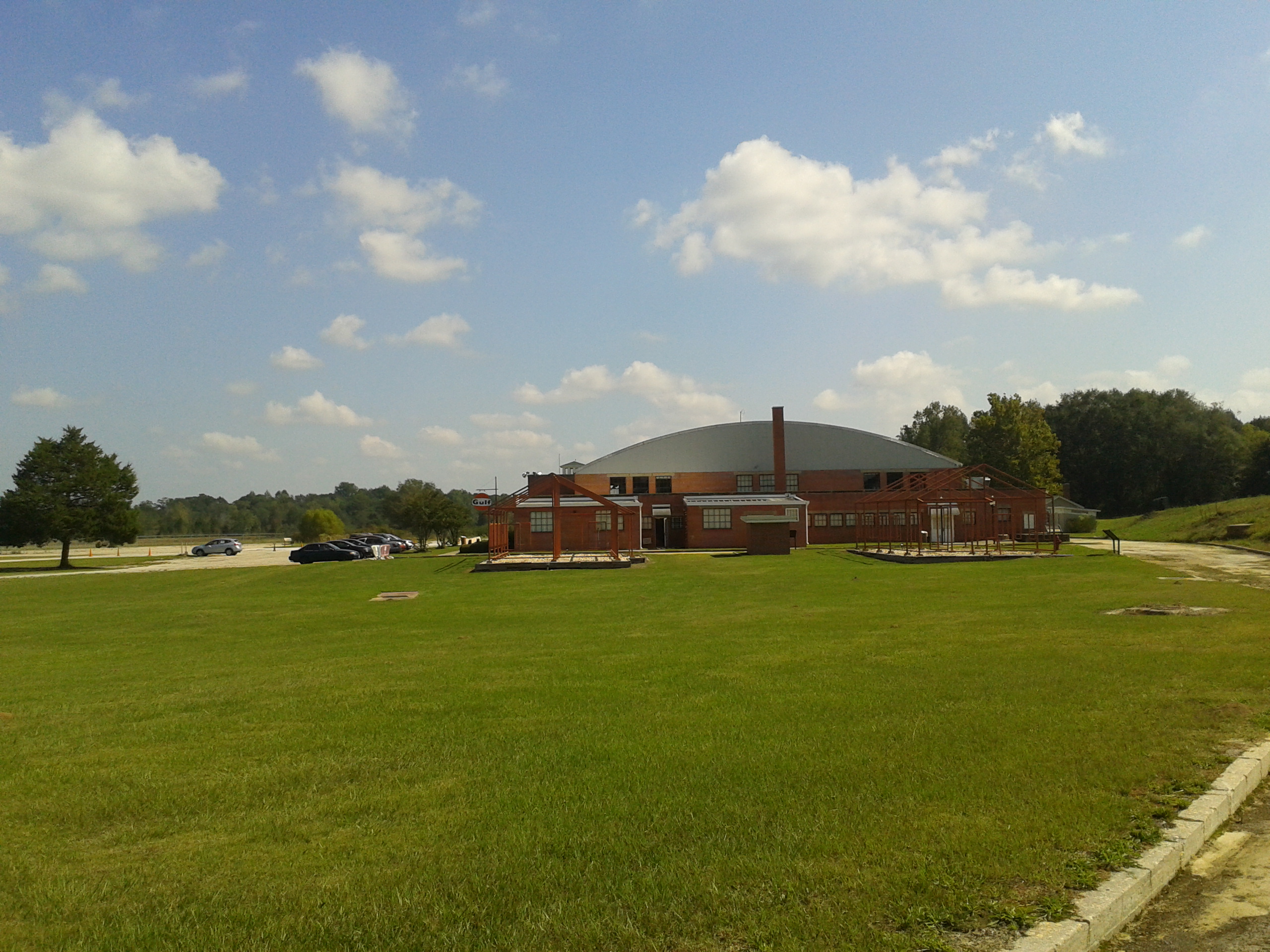
Moton Field: Where They Fought Two Wars
The phrase is stamped on a quarter: THEY FOUGHT TWO WARS. In 2021, the U.S. Mint chose Moton Field in Tuskegee, Alabama, for the final coin in its America the Beautiful series, depicting a Tuskegee Airman suiting up beneath P-51 Mustangs. The image captures a double burden that defined an entire generation of Black servicemen. Before 1940, African Americans were flatly barred from flying for the U.S. military. The idea that Black men could pilot combat aircraft was considered so improbable by the military establishment that when pressure from civil rights organizations and the Black press finally forced the Army Air Corps to act, the resulting program was labeled an "experiment" - as though the capacity of an entire race were a hypothesis requiring proof.
The Experiment That Wasn't
The first class of cadets began training at Moton Field on July 19, 1941. Among them was Captain Benjamin O. Davis Jr., who would go on to become the first African-American general in the United States Air Force. Thirteen cadets started; only five completed the advanced flying training at nearby Tuskegee Army Air Field, about five miles away, graduating in March 1942. The program was deliberately isolated in rural Alabama, far from public view, set up in ways that skeptics hoped would confirm their prejudices. It did the opposite. The program grew from that small beginning to encompass approximately 16,000 personnel - not just pilots, but navigators, bombardiers, mechanics, instructors, and all the ground crew who kept aircraft flying. The term "Tuskegee Airmen" refers to every one of them.
A Field Named for a Principal
Moton Field was constructed in 1941 as a dedicated primary flight training facility, and it was named for Robert Russa Moton, who had served as principal of the Tuskegee Institute until his death the previous year. Moton had succeeded Booker T. Washington, making the airfield's name a link in a chain stretching back to Tuskegee's founding in 1881. The field served as the first stop for aspiring Tuskegee Airmen - this was where they learned the fundamentals of flight in PT-13 Stearman biplanes before advancing to Tuskegee Army Air Field for combat training. Flight instructors at Moton were themselves a breakthrough: Black aviators teaching the next generation in a military that had insisted such men could not exist.
From Runway to Reckoning
The Tuskegee Airmen compiled a combat record that dismantled every argument against them. They flew escort missions over North Africa and Europe, and their success forced the military to confront its own assumptions. But the war they fought at home was slower and less decisive. They returned to a country still enforcing segregation, still denying the vote, still drawing lines through every public space. The significance of Moton Field is not just what happened there during the war, but what it represented afterward: documented, undeniable proof that the barriers had always been artificial. The field fell into disuse after the war, its hangars and control tower deteriorating for decades before preservation efforts began.
What Remains at Moton Field
The National Park Service took over the site, which was formally opened as a National Historic Site on October 10, 2008. Visitors enter free of charge, Monday through Saturday, into restored hangars where the original training aircraft once sat. An oral history project completed in 2005 captured the voices of hundreds of people involved in the Tuskegee Experience, preserving firsthand accounts of what it meant to train at a facility built to test whether you deserved to exist. The restored control tower and hangars at Moton Field are artifacts of both aviation history and civil rights history - two narratives that rarely intersect, but here are inseparable.
From the Air
Located at 32.46°N, 85.68°W in Macon County, Alabama, just northeast of the town of Tuskegee. From the air, Moton Field's runway layout is still visible. The nearby Tuskegee Army Air Field (about 5 miles away) was where advanced training took place. Closest major airport is Montgomery Regional Airport (KMGM), roughly 40 miles west. Approach from the east to see the field in context with Tuskegee University's campus to the south. Best viewed at 2,000-3,000 feet AGL for the full layout of the historic airfield.