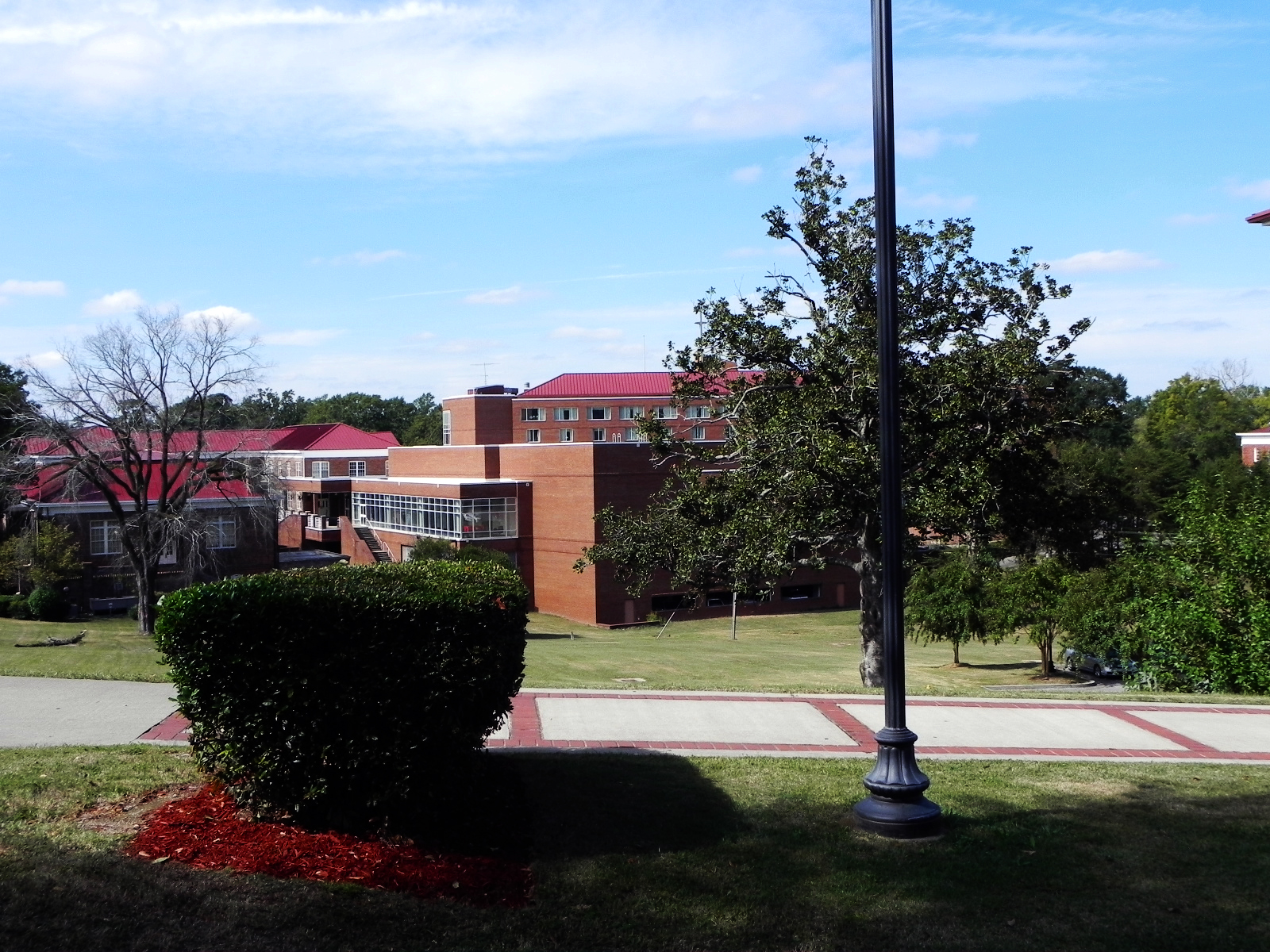
Tuskegee University: Built by the Hands That Learned There
The deal was simple and transactional. During the 1880 elections in Macon County, Alabama, a former Confederate colonel named Wilbur F. Foster needed Black votes. Lewis Adams, a former slave who could read, write, and speak several languages despite having no formal education, had the influence to deliver them. Foster promised a school for Black citizens in exchange. Both men kept their word. The Alabama Legislature appropriated $2,000 for teachers' salaries - nothing for land, nothing for buildings, nothing for equipment. The commissioners wrote to the Hampton Institute in Virginia asking for a teacher. They got 25-year-old Booker T. Washington, who showed up in 1881 and held his first classes in a rundown church and a shanty. Within a year, he had purchased a 100-acre former plantation. The students would build their own campus on it.
Labor as Architecture
Washington's vision was radical in its literalness: students built Tuskegee with their own hands. Brickmaking, carpentry, farming - these were not just job training but the physical construction of the institution itself. By the turn of the 20th century, the campus had grown from that 100-acre purchase to nearly 2,300 acres. The campus was designed by Robert Robinson Taylor, the first African American to graduate from MIT, working alongside David Williston, the first professionally trained African-American landscape architect. Their designs were executed largely by student labor, making Tuskegee a place where the act of learning and the act of building were indistinguishable. Washington's second wife, Olivia A. Davidson, worked alongside him as assistant principal, raising funds from donors in Massachusetts. Andrew Carnegie funded a library. John D. Rockefeller, Henry Huttleston Rogers, and George Eastman all contributed. Julius Rosenwald of Sears, Roebuck partnered with Washington to build more than 5,000 rural schools across the South.
Carver, the Airmen, and the First Lady
George Washington Carver arrived at Tuskegee and stayed for nearly fifty years, becoming one of America's most celebrated scientists. His agricultural research transformed Southern farming practices. Both Carver and Washington are buried on the campus. In 1941, the U.S. Army Air Corps established a flight training program at nearby Moton Field, producing the Tuskegee Airmen who broke the military's color barrier. Eleanor Roosevelt visited that year, lending her support to the program, corresponding regularly with Tuskegee's third president, Frederick Douglass Patterson. The university's reach extended beyond Alabama: Tuskegee alumni founded smaller schools and colleges across the South, and the institution cooperated with missionary organizations to establish industrial training programs in Africa.
The Betrayal of Trust
Tuskegee had built something rare: a center of medical excellence for African Americans. The John A. Andrew Memorial Hospital was the first full-service hospital in the nation developed and operated by African Americans. The Tuskegee Veterans Hospital was the only U.S. veterans' facility with an all-African-American staff. Booker T. Washington's community health outreach had cultivated deep trust in medicine. Then, from 1932 to 1972, the United States Public Health Service exploited that trust. In the USPHS syphilis study, researchers monitored the progression of untreated syphilis in African-American men from rural Macon County, telling them they had "bad blood" and deliberately withholding treatment - even after penicillin became the standard cure in 1947. No researcher was legally punished. President Bill Clinton issued a formal apology in 1997, and Tuskegee responded by establishing the nation's first National Center for Bioethics in Research and Health Care.
Students Who Would Not Be Silent
During the 1960s Civil Rights Movement, Tuskegee students formed the Tuskegee Institute Advancement League, an affiliate of the Student Nonviolent Coordinating Committee. They led sit-ins at the state capital, wade-ins to desegregate city pools, and voter registration drives in rural communities. They marched from Tuskegee to Montgomery as part of the Selma to Montgomery March on March 21, 1965. The boldest action came on April 6, 1968: approximately 300 students surrounded Dorothy Hall while the Board of Trustees was meeting inside, effectively holding them hostage. The governor sent the National Guard. The campus was shut down, and every student had to reapply for admission. But the activists' demands were ultimately met.
The Campus Today
Tuskegee University is the only historically Black university to offer the Doctor of Veterinary Medicine degree; about 75% of the nation's African-American veterinarians graduated from its program, established in 1944. It is the first and only historically Black university to offer an accredited bachelor's degree in Aerospace Engineering. The campus was designated a National Historic Landmark in 1965 and a National Historic Site by the National Park Service in 1974. Points of historic interest include The Oaks, Washington's home; the Booker T. Washington monument, titled Lifting the Veil of Ignorance; and the graves of both Washington and Carver. Nearly 3,000 students from over 30 countries attend today, walking corridors built by students who came before them, on ground that a 25-year-old teacher purchased with $2,000 and an unshakable idea.
From the Air
Located at 32.43°N, 85.71°W in Macon County, Alabama, east of Montgomery. The campus occupies substantial grounds visible from the air - look for the park-like setting with large green areas and the historic building clusters along Booker T. Washington Boulevard. Moton Field, the Tuskegee Airmen training site, is nearby to the northeast. Nearest major airport is Montgomery Regional Airport (KMGM), about 40 miles west. Interstate 85 passes just south of campus with a dedicated Tuskegee University exit. Best viewed at 2,000-4,000 feet AGL to appreciate the full campus layout and its relationship to the surrounding Macon County landscape.