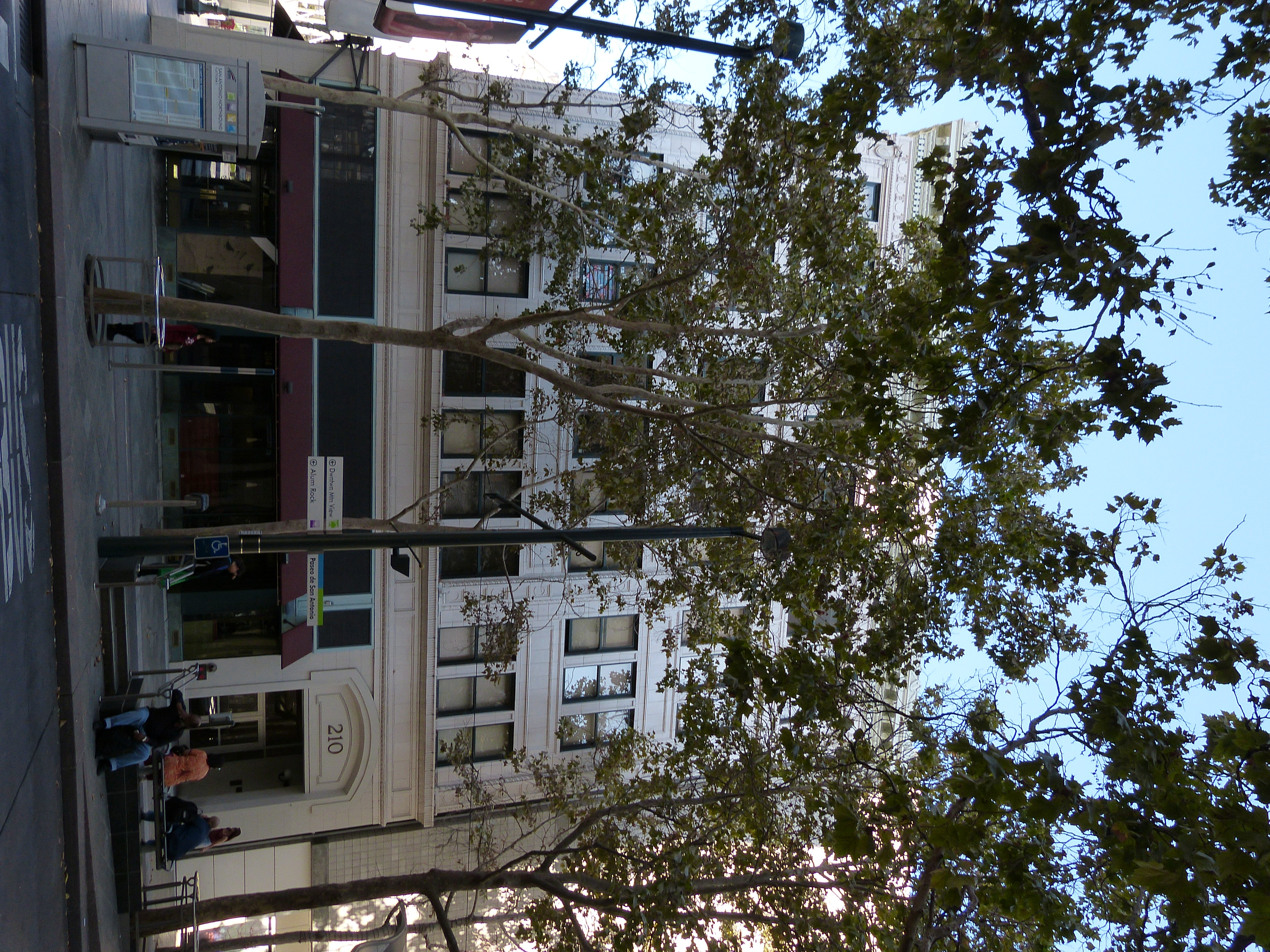
Twohy Building
The 1906 San Francisco earthquake destroyed railroad bridges across Northern California. The family that came to fix them stayed to build an empire -- and left downtown San Jose a building that outlasted both the empire and the railroads it served. Judge John W. Twohy commissioned the Twohy Building in 1917, a neoclassical statement in concrete and terra cotta that rose along what is now the Paseo de San Antonio. The building was not merely an office address. It was a monument to what the Twohy family had accomplished since arriving in the Santa Clara Valley eleven years earlier with a contract to repair what the earthquake had broken.
Earthquake Contractors
The Twohy Brothers Construction Company was already established in heavy civil work when the earthquake struck on April 18, 1906. The catastrophe that leveled much of San Francisco created urgent demand for exactly the kind of work the Twohys specialized in: railroads, bridges, tunnels, and public works on a massive scale. Southern Pacific Railroad hired the family to construct the Bayshore Cut-Off, a new rail route designed to improve service around the Bay, and to supervise repairs to the bridges the earthquake had damaged. The Twohys relocated their operations to San Jose to manage these projects, and the valley became their permanent base. From this foothold, the company expanded into manufacturing railroad cars and building World War I "Victory" ships -- the mass-produced cargo vessels that kept Allied supply lines running across the Atlantic.
A Judge's Monument in Stone
By 1917, John W. Twohy had accumulated enough wealth and local standing to commission a building that would anchor his family's name to downtown San Jose. The neoclassical design he chose was deliberate -- columns, symmetry, and classical proportions that signaled permanence in a state still haunted by the memory of buildings that had collapsed just eleven years before. The Twohy Building stood on what would eventually become the Paseo de San Antonio, a pedestrian promenade that today connects San Jose's convention center to the university campus. In 1917, this was simply the commercial heart of a growing city, and the Twohy Building was designed to project stability and ambition in equal measure. It joined the fabric of downtown San Jose as both a functional office building and an architectural declaration: the Twohys were here to stay.
Railroads to Ruin to Registry
The industries that built the Twohy fortune did not last forever. Railroad construction slowed as highways took over long-distance transport. The Victory ships became obsolete after the armistice. The Twohy Brothers Construction Company, like many firms built on nineteenth-century infrastructure, faded from prominence as the twentieth century found new priorities. But the building survived. Downtown San Jose went through its own cycles of boom and decline -- the suburban exodus of the 1950s and 60s, the tech-driven revival of the 1990s, the ongoing reinvention of the twenty-first century. Through all of it, the Twohy Building remained on its corner, its neoclassical facade a reminder that downtown San Jose had a history before it had a skyline. Its listing on the National Register of Historic Places formalized what the building had been demonstrating for decades: some things are worth preserving simply because they endured.
The Paseo's Quiet Anchor
Walk the Paseo de San Antonio today and the Twohy Building registers differently than it did a century ago. It no longer represents railroad wealth or wartime industry. Instead, it anchors one end of a pedestrian corridor that stretches through downtown San Jose's cultural and academic landscape, connecting the convention center district to San Jose State University. The building's presence on the Paseo gives the walkway something that newer construction cannot provide: a physical link to the early twentieth century, when downtown San Jose was a place where families like the Twohys could arrive as contractors and leave as civic institutions. The neoclassical columns still frame the entrance, still project the confidence that Judge Twohy intended. The empire they advertised is gone. The building is not.
From the Air
Located at 37.333N, 121.887W on the Paseo de San Antonio in downtown San Jose, California. The building sits in the urban core between the San Jose Convention Center and San Jose State University. Nearest airports: Reid-Hillview (KRHV, 5nm E), San Jose International (KSJC, 3nm NW), Moffett Federal Airfield (KNUQ, 9nm NW). Best viewed at 1,500-2,500 feet AGL to appreciate the downtown grid and the Paseo de San Antonio pedestrian corridor.