Tyndall Air Force Base
On the morning of October 10, 2018, Hurricane Michael slammed into the Florida Panhandle as a Category 5 storm and aimed straight for one of America's most important fighter training bases. Wind gusts approached 172 mph. Every building on the installation was declared unlivable. Seventeen F-22 Raptors - among the most advanced and expensive fighter jets ever built - sat in hangars that could not protect them. The damage would eventually be estimated at $4.7 billion. Yet Tyndall Air Force Base, located east of Panama City on a peninsula jutting into the Gulf of Mexico, had weathered destruction before. The base has been reinventing itself since the day it opened - which happened to be December 7, 1941.
Born on a Day of Infamy
Tyndall Field opened its doors as a gunnery range on the same day Japanese aircraft attacked Pearl Harbor. The timing was coincidental but fitting - the base would spend the next four years training aerial gunners at a pace that matched the war's urgency. The site, chosen in December 1940, was East Peninsula southeast of Panama City - a landscape of pine trees, stubborn palmetto plants, and swamps. Bulldozers worked around the clock to clear it. Panama City's mayor, Harry Fannin, dug the first ceremonial spade of sand in May 1941, while Colonel Warren Maxwell, the first commander, swung an ax at the palmettos. The base subsumed the small settlements of Cromanton, San Blas, Redfish Point, Auburn, and Farmdale. Its namesake, 1st Lieutenant Frank Benjamin Tyndall, was a World War I fighter pilot from Sewall's Point, Florida, a Silver Star recipient credited with downing six German planes behind enemy lines in 1918. He died in a crash of his Curtiss P-1F Hawk near Mooresville, North Carolina, in 1930.
Cold War Interceptors Over the Gulf
As the Cold War intensified in the late 1950s and 1960s, Tyndall transformed from a gunnery school into a hub for interceptor pilot training. The flight line cycled through a remarkable succession of aircraft: F-100 Super Sabres, F-101 Voodoos, F-102 Delta Daggers, F-104 Starfighters, and F-106 Delta Darts. During the Cuban Missile Crisis, the base served as a stopover and refueling point for Air Defense Command aircraft deploying to Florida. Alert facilities kept F-101 Voodoo and F-102 Delta Dagger interceptors on standby, ready to scramble against unknown aircraft approaching American airspace. Tyndall shared F-102 training responsibilities with Perrin AFB in Texas until that base closed in 1971. The Gulf of Mexico offshore ranges became essential for weapons evaluation, eventually hosting the biennial "William Tell" air-to-air gunnery competition.
Raptor Country
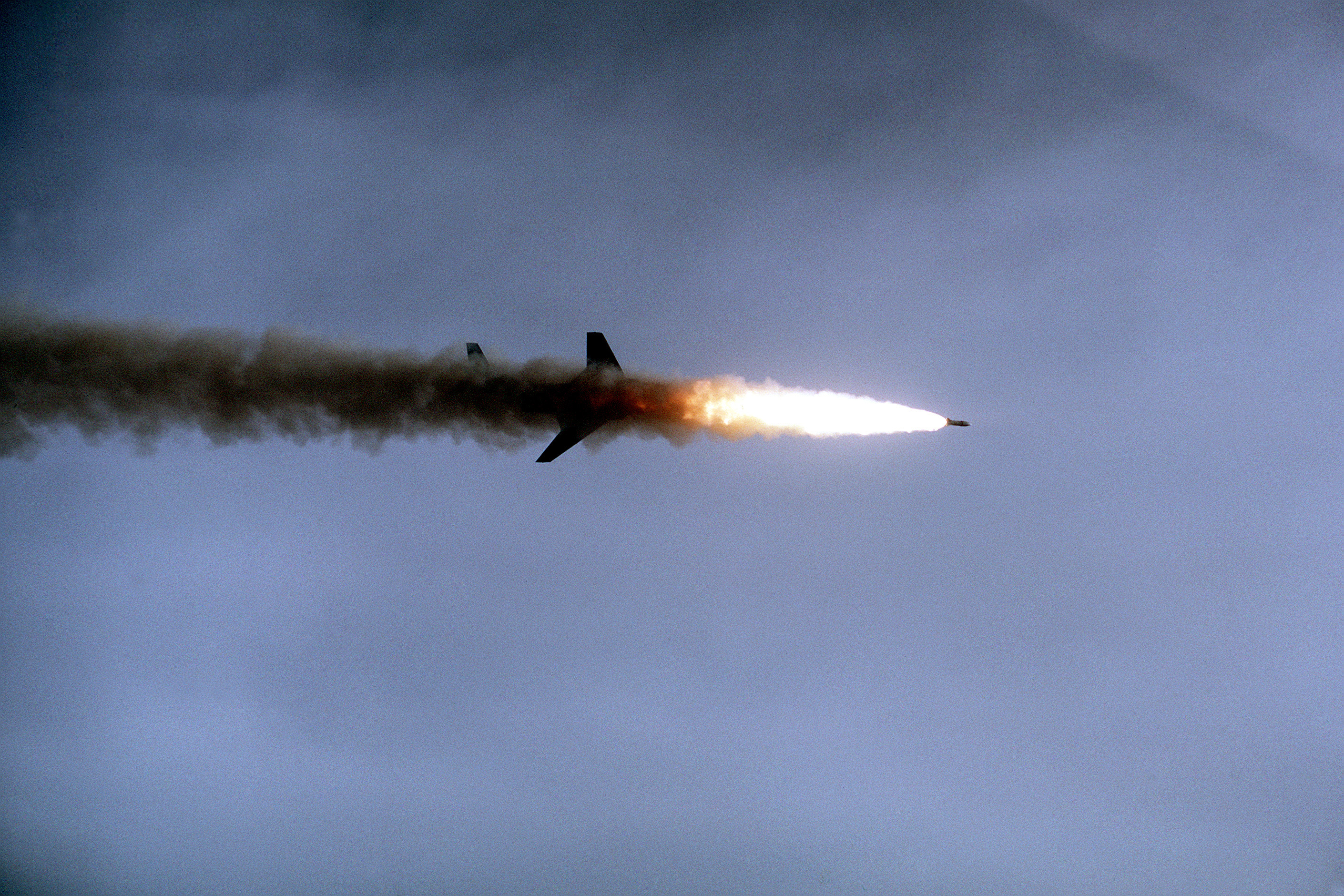
By the 2000s, Tyndall had become synonymous with air dominance. The 325th Fighter Wing, the base's host unit, transitioned from training F-15 Eagle pilots to preparing crews for the F-22A Raptor - the Air Force's premier fifth-generation stealth fighter. The 43rd Fighter Squadron and 2nd Fighter Training Squadron handle F-22 and T-38 adversary training, while the 95th Fighter Squadron maintains combat readiness. First Air Force, headquartered at Tyndall since 1991, oversees the air sovereignty and defense of the continental United States as a component of both NORAD and U.S. Northern Command. The 53rd Weapons Evaluation Group manages target drone programs and offshore weapons ranges over the eastern Gulf of Mexico, operating a fleet of QF-16 full-scale aerial targets - retired Fighting Falcons converted into unmanned drones.
Surviving Michael
Hurricane Michael tested the base's resilience like nothing before. Ninety-three Air Force personnel rode out the storm on base while over 11,000 military members and families evacuated. Thirty-three of Tyndall's 55 F-22s were flown to Wright-Patterson Air Force Base in Ohio ahead of the hurricane, but seventeen remained behind. The extent of damage to those jets remained classified. Air Force officials described the destruction as catastrophic - hangars ripped apart, housing demolished, infrastructure shattered. Airmen were told they would be away from the installation for a significant amount of time. Rather than abandon the site, the Air Force committed to rebuilding Tyndall as a model 21st-century installation. The base that opened amid the chaos of a world war found itself, once again, rebuilding from devastation on the edge of the Gulf.
From the Air
Located at 30.08N, 85.58W on East Peninsula east of Panama City, Florida. ICAO code KPAM (Panama City-Tyndall). The base occupies a prominent peninsula visible from altitude extending into the Gulf of Mexico. Northwest Florida Beaches International (KECP) is the nearest civilian airport, approximately 15nm northwest. Eglin AFB (KVPS) lies about 60nm to the west. From the air, the long runways are clearly visible on the narrow peninsula with water on three sides. Active military airspace - check NOTAMs. The Gulf of Mexico weapons ranges extend offshore to the south. Best viewed at 5,000+ feet AGL for the full peninsula context.