Ubasute: The Mountain That Remembers
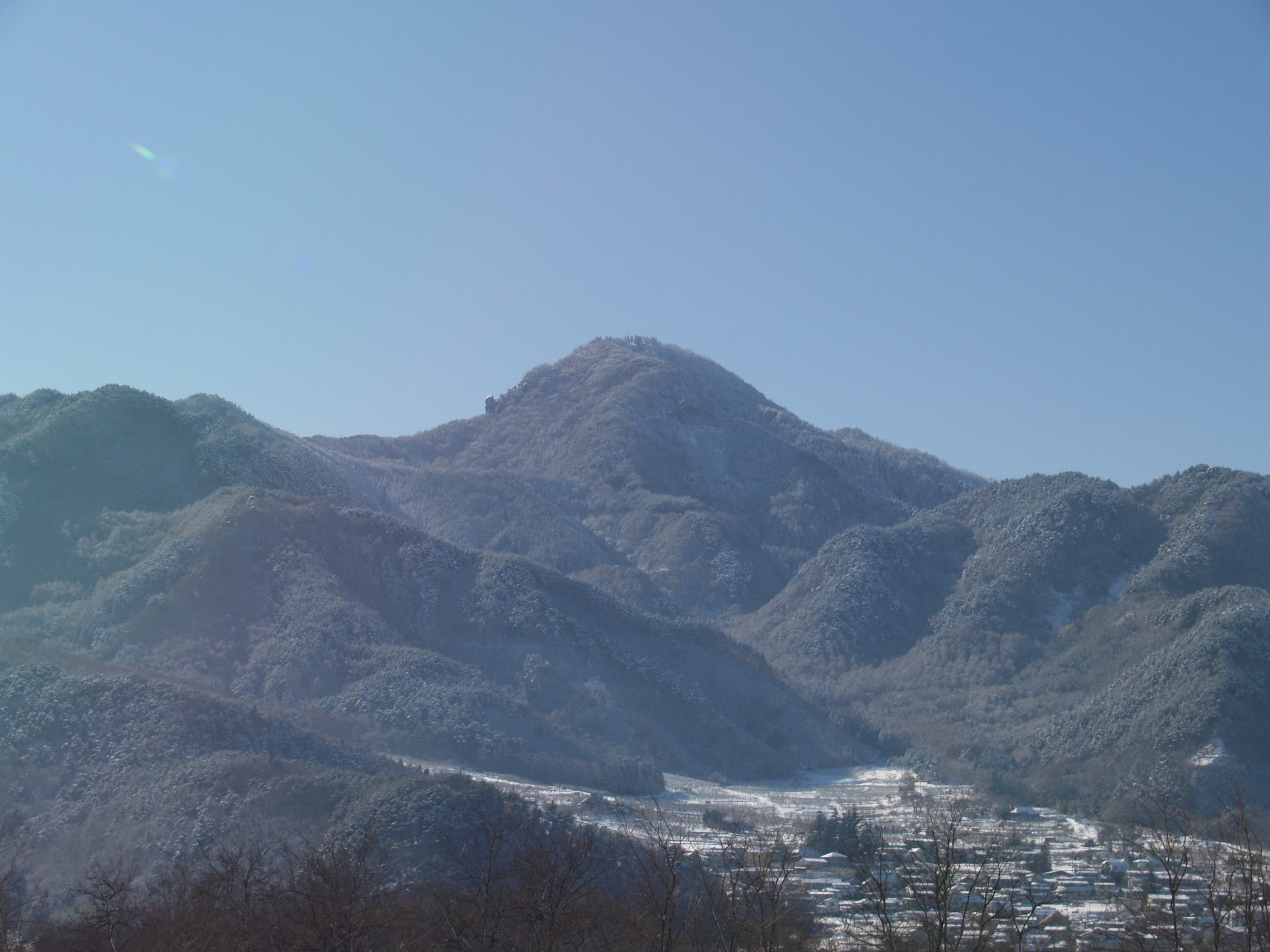
A mother rides on her son's back up a dark mountain trail. She is old, and this is the last journey she will take. But as they climb, she reaches out and snaps twigs from the branches, scattering them behind so her son can find the way home. The story is a Buddhist allegory, not a historical record, and the folklorist Kunio Yanagita traced ubasute -- the mythical practice of carrying an elderly relative to a remote place and leaving them to die -- to Indian Buddhist mythology rather than any documented Japanese custom. The Kodansha Illustrated Encyclopedia of Japan states plainly that ubasute "does not seem ever to have been a common custom." Yet the legend attached itself to a real mountain in Chikuma, Nagano Prefecture, and the name stuck. Mount Kamuriki, known popularly as Obasuteyama, rises above terraced rice paddies that have been cultivated on its slopes for centuries. The mountain that folklore made a place of abandonment became, improbably, one of the most beautiful places in Japan to watch the moon rise.
Broken Twigs on a Dark Path
The ubasute legend exists in many versions, but the core always holds the same tension between filial duty and impossible cruelty. In the most widely known telling, a feudal lord decrees that all elderly people must be taken to the mountain. A devoted son carries his mother upward, weeping, but she thinks only of his safety, breaking branches to mark his return. In some versions, the son defies the lord's order and hides his mother, and her wisdom later saves the village from a crisis -- proving the value of the old. The story became the basis for Shichiro Fukazawa's 1956 novel The Ballad of Narayama, itself adapted into three films. The most celebrated, directed by Shohei Imamura, won the Palme d'Or at the 1983 Cannes Film Festival -- the highest prize in cinema awarded to a story about a practice that likely never happened.
Where the Moon Fills Every Field
The terraced rice paddies on the slopes of Mount Kamuriki, at altitudes between 460 and 560 meters, create one of Japan's most extraordinary natural spectacles. In early summer, when the paddies are flooded and the seedlings are young, the water-filled terraces become mirrors. As the full moon rises over the Zenkoji Plain, it reflects simultaneously in hundreds of individual fields -- a phenomenon called tagoto no tsuki, or "moon in each field." The sight drew Japan's greatest poets. Matsuo Basho visited. Kobayashi Issa composed verses here. The ukiyo-e master Hiroshige painted the scene. The paddies themselves are working agricultural land, tended by local farmers who maintain them as they have been maintained for generations. There is no theme park, no artificial lighting. The moon simply rises, the water catches it, and each small field holds its own perfect circle of light.
A Station Built in Zigzags
Obasute Station, on the JR Shinonoi Line between Matsumoto and Nagano City, is one of the few remaining switchback railway stations in Japan. The grade up to the station was too steep for early steam locomotives to climb in a straight line, so engineers built the tracks in a zigzag pattern -- the train pulls forward, stops, reverses direction onto a siding, then pulls forward again to reach the platform. The view from the platform is considered one of Japan's three great train window views, looking out across the Zenkoji Plain and the city lights of the Nagano basin. During summer evenings, JR East operates a special Night View train service from Nagano Station, allowing passengers to sit on the platform and take in the panorama after dark. The station is unmanned and modest -- just two side platforms connected by a footbridge -- but the view from it has been celebrated for centuries.
Legend Against the Light
The tension at the heart of Obasute is the collision between its dark folklore and its luminous reality. The Aokigahara forest at the base of Mount Fuji carries a similar burden -- folklore links it to ubasute, and the association with death clings to it despite the living forest beneath the canopy. But at Obasuteyama, the legend has been absorbed into something gentler. The name persists in the station, the mountain, and the tourist maps, but what people come for is beauty, not horror. The 2016 American film The Forest used ubasute to explain the haunted reputation of Aokigahara, but at the actual mountain that bears the name, the ghosts are literary. Tsukioka Yoshitoshi depicted the scene in his famous series One Hundred Aspects of the Moon -- a son carrying his mother under moonlight, the mountain looming behind. The image is sorrowful, not frightening. It captures the same quality that draws visitors today: the sense that this mountain holds stories older than memory, reflected in water and light.
From the Air
Located at 36.47°N, 138.11°E in Chikuma, Nagano Prefecture, on the slopes of Mount Kamuriki. From altitude, the terraced rice paddies are visible as stepped patterns on the mountainside above the Zenkoji Plain. Best viewed at 3,000-5,000 feet AGL for the terracing detail. The Shinano Railway and JR Shinonoi Line run through the valley below. Matsumoto Airport (RJAF) lies approximately 20 nautical miles southwest. The surrounding terrain is mountainous with the Japanese Alps visible to the west.