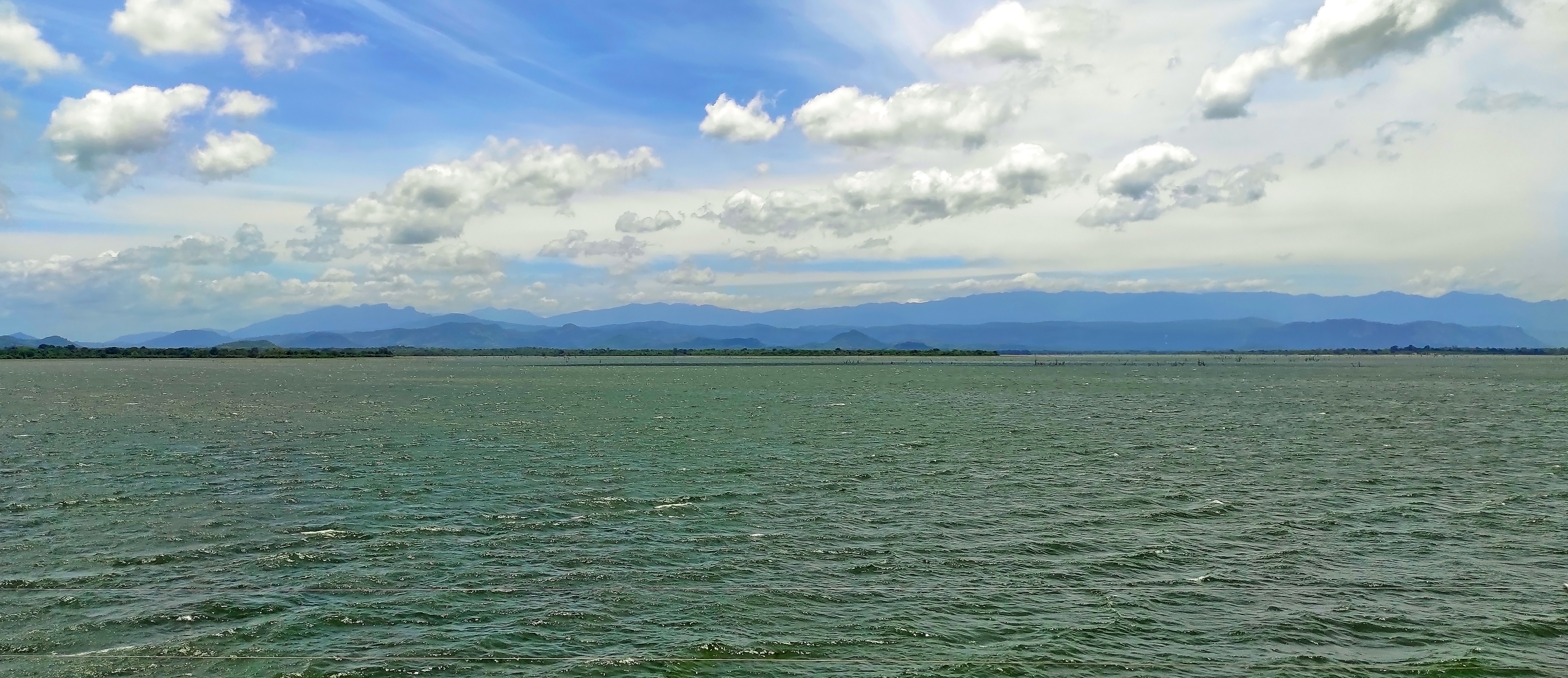
Udawalawe National Park
The elephant appears without warning. One moment you are scanning dry scrubland from a jeep window; the next, a grey shape the size of a delivery truck materializes from behind a thorny thicket, ears slowly fanning, trunk testing the air. At Udawalawe, this is not a rare event choreographed by guides and radio chatter. It is Tuesday morning. Sri Lanka's third most visited national park sits on the boundary of the island's wet and dry zones, covering 308 square kilometers of grassland, scrub, and scattered forest where wild elephants roam in numbers that rival East Africa's most famous reserves.
Built on Displacement
Udawalawe exists because of a dam. When the Udawalawe Reservoir was constructed in the early 1970s, the rising waters displaced both the farmers who had practiced chena cultivation -- slash-and-burn shifting agriculture -- on these lowlands and the wildlife that depended on the same terrain. The national park was established in 1972 to safeguard animals pushed out by the reservoir's footprint. It was a pragmatic conservation decision rather than a romantic one: create a refuge or watch species scatter into cultivated land and conflict. The park's flat topography, broken by Ulgala peak at just 373 meters, and its network of small tanks and seasonal ponds make wildlife easy to spot. The landscape shifts from yellow to green with the monsoon, receiving over 1,500 millimeters of rain annually, and temperatures hold between 24 and 29 degrees Celsius year-round.
The Elephant Kingdom
Sri Lankan elephants -- Elephas maximus maximus, the largest of the Asian elephant subspecies -- are the main attraction, and Udawalawe delivers encounters with a reliability that few parks anywhere can match. Herds drift across the grasslands in loose family groups, calves tucked between the legs of adults, bulls wandering the periphery. But Udawalawe's elephant story extends beyond the wild herds. The Elephant Transit Home, established in 1995 by the Department of Wildlife Conservation on the park's western boundary near the reservoir, takes in orphaned calves -- victims of poaching, crop-raiding conflicts, or separation from their mothers. The calves are bottle-fed milk every three hours, allowed to roam freely during the day, and gradually weaned over roughly five years. The goal is not domestication but release: over 100 elephants have been rehabilitated and returned to the wild, making it the largest orphaned baby elephant release program in the world.
Beyond the Giants
Elephants claim the headlines, but Udawalawe shelters a broader ecosystem than most visitors expect. Water buffalo graze the marshier lowlands alongside spotted deer, while golden jackals patrol the scrub edges at dusk. Mugger crocodiles haul themselves onto the banks of reservoirs and ponds in the late afternoon to absorb the fading heat. Birdwatchers come for species that are difficult to find elsewhere on the island: European rollers flash iridescent blue from exposed perches, and the black-necked stork -- one of Sri Lanka's rarest wading birds -- stalks the shallows. The park's evergreen forests harbor two endemic floral species, though the landscape is dominated not by trees but by grassland and open plain. Tall species like ebony, satinwood, and Chloroxylon swietenia anchor the scattered forest patches, but much of the canopy was lost to the chena farming that preceded the park.
The Safari Economy
Udawalawe town, a small settlement on the reservoir's southwestern edge, runs almost entirely on the safari trade. Guesthouses arrange early-morning departures -- typically 5:30 AM, when the light is soft and the animals are active. A half-day jeep tour with a driver who doubles as a spotter costs around 8,500 rupees through local accommodation, with park entrance fees calculated separately through a complicated formula that converts US dollar base prices at the daily exchange rate. Drivers radio each other with sighting locations, which is both the system's strength and its weakness: when a leopard or rare bird appears, convoys of safari trucks converge, sometimes blocking views entirely. The park's flat terrain and extensive four-wheel-drive track network make coverage easy, but the crowds remind visitors that Udawalawe's accessibility is a double-edged sword. It is one of the easiest places in Asia to see wild elephants -- and everyone knows it.
From the Air
Udawalawe National Park is centered at 6.44N, 80.89E in southern Sri Lanka, straddling the Sabaragamuwa-Uva provincial boundary. The Udawalawe Reservoir is the dominant visual landmark from altitude -- a large blue-grey expanse on the park's northern edge. The park itself appears as a broad, flat area of mixed grassland and scrub, noticeably less cultivated than the surrounding agricultural land. Nearest airport: Mattala Rajapaksa International (VCRI) approximately 70 km southeast. Colombo Bandaranaike International (VCBI) is 190 km northwest. Best viewed at 3,000-5,000 feet AGL in clear conditions.