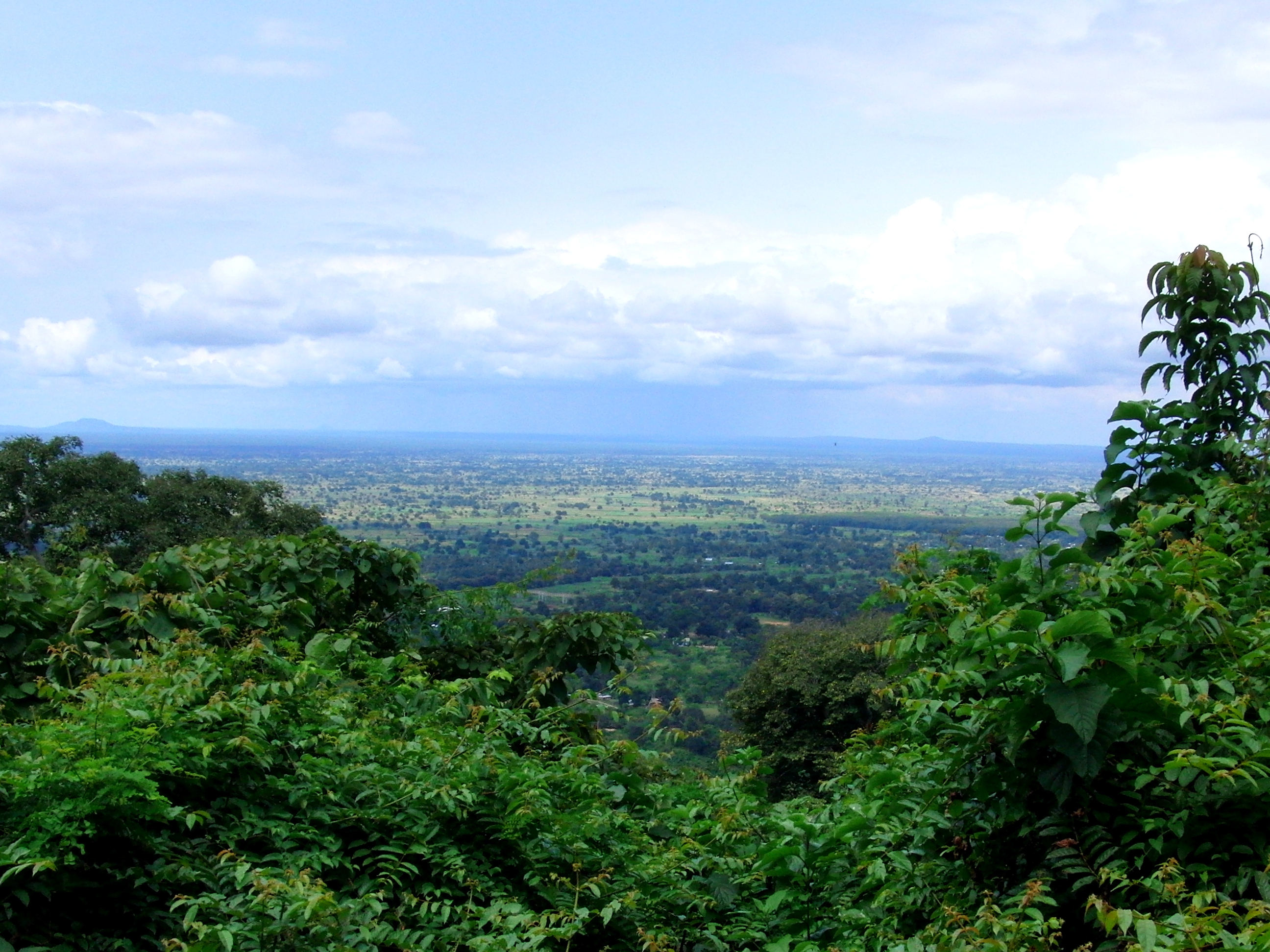
Udzungwa Mountains National Park
Three primate species live in the Udzungwa Mountains and nowhere else on Earth. The Sanje mangabey was unknown to science until 1979. The Kipunji, a highland monkey with a distinctive honking call, was not described until 2003 -- making it the first new African primate genus identified in more than 80 years. These are not animals clinging to survival in degraded habitat. They thrive in some of the most pristine rainforest remaining on the continent, protected inside a national park that forbids vehicles entirely. In Udzungwa, you walk, or you do not go at all.
Thirty Million Years of Isolation
The Udzungwa Mountains are part of the Eastern Arc, an ancient chain of crystalline block mountains running through Tanzania and Kenya. These forests were once connected to the Congo Basin and West Africa, but geological and climatic shifts over 30 million years gradually isolated them into sky islands -- fragments of primeval forest stranded at altitude above the surrounding dry lowlands. That isolation produced an evolutionary laboratory. The Eastern Arc covers less than two percent of Tanzania's land area yet holds 30 to 40 percent of the country's plant and mammal species. Over 300 animal species have been recorded in Udzungwa alone, including 96 vertebrate species found only in the Eastern Arc. The name Udzungwa derives from the Kihehe word Wadzungwa -- the people who live on the sides of the mountains -- and in places where cultural taboos long discouraged disturbance, vast stretches of forest remain exactly as they were before any human saw them.
Waterfalls and Walking Trails
Udzungwa is a park built for feet, not tires. Trails range from gentle one-kilometre loops past small cascades like Prince Bernard Falls to the ambitious 65-kilometre Lumemo Trail, a four-night traverse across the mountain range. The most popular destination is Sanje Waterfalls, the highest in Tanzania's national park system, where water drops in three tiers through the canopy before collecting in plunge pools cool enough to make a hot climb worth every step. More demanding routes lead to Mwanihana Peak, the park's highest point, a one- or two-night expedition through altitudinal zones that shift from lowland forest through montane woodland to bamboo thickets. Birders find the park irresistible: approximately 400 species have been recorded here, many endemic to the Eastern Arc. Along the Kilombero River at the park's southern boundary, dugout canoes offer a quieter way to spot the endemic Kilombero weaver, bee-eaters, and the occasional crocodile gliding beneath the surface.
A Park Born from Five Forests
Udzungwa Mountains National Park was established in 1992, formed by consolidating five forest reserves that dated back to the 1950s. The inauguration was performed by Prince Bernhard of the Netherlands, co-founder of the World Wildlife Fund. The park earned designation as one of 34 World Biodiversity Hotspots and one of 200 WWF Ecoregions of global importance -- credentials that reflect its significance to conservation biology worldwide. Despite those accolades, Udzungwa remains wonderfully obscure to most travellers. The park headquarters sit at the village of Mang'ula, reachable by a graded dirt road from Mikumi town or by the TAZARA railway from Dar es Salaam -- a six-to-seven-hour train journey through countryside that includes stretches along the Selous Game Reserve. The train is cheap, comfortable, and unreliable in the way that makes African rail travel either infuriating or unforgettable, depending on disposition.
Village Life at the Forest's Edge
Beyond the park boundary, the Kilombero Valley spreads flat and fertile, edged by sugar cane plantations and small farms. Exploring by bicycle is the preferred method -- the terrain is level and the pace allows for the kind of encounters that make rural Tanzania memorable. Local markets sell everything from secondhand clothing to hand-woven blankets produced by women's cooperatives in Ifakara. In Mang'ula village, the food is simple and good: mishkaki -- barbecued meat on skewers -- or chips mayai, a chip omelette that is exactly as satisfying as it sounds. For evening entertainment, a traditional Ngoma group performs drumming, dancing, and singing around a campfire, with the kind of improvised energy that makes the experience feel less like a performance and more like an invitation. Monkeys sometimes wander across the boundary from the national park into the tented camps nearby, a reminder that the line between wilderness and village here is less a border than a suggestion.
From the Air
Located at 7.80S, 36.68E in central Tanzania, approximately 360 km west of Dar es Salaam. From altitude, the Udzungwa Mountains appear as a dramatic green escarpment rising sharply from the flat Kilombero Valley to the south. The TAZARA railway line is visible threading through the lowlands below the mountains. Mikumi National Park lies to the northeast along the main highway. The nearest airstrip is Kilombero, 24 km from park headquarters. Mikumi airstrip (no ICAO code) handles scheduled flights. Dar es Salaam (HTDA) is the nearest major airport. The park's forested ridgeline contrasts starkly with the surrounding agricultural plains.