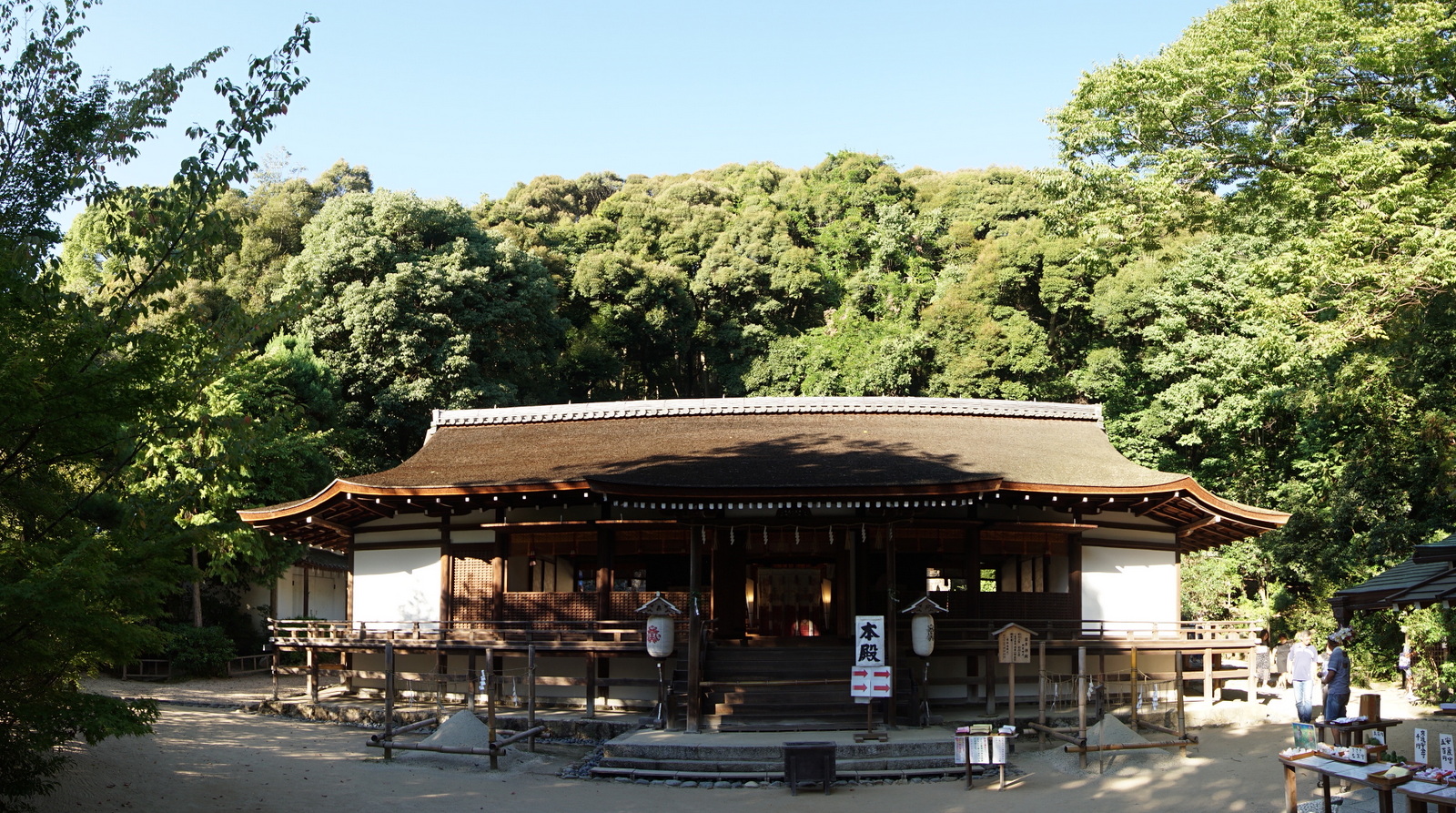
Ujigami Shrine: Japan's Oldest Standing Shrine
A thousand years of weather have darkened the cypress bark of the honden at Ujigami Shrine to the color of old tea. The wood was cut around 1060, according to dendrochronology studies by the Nara National Research Institute for Cultural Properties -- making this the oldest original Shinto shrine building in Japan. Yet nothing about the place announces its age. No grand approach, no towering torii gate framing the entrance. The shrine sits tucked against a wooded hillside in the city of Uji, south of Kyoto, behind the far more famous Byodo-in temple with its Phoenix Hall depicted on the ten-yen coin. Most visitors walk past without realizing they are standing beside a structure that has survived nearly a millennium of earthquakes, typhoons, civil wars, and the slow drift of human indifference.
The Prince Who Refused the Throne
Ujigami Shrine is dedicated to Emperor Ojin and his two sons, the imperial princes Uji no Wakiiratsuko and Emperor Nintoku. The story behind the shrine is one of tragic filial devotion. Emperor Ojin chose his youngest son, Wakiiratsuko, as his successor. But when the old emperor died, Wakiiratsuko refused the throne, insisting his elder brother was better suited to rule. The standoff dragged on for years. Neither prince would claim the title. Finally, in 312, Wakiiratsuko resolved the impasse the only way he saw possible: he drowned himself in the Uji River. His brother ascended as Emperor Nintoku. The shrine was built to honor the spirit of the prince who chose death over a crown -- and a rabbit is said to have once guided him through this area, looking back repeatedly to make sure he followed, a legend that some believe gave the city of Uji its name, from the word for rabbit path.
Architecture That Outlasted Empires
The honden, or main sanctuary, is the oldest example of nagare-zukuri style architecture in Japan -- the flowing, asymmetrical roofline that became the dominant style for Shinto shrines across the country. What looks like a single building actually houses three inner shrines side by side, each sheltering a deity behind closed doors. The haiden, or worship hall, dates to approximately 1215, built in the shinden-zukuri style once common in aristocratic residences of the Kamakura period. Both the honden and haiden have been designated National Treasures by Japan's Agency for Cultural Affairs. In 1994, Ujigami Shrine was inscribed as a UNESCO World Heritage Site as part of the Historic Monuments of Ancient Kyoto. The designation recognized not just the architecture but the extraordinary fact of its survival -- nearly a thousand years of continuous existence in a country where earthquakes and fire have consumed most wooden buildings many times over.
The Last Spring of Uji
Within the shrine compound, stone steps descend to a small, clear pool fed by a natural spring called Kiriharasui. In centuries past, Uji was celebrated for its Seven Famous Springs, prized for their purity in preparing the region's renowned green tea. One by one, the other six dried up. Kiriharasui alone continues to flow, its water still used in purification rituals at the shrine. The spring connects the shrine to Uji's deep identity as a tea-producing center -- the leaves grown along the misty banks of the Uji River have been considered among Japan's finest since the Kamakura period. That the last surviving spring happens to rise within the grounds of the oldest surviving shrine feels less like coincidence than a statement about what endures when everything else has been washed away.
A Guardian in the Shadows
The shrine was originally built as a guardian for Byodo-in, the grand temple founded in 1052 by the Fujiwara clan regent Fujiwara no Yorimichi. Until the Meiji period, which began in 1868, Ujigami Shrine and the nearby Uji Shrine were collectively known as the Rikyukamisha and functioned together as a single religious complex. The Meiji government's separation of Shinto and Buddhism split them apart. Today, Byodo-in draws millions of visitors. Ujigami Shrine, separated by only a short walk along the river, receives a fraction of that attention. The quiet is part of its character. The annual festival falls on May 5, and on ordinary days, the compound holds only the sound of water, wind through cedar, and the creak of wood that has been standing since before the Crusades, before the Norman Conquest, before almost anything in the Western world still in use was built.
From the Air
Located at 34.89°N, 135.81°E on the east bank of the Uji River in Uji, Kyoto Prefecture. The shrine is nestled against a wooded hillside and is not individually visible from altitude, but the Uji River corridor and the nearby Byodo-in temple complex serve as visual landmarks. Best approached at 2,000-3,000 feet AGL following the Uji River south from its confluence with the Kamo River. Osaka Itami Airport (RJOO) lies approximately 20 nautical miles to the southwest. Kansai International Airport (RJBB) is approximately 40 nautical miles to the south.