Ulster Museum
Architectural critic David Evans described it as possessing "the almost barbaric power of its great cubic projections and cantilevers brooding over the conifers of the botanic gardens like a mastodon." He meant it as a compliment. The Ulster Museum's 1972 Brutalist extension, designed by Francis Pym, was once the most important example of Brutalism in Northern Ireland. Love it or loathe it, the building makes a statement that the contents within are not merely decorative. This is a museum that spans eight thousand square metres, holds everything from Spanish Armada gold to contemporary Irish art, and has been reinventing itself since a group of Belfast naturalists first started collecting specimens in 1821.
From Curiosity Cabinet to National Museum
The Ulster Museum was founded as the Belfast Natural History Society in 1821 and began exhibiting twelve years later. An art gallery was added in 1890. Originally called the Belfast Municipal Museum and Art Gallery, it moved to its present location in the Botanic Gardens in Stranmillis in 1929, into a building designed by James Cumming Wynne. The Museum Act of 1961 renamed it the Ulster Museum and formally recognised it as a national institution. The following year saw its most dramatic physical transformation: Francis Pym won a design competition in 1964, and his Brutalist extension opened in 1972. It was his only completed building, and it divided opinion with the force of a cleaver. The museum closed for a major renovation in 2006 and reopened in 2009 with redesigned galleries, though the Brutalist exterior remains largely intact.
Armada Gold and Ancient Bones
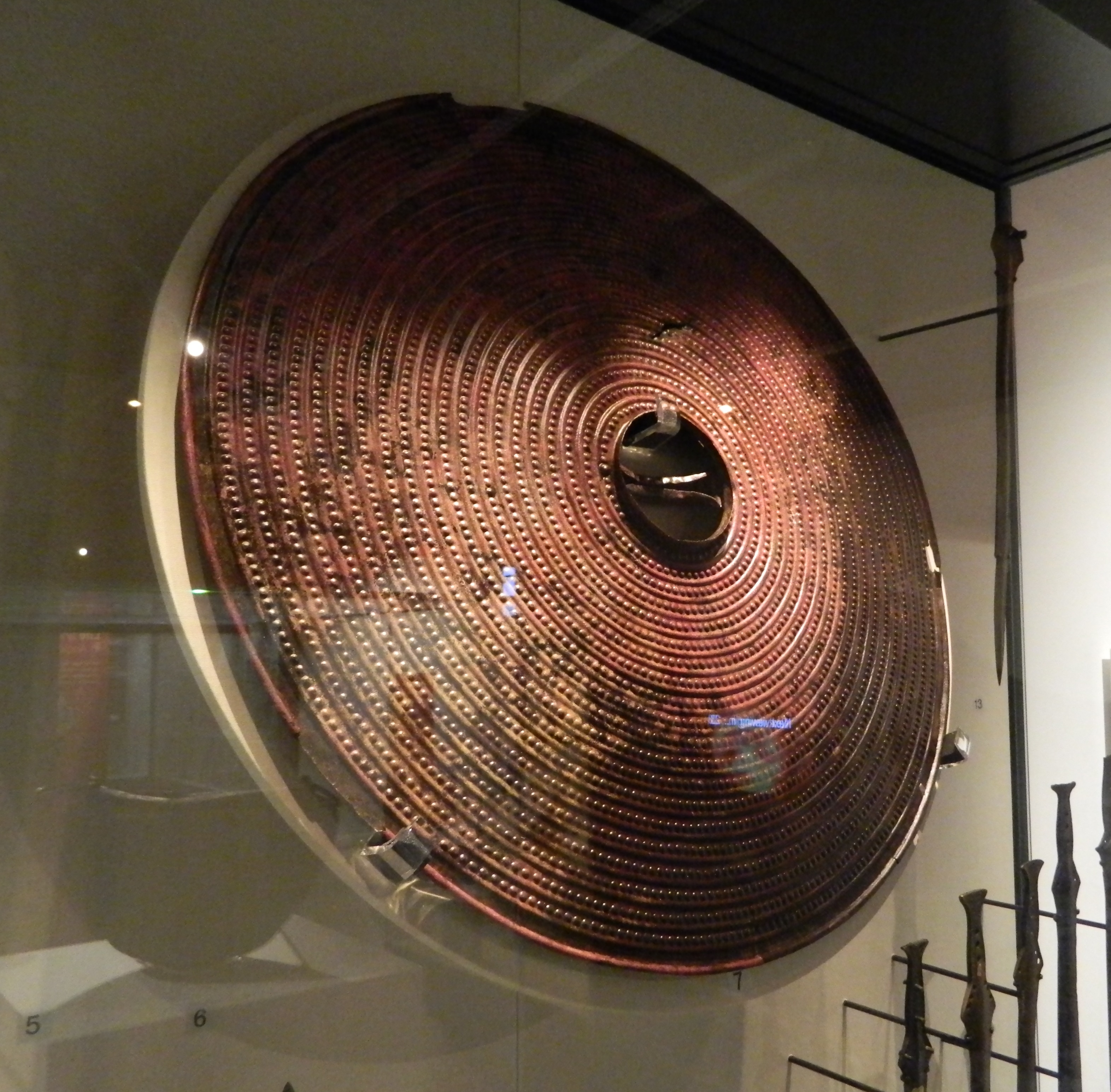
Among the museum's most prized holdings are treasures recovered from the wreck of the Girona, a galleass of the Spanish Armada that sank off the Antrim coast in 1588. The Girona collection includes gold and silver jewellery, coins, and navigational instruments recovered from the seabed. The archaeology collection extends far deeper in time, with artefacts from Ireland's earliest human settlement through the medieval period. The museum's geology and natural science galleries display specimens of Irish flora, fauna, and mineral wealth. Ethnographic collections broaden the scope beyond Ireland entirely, placing the island's story within a global context. The numismatic collection traces economic history through coins and currency, while industrial archaeology exhibits document Northern Ireland's manufacturing heritage.
Art in the Botanic Gardens
Since the 1940s, the Ulster Museum has built a strong collection of modern Irish art, with particular emphasis on Ulster-based artists. The fine and applied art holdings include painting, sculpture, ceramics, glass, and textiles spanning centuries. The museum sits within the Botanic Gardens, itself a Victorian pleasure ground established in the 1820s, making the approach to the museum a walk through one of Belfast's most attractive public spaces. The Palm House, a curvilinear iron and glass conservatory predating the Crystal Palace, stands nearby. The museum and its gardens together form a cultural precinct in the heart of south Belfast's university district, close to Queen's University and the Lagan towpath.
A Museum Reborn
The three-year closure and renovation that ended in 2009 reimagined how the museum's collections are presented. Around 8,000 square metres of public display space was reorganised to move visitors through themed floors: nature, art, and history. Interactive elements and modern exhibition design replaced some of the older static displays, though the Brutalist architecture still imposes its own aesthetic logic on the experience. The museum is one of four institutions in the National Museums Northern Ireland network, alongside the Ulster Folk Museum, the Ulster Transport Museum, and the Ulster American Folk Park. Admission is free. For a city that has spent decades rebuilding both its infrastructure and its self-image, the Ulster Museum represents something valuable: a place where Belfast's full story -- geological, historical, artistic, industrial -- is gathered under one roof and offered without charge to anyone who walks through the door.
From the Air
Located at 54.59°N, 5.93°W in the Botanic Gardens in south Belfast, adjacent to Queen's University. The museum and gardens form a green rectangle visible from lower altitudes. Belfast City Airport (EGAC) is approximately 4 km to the northeast. The River Lagan runs roughly parallel to the east. The Botanic Gardens' distinctive Palm House glasshouse is visible nearby.