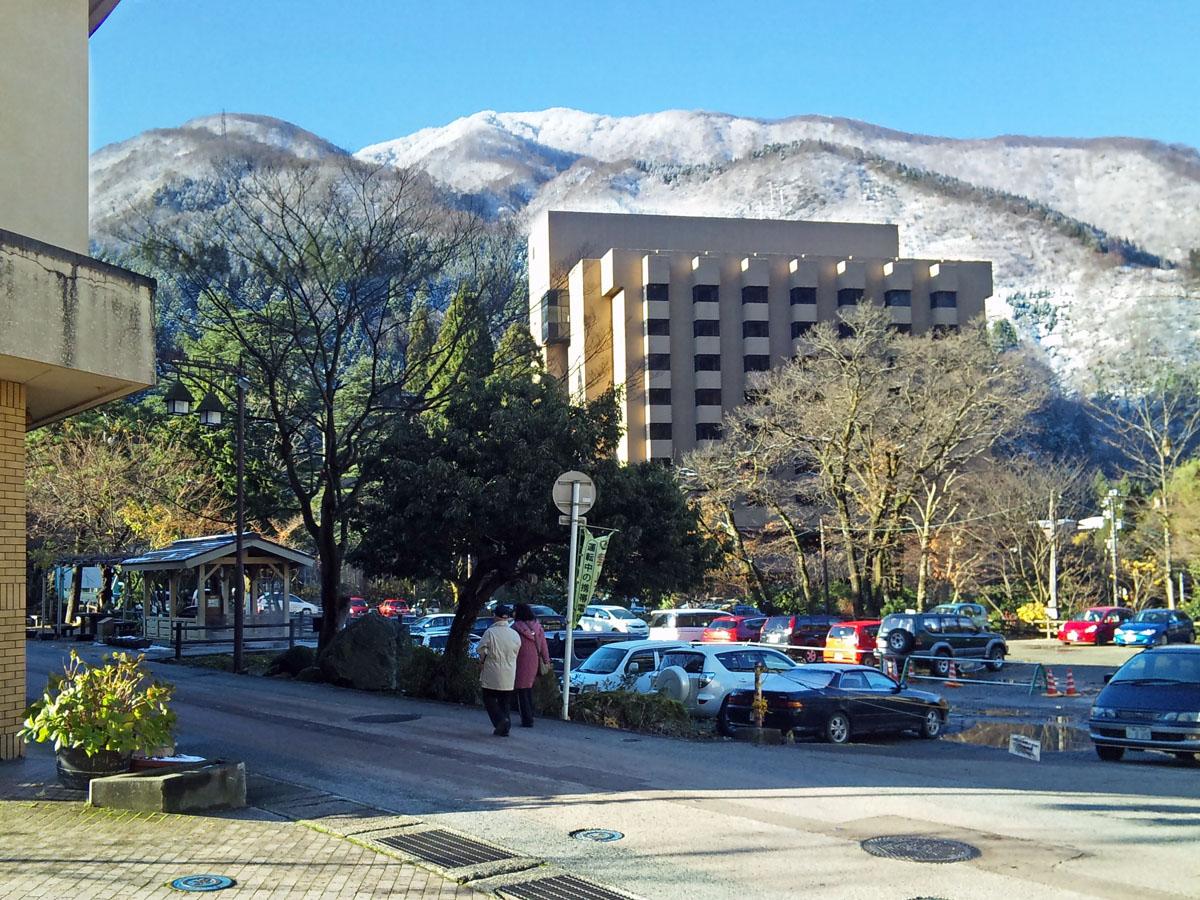
Unazuki Onsen
The hot spring water at Unazuki does not come from beneath the town. It arrives through a 7-kilometer pipe from Kuronagi Onsen, a remote spring hidden deeper in the Kurobe Gorge, and the water is so clear that Unazuki's baths have earned the nickname "Beauty's Bath" -- a mildly alkaline soak said to be among the most transparent thermal waters in Japan. The town itself sits at the entrance to the gorge, a narrow slot carved by the Kurobe River through the mountains of Toyama Prefecture, and since 1923 it has served as the gateway between the civilized coast and one of the wildest landscapes in the Japanese Alps.
Born from the Dam Builders' Railroad
Unazuki Onsen did not exist before the railroad arrived. The town opened in 1923, during the Taisho period, when construction crews building hydroelectric facilities along the Kurobe River laid tracks into the gorge. The Kurobe Gorge Railway -- originally an industrial line hauling materials for dam construction -- brought workers, and the workers needed somewhere to rest. Hot springs were tapped, inns were built, and by the time the railway opened to regular passengers in 1953, the town had transformed from a construction camp into a resort. The railway itself became a tourist attraction: a narrow-gauge trolley train that travels 20 kilometers from Unazuki into the gorge, crossing 21 bridges and passing through 41 tunnels at a leisurely 16 kilometers per hour.
Into the Gorge by Trolley
The Kurobe Gorge Railway is not an ordinary train ride. The open-air trolley cars -- some with windows, some without -- rattle along a track clinging to the walls of one of Japan's deepest gorges, the Kurobe River churning far below. Highlights along the route include the 60-meter-high Atobiki Prospect and Sarutobi Gorge, where the Kurobe and Babadani rivers meet. The line terminates at Keyakidaira Station, deep in the mountains, where hikers can access trails and additional hot springs. The railway was set up as a subsidiary of Kansai Electric Power Company in 1971 -- the same utility that operates the Kurobe Dam upstream -- and the journey remains one of the most scenic rail experiences in Japan, a slow passage through a landscape that feels impossibly steep and green.
Poets, Painters, and the Selene Museum
Over the decades, Unazuki's combination of hot water and mountain scenery has drawn poets and writers seeking inspiration. The town leans into its cultural identity. The Selene Museum of Art, housed in the nearby Unazuki International Center, features works by Japanese artists, much of it focused on the natural environment of the Kurobe Gorge -- paintings and sculptures that attempt to capture the scale of the cliffs, the color of the river, and the shifting light in a canyon that is often filled with mist. The collection serves as a reminder that this landscape has been as much a subject for art as for engineering, even as the hydroelectric infrastructure that made the town possible hums away upriver.
A Century of Steam and Snow
Unazuki Onsen celebrated its 100th anniversary in 2023, a full century of welcoming visitors to the edge of the gorge. The town remains the largest hot spring resort in Toyama Prefecture, with ryokan and hotels lining streets that slope toward the river. A ski resort opened here in 1956, adding a winter dimension to a town that had been primarily a warm-weather destination. Access has improved steadily -- the Hokuriku Shinkansen now connects to the area via JR West, and the Toyama Chiho Railway runs a local line to Unazuki Station. But the essential experience has not changed: arrive at the mouth of the gorge, soak in water piped from deep in the mountains, and board a small train that carries you into a landscape that looks like it has not been touched since the rivers first carved it.
From the Air
Located at 36.817N, 137.582E at the entrance to the Kurobe Gorge in the Hida Mountains of Toyama Prefecture. The gorge runs roughly south from Unazuki into increasingly steep terrain. The Kurobe Gorge Railway line is visible as a narrow corridor with bridges and tunnel entrances along the river. The town sits at approximately 230 meters elevation, but the surrounding mountains rise steeply to over 2,000 meters within a few kilometers. Nearest airport: Toyama Airport (RJNT), approximately 30nm west-southwest. The gorge terrain creates significant turbulence and wind shear hazards at low altitude -- maintain safe clearance above ridgelines. Mountain weather can change rapidly; cloud formation in the gorge is common in afternoon hours.