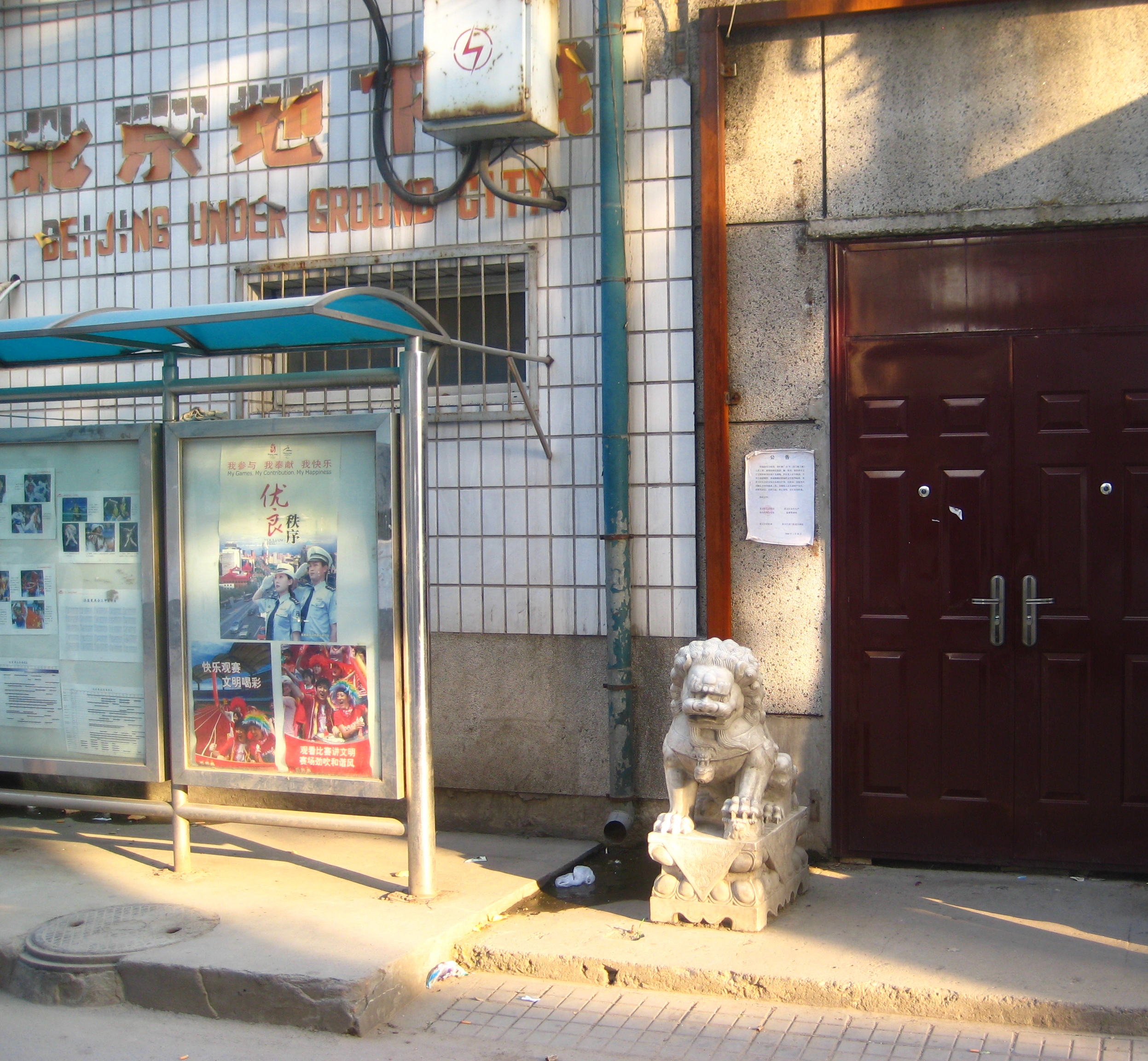
Underground City (Beijing)
Beneath the shops and hutongs of central Beijing lies a parallel city. Between 1969 and 1979, as Sino-Soviet relations deteriorated toward the edge of nuclear war, more than 300,000 Beijing residents -- including school students -- dug a network of tunnels designed to shelter half the city's population. The other half would evacuate to the Western Hills. Known as Dixia Cheng, or simply the Underground City, this labyrinth was equipped with gas-proof hatches, thick concrete blast doors, hospitals, cinemas, and arsenals. It was never used for its intended purpose. It has never been fully abandoned, either.
Digging Against Doomsday
The construction campaign reflected genuine terror. The 1969 Sino-Soviet border conflict had brought the two nuclear powers to the brink, and Mao Zedong's government prepared for the worst. Citizens were organized into volunteer construction brigades, and some portions of the tunnels were dug by hand, without heavy machinery. The price of survival infrastructure extended to the city above: centuries-old city walls, towers, and gates -- including the historic gates of Xizhimen, Fuchengmen, and Chongwenmen -- were demolished to supply construction materials. The tunnel network reportedly linked all areas of central Beijing, from Xidan and Xuanwumen to Qianmen and the Chongwen district, extending all the way to the Western Hills. Rumor held that every residence once had a secret trapdoor nearby leading underground.
A City Beneath the City
The tunnels stayed cool in summer and warm in winter, and Beijing's residents found practical uses for them long after the nuclear threat receded. On busy commercial streets, sections were converted into budget hotels. Other stretches became underground shopping centers, business offices, or makeshift theaters. Fading murals of citizens volunteering to dig the tunnels shared wall space with portraits of Mao Zedong and slogans like 'Accumulate Grain' and 'For the People: Prepare for War, Prepare for Famine.' In rooms not open to visitors, decayed cardboard boxes of water purifiers sat beside rows of bunk beds, the supplies of an apocalypse that never came.
Tourists and Silkworms
When the complex was officially opened to visitors in 2000, foreign tourists entered through a small shop front at 62 West Damochang Street in Qianmen, south of Tiananmen Square. The official tour followed a small circular route past chambers labeled with their original functions -- cinema, hospital, arsenal -- and past signposts pointing toward Tiananmen Square and the Forbidden City, accessible by tunnels that visitors could not follow. One detour led through a functioning silk factory installed in what had been an underground staff meeting room, where workers demonstrated the process of extracting silk from silkworm cocoons. The Underground City was described as 'dark, damp, and genuinely eerie.' It attracted foreign visitors while remaining virtually forgotten by Beijing's own residents.
Closed Doors, Open Questions
The complex has been closed for renovation since at least February 2008, and many entrances have since been demolished or blocked off for reconstruction. Local authorities still perform water leakage checks and pest control in the tunnels on a regular basis, maintaining infrastructure built for a threat that has evolved rather than vanished. The Underground City remains one of Beijing's strangest paradoxes: a massive public works project built by hundreds of thousands of hands, threaded beneath one of the world's great capitals, that most residents walk over every day without knowing it is there.
From the Air
Located at 39.90N, 116.41E beneath central Beijing, south of Tiananmen Square in the Qianmen area. The tunnels are entirely underground and invisible from the air. Nearest airports are Beijing Daxing International (ZBAD) and Beijing Capital International (ZBAA). The Qianmen area is identifiable from altitude by its position directly south of Tiananmen Square.