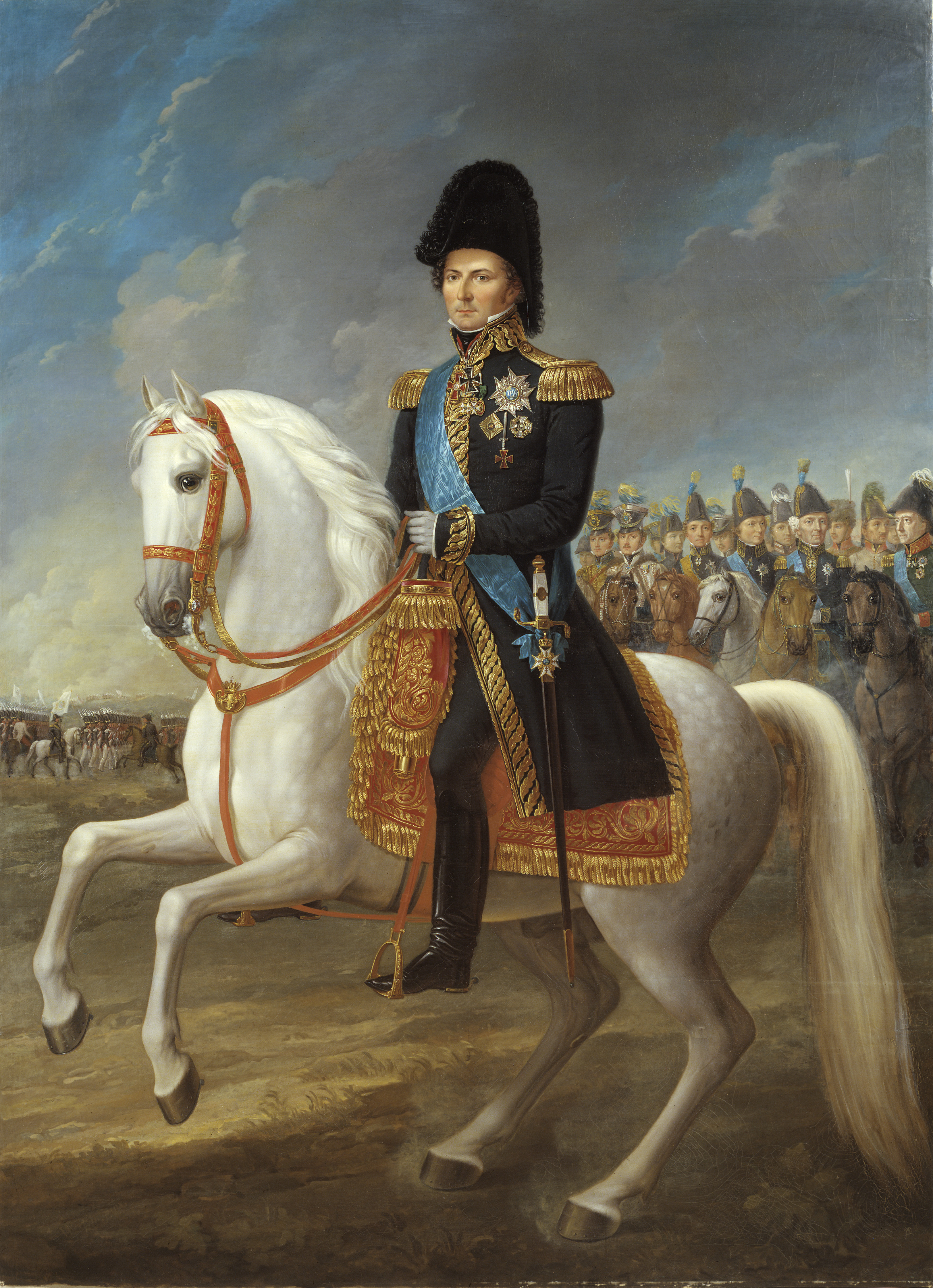
Union between Sweden and Norway
On 7 June 1905, the Norwegian Storting declared the union with Sweden dissolved. No armies mobilized. No borders were stormed. After 91 years of shared monarchy, shared foreign policy, and deep mutual frustration, two kingdoms simply agreed to go their separate ways. It remains one of the few examples in modern history of a political union ending without violence, and the story of how it came together is almost as unlikely as the story of how it came apart.
Napoleon's Unintended Gift
The union was born from war, though not a war between Sweden and Norway. During the Napoleonic conflicts, Denmark-Norway found itself allied with France after Britain attacked the Danish fleet at Copenhagen in 1807. Sweden, having lost Finland to Russia in 1809, aligned with Britain and Russia. The price of Denmark's miscalculation came due in January 1814, when the Treaty of Kiel ceded Norway to the Swedish king. The treaty's wording was careful: Norway was given to the King of Sweden, not to the Kingdom of Sweden, a distinction that would matter enormously. Norwegians, who had been under Danish rule for over four centuries, were not inclined to accept being handed over like property. A constitutional assembly convened at Eidsvoll in April 1814, drafted a constitution in six weeks, and elected the Danish prince Christian Frederik as king. Sweden responded with a brief military campaign. The war lasted about two weeks, ended with the Convention of Moss, and produced an odd result: Sweden won on the battlefield but agreed to accept Norway's constitution. Both sides could claim a kind of victory.
Two Crowns, One Throne
What followed was less a marriage than an arrangement. Sweden and Norway shared a monarch and a foreign policy, but nearly everything else remained separate: constitutions, laws, parliaments, churches, armies, and currencies. The king resided mostly in Stockholm, where foreign diplomats were posted. Norwegian government was initially run by Swedish viceroys, a practice that ended in 1829 after significant Norwegian protest. The Act of Union, negotiated in 1815, tried to formalize the relationship in twelve articles, but the fundamental tension was never resolved. Sweden saw itself as the senior partner. Norway saw itself as an equal kingdom that happened to share a king. These competing visions would grind against each other for nine decades. Even the national flag became a battleground: Norwegians wanted their own distinct flag, while Sweden insisted on union symbols. The compromise, a shared merchant flag adopted in 1818, satisfied neither side.
The Slow Unraveling
By the late nineteenth century, Norway's economy, merchant marine, and national identity had outgrown the union's constraints. The consular question became the breaking point. Norway's booming shipping industry needed its own consular service abroad, but foreign affairs remained under Swedish control. Repeated attempts to negotiate separate Norwegian consuls failed. In May 1905, the Storting passed legislation establishing its own consular service. King Oscar II vetoed the bill, as was his constitutional right. The Norwegian cabinet then resigned, and the king declared he could not accept their resignation because no alternative government could be formed. The Norwegians seized on this deadlock. On 7 June, the Storting declared that the king had ceased to function as Norwegian monarch, and therefore the union built on a shared monarchy no longer existed. It was dissolution by constitutional logic rather than revolution.
A Parting Without Blood
Tensions ran high through the summer of 1905. Both countries mobilized troops near the border, and war seemed possible. But negotiations at Karlstad in September produced an agreement: Norway would demolish some border fortifications, a plebiscite would confirm the Norwegian people's desire for independence, and the union would end formally. The plebiscite was overwhelming: 368,208 voted for dissolution, only 184 against. On 26 October, Sweden formally recognized Norwegian independence. Prince Carl of Denmark was elected Norwegian king, taking the name Haakon VII. A monument erected on the city square in Karlstad in 1955 commemorates the fiftieth anniversary of the dissolution. The peaceful separation became a point of pride for both nations, evidence that even the deepest political disagreements need not end in bloodshed. In the Scandinavian mountains along the old border, the fortifications that Norway agreed to demolish have long since crumbled. The border itself is one of the quietest in Europe.
From the Air
Coordinates centered at 62.23°N, 12.28°E in the Scandinavian mountain border region between Norway and Sweden. The terrain below encompasses the historically contested border areas of the two kingdoms. Key related locations include Eidsvoll (Norway, site of the 1814 constitutional assembly), Karlstad (Sweden, site of 1905 dissolution negotiations), and the Norwegian-Swedish border. Nearest airports: Trondheim Værnes (ENVA) to the northwest, Östersund Airport (ESNZ) to the east. Altitude recommendation: 8,000-12,000 feet for panoramic views of the mountain border landscape.