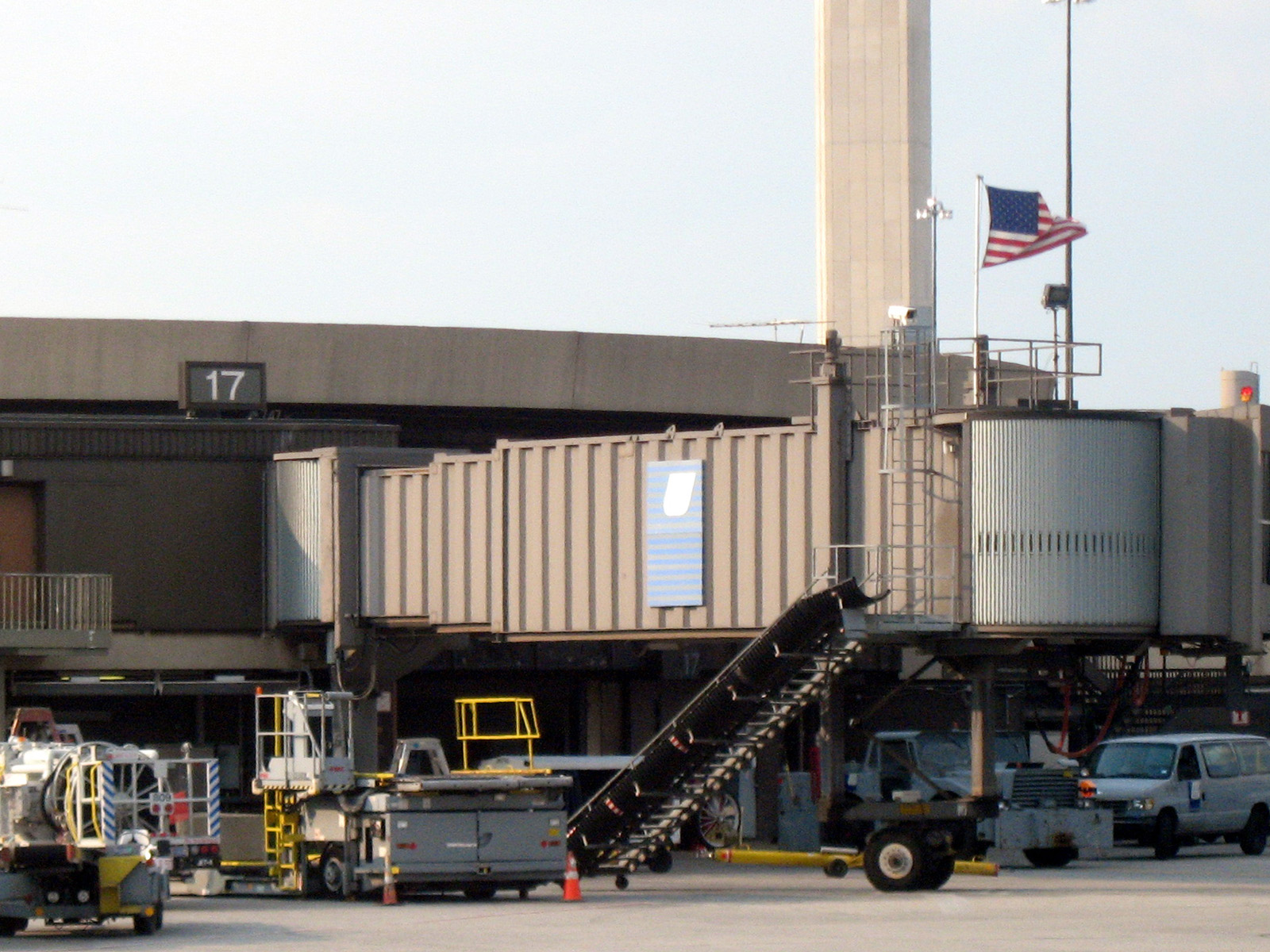
United Airlines Flight 93
Lauren Grandcolas called her husband twice that morning. He missed both calls. She left a voicemail at 9:39 AM: calm, measured, telling him not to worry. By that point, four hijackers had already taken control of United Airlines Flight 93, a Boeing 757 bound from Newark to San Francisco. What happened in the next 24 minutes is one of the defining stories of September 11, 2001 -- not because of what was destroyed, but because of what was saved. The 33 passengers and 7 crew members aboard Flight 93 learned, through frantic phone calls to the ground, that two planes had already struck the World Trade Center and another had hit the Pentagon. They understood they were aboard a guided missile. And they decided, by vote, to fight.
Twenty-Four Minutes
The hijacking began around 9:28 AM, roughly 46 minutes after takeoff. The four hijackers -- led by Ziad Jarrah, the pilot among them -- stabbed a passenger and a flight attendant, stormed the cockpit, and turned the plane south toward Washington, D.C. Their intended target was likely the U.S. Capitol or the White House, though accounts from captured al-Qaeda operatives differ on which. Flight 93 had departed Newark 25 minutes late, and that delay changed history. By the time the hijackers made their move, the attacks on New York and the Pentagon were already on television. Passengers began calling from airphones and cell phones. Todd Beamer reached a GTE supervisor named Lisa Jefferson. Tom Burnett called his wife four times. Linda Gronlund left a voicemail for her sister: 'There are men with a bomb.' CeeCee Lyles, a flight attendant, called her husband and told him the plane had been hijacked. The passengers gathered information, shared it, and made a plan.
Let's Roll
The passenger revolt began at 9:57 AM. Beamer told Jefferson that he and several others were going to 'jump' the hijacker guarding the cabin. His last audible words were 'Are you guys ready? Let's roll.' The cockpit voice recorder captured what followed: three shouts of pain from a hijacker outside the cockpit door, suggesting the passengers overwhelmed the guard. CeeCee Lyles called her husband a final time to say the passengers were forcing their way into the cockpit. The hijackers rocked the plane violently, rolling it left and right to throw the attackers off balance. A hijacker asked, 'Is that it? Shall we finish it off?' Another replied, 'No. Not yet. When they all come, we finish it off.' The 9/11 Commission concluded that the hijackers retained control of the aircraft but 'must have judged that the passengers were only seconds from overcoming them.' Vice President Dick Cheney, deep beneath the White House in the Presidential Emergency Operations Center, had authorized the military to shoot Flight 93 down -- but two F-16 pilots scrambled from the D.C. Air National Guard never reached the plane. They had intended to ram it, since there was no time to arm their jets.
Impact
At 10:03:11 AM, Flight 93 slammed into a field near Shanksville, Pennsylvania, at the Diamond T. Mine, a reclaimed coal strip mine owned by PBS Coals in Stonycreek Township, Somerset County. The remaining fuel exploded in a fireball that scorched a nearby hemlock grove. A third of the aircraft, including the cockpit, continued into surrounding woods, demolishing trees. The rest buried itself in the soft fill dirt that had been hauled to the mine site for reclamation in the 1990s. Local resident Kelly Leverknight heard the plane and ran to her front door: 'It was headed toward the school, which panicked me, because all three of my kids were there. Then you heard the explosion and felt the blast.' Val McClatchey grabbed her camera and captured the only known photograph of the smoke cloud. First responders arrived minutes later to find a crater, scattered debris, and no survivors. The coroner ruled everyone aboard died instantly of blunt-force trauma. Investigators later found 1,500 fragments of human remains totaling about eight percent of the passengers; the rest were consumed by the impact.
What Remained
Recovery teams located the flight data recorder on September 13 and the cockpit voice recorder the following day, buried 25 feet below the crater. Light debris -- paper, nylon fragments -- scattered up to eight miles from the impact point, reaching New Baltimore, Pennsylvania. All 44 people on board were eventually identified by December 21, 2001. Death certificates listed the cause of death for the 40 passengers and crew as homicide, and for the four hijackers as suicide. The FBI allowed families to listen to the cockpit voice recording in a closed session on April 18, 2002, though the full audio has never been released to the public. The passengers and crew were posthumously nominated for the Congressional Gold Medal on September 19, 2001; it was formally granted on September 11, 2014. The medal's inscription reads: 'A common field one day, a field of honor forever.' Todd Beamer's phrase 'let's roll' entered the national vocabulary. United Airlines permanently retired flight numbers 93 and 175.
A Field Becomes a Memorial
The crash site drew mourners immediately. Visitors left tributes on a chain-link fence overlooking the field. A national design competition in 2005 selected 'Crescent of Embrace' from over 1,000 entries; the design was later modified to a circle bisected by the flight path. The white marble Wall of Names was dedicated on September 10, 2011, the day before the tenth anniversary. The visitor center opened in 2015. The Tower of Voices, holding 40 wind chimes tuned to different pitches, was completed in 2018. On June 21, 2018, the recovered wreckage of Flight 93 -- stored in shipping containers since the crash -- was buried at the crash site in a private ceremony. Today the memorial is managed by the National Park Service. The crash site itself remains off-limits to the public; it is still a grave. From the observation platform, visitors look across an open meadow to the boulder marking the impact point, in a landscape of deliberate quiet.
From the Air
The crash site is located at 40.051°N, 78.905°W in Stonycreek Township, Somerset County, Pennsylvania, at approximately 2,550 feet elevation. From altitude, the memorial appears as a designed landscape in otherwise rural Appalachian terrain -- the circular tree pathway, the white Wall of Names, and the Tower of Voices are distinguishable from lower altitudes. The impact crater is within the memorial grounds. Nearest airports: Somerset County Airport (2G9) about 10 miles south, Johnstown-Cambria County Airport (KJST) 20 miles north, and Pittsburgh International Airport (KPIT) 80 miles northwest. The plane was approximately 20 minutes' flying time from Washington, D.C. when it crashed. Terrain is rolling ridges and valleys with moderate turbulence possible; visibility can be limited by fog, especially in fall.