United Indians of All Tribes
In March 1970, a group of Native Americans climbed the fence at Fort Lawton, a surplus Army base on Seattle's Magnolia Bluff, and refused to leave. The Army arrested them. They came back. The occupation lasted weeks, drawing national attention and support from Indigenous activists across the country. What emerged was not just a political victory but an institution: the United Indians of All Tribes Foundation, which secured a 99-year lease on 20 acres of what became Discovery Park and built the Daybreak Star Cultural Center on land the U.S. military no longer needed but that Indigenous people had never stopped needing.
The Man Who Stayed
Bernie Whitebear led the foundation from its founding in 1970 until shortly before his death from cancer in 2000. A member of the Colville Confederated Tribes, Whitebear possessed a rare combination of political savvy and relentless persistence. He negotiated with Governor Daniel J. Evans for a $1 million construction grant from Washington State. He secured $80,000 from the Seattle Arts Commission for artwork in the building's interior, then joined the commission himself. He brought donations from tribes and corporations, including many of the building materials themselves. His brother, the designer and sculptor Lawney Reyes, laid out the philosophy, naming conventions, and organizational blueprint for the foundation, then collaborated with Northwest architect Arai Jackson to design the center. The Daybreak Star Cultural Center that opened on those 20 acres was as much Whitebear's creation as any architect's.
Where Cultures Converge
Seattle's urban Native American population is among the most diverse in the country. The Suquamish, Duwamish, Nisqually, Snoqualmie, and Muckleshoot have deep roots in the Puget Sound region, but the city has also drawn Alaskan Natives and Native Americans from the Inland Northwest, creating a community that blends Coast Salish, Tlingit, Haida, and Plateau Indian cultures. The 2000 Census counted 86,649 American Indians and Alaska Natives in the Seattle-Tacoma-Bremerton area. UIATF serves this community from Daybreak Star, running programs that range from Indian child welfare and elder services to substance abuse treatment and housing for homeless youth. The Labateyah Youth Home, a 25-bed facility in Seattle's Crown Hill neighborhood operating since 1992, takes its name from the Lushootseed word for "the transformer." About a quarter of its residents are Native American; the rest are young people from other communities who need the same help.
Sacred Circle
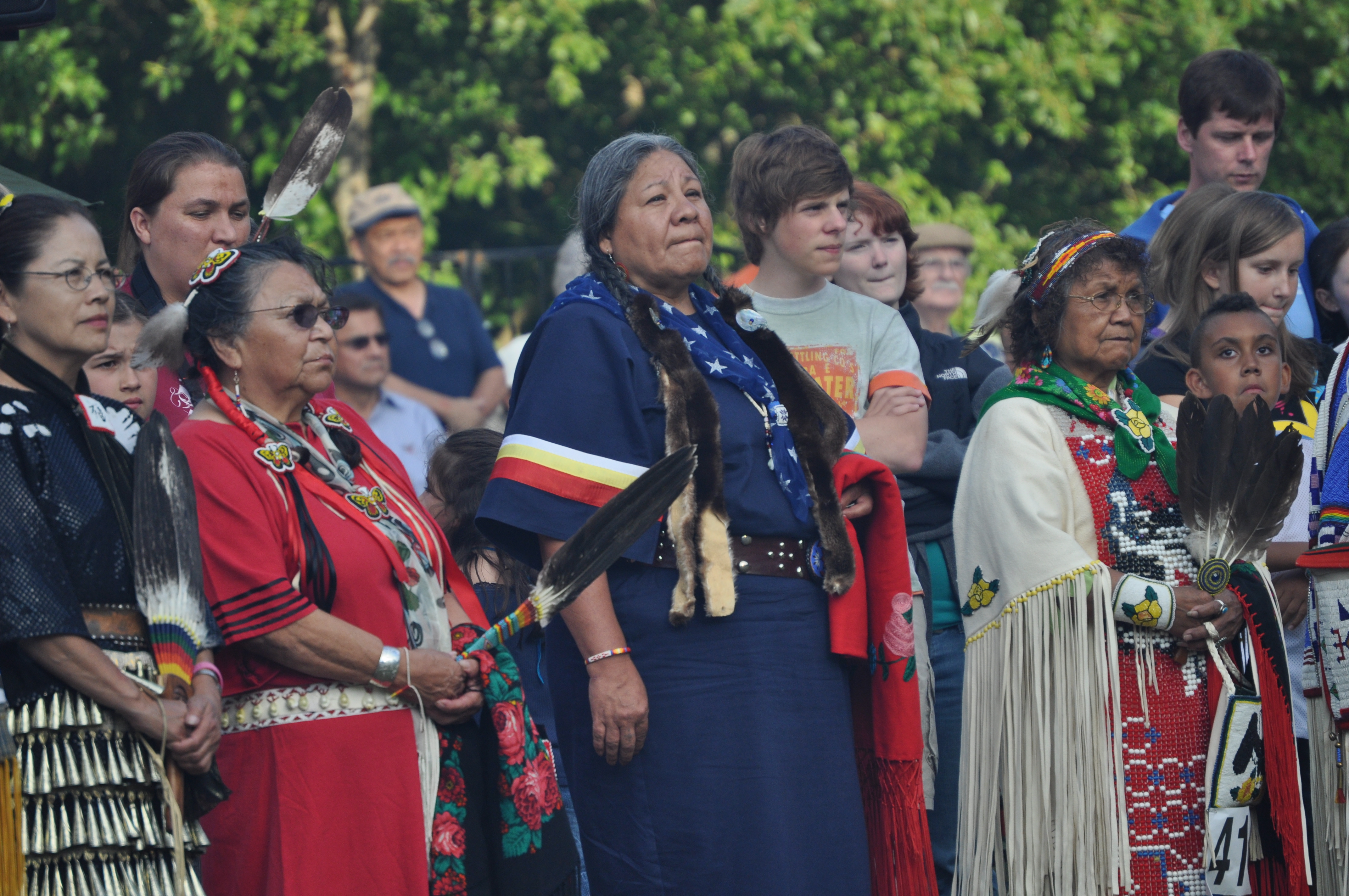
In 1975, the foundation opened the Sacred Circle Art Gallery at Daybreak Star, dedicating it to contemporary work by Native artists. For more than two decades, the gallery featured pieces by renowned artists including James Lavadour, Edgar Heap of Birds, and Marvin Oliver. After Whitebear's death, new leadership reorganized the space, renaming it the Daybreak Star Indian Art Gallery, consolidating two viewing rooms into one, and shifting focus. The gallery continues to host exhibitions and art markets throughout the year, though longtime supporters note the change in direction. The foundation also organizes the annual Seafair Indian Days powwow, held during Seattle's summertime Seafair festival. It draws tribal members from Washington, Oregon, Idaho, Montana, and Canada, making it one of the largest powwows in the Pacific Northwest -- a gathering that fills Discovery Park with drumming, regalia, and the sounds of traditions that predate the city by millennia.
Unfinished Work
Whitebear dreamed bigger than one building. Before his death, he envisioned a People's Lodge at Daybreak Star that would include a Hall of Ancestors, a Potlatch House, a theater, and a museum. He planned a Pacific Northwest Indian Canoe Center on South Lake Union, near downtown. He proposed the Bernie Whitebear Center for Human and Community Development in White Center, an unincorporated area between Seattle and Burien with a growing Native American population. A $3.5 million grant from the Northwest Area Foundation in 2007 was meant to advance several of these projects. Some remain in planning stages; the People's Lodge has been indefinitely postponed for financial reasons. The foundation operates today with an annual budget of approximately $4.5 million, a figure that reflects both the scope of its mission and the constraints it works within. Whitebear's vision remains the blueprint. The building continues.
From the Air
Located at 47.69N, 122.37W within Discovery Park on Seattle's Magnolia Bluff, the largest park in the city at 534 acres. The park's West Point Lighthouse on the Puget Sound shoreline is a prominent visual landmark from the air. The Daybreak Star Cultural Center sits in the northern portion of the park. Nearest airport is Boeing Field/King County International (KBFI), approximately 7 nm south-southeast. The Ballard Locks and Ship Canal to the north provide additional orientation. Best viewed from 2,000-3,000 ft AGL.