United States Astronaut Hall of Fame
Gus Grissom's spacesuit is still the subject of a family argument. NASA says he borrowed it for show-and-tell at his son's school in the early 1960s and never brought it back. The Grissom family insists he rescued it from a scrap heap, and therefore it belongs to them. The suit -- the one Grissom wore during his 1961 Liberty Bell 7 Mercury flight -- now sits in a display case inside the United States Astronaut Hall of Fame at Kennedy Space Center's Visitor Complex on Merritt Island, Florida. It is the kind of artifact that captures this museum perfectly: not a replica, not a reconstruction, but the real thing, carrying the wear marks of actual spaceflight and the complications of real human lives.
Seven Men and an Idea
The Hall of Fame exists because the Mercury Seven made it happen. In the 1980s, the six surviving members of America's original astronaut corps -- John Glenn, Scott Carpenter, Wally Schirra, Gordon Cooper, Alan Shepard, and Deke Slayton -- decided that U.S. space travelers deserved a dedicated shrine, something comparable to the halls of fame honoring athletes and musicians. Their inaugural class, inducted in 1990, was themselves. The symmetry was deliberate. These were the men who had first ridden rockets for their country: Shepard, who became the first American in space aboard Freedom 7 in 1961; Glenn, who orbited Earth three times in Friendship 7 in 1962 and returned to space in 1998 at age 77; and Grissom, who flew twice before dying in the Apollo 1 fire on January 27, 1967 -- the first astronaut deaths directly attributed to preparation for spaceflight.
The Expanding Pantheon
The second class, in 1993, brought in thirteen Gemini and Apollo astronauts: Neil Armstrong, the first human to walk on the Moon, and Eugene Cernan, the last. Ed White, the first American to walk in space, who also perished in the Apollo 1 fire. Jim Lovell, who commanded Apollo 13 through its near-fatal journey home. John Young, whose six flights spanned Gemini, Apollo, and the first Space Shuttle mission. The third class in 1997 swept in every remaining pioneer-era astronaut, including Roger Chaffee -- the only unflown astronaut in the Hall -- and Harrison Schmitt, the first scientist to walk on the Moon. After that, induction became selective. Shuttle-era astronauts earned their places through extraordinary accomplishment: Sally Ride, the first American woman in space; Story Musgrave, who flew six missions; Francis Scobee, commander of the final Challenger flight. By 2025, the Hall had honored well over a hundred explorers.
Capsules and Complications
The centerpiece exhibits are spacecraft that actually flew. Sigma 7, the Mercury capsule Wally Schirra piloted through six Earth orbits in 1962, sits in the Hall alongside the Gemini 9A capsule that Gene Cernan and Thomas Stafford flew in 1966. The Memorabilia collection surrounding them is the world's largest devoted to American astronauts, filled with personal items the space travelers themselves donated. But the Hall's own history has been turbulent. In 2002, low attendance and mounting debt led the U.S. Space Camp Foundation's creditors to foreclose. Delaware North purchased the property at auction on behalf of NASA that September, and the facility reopened on December 14, 2002. In 2015, the original location west of the NASA Causeway closed permanently, and the entire collection moved six miles east to the Kennedy Space Center Visitor Complex's Heroes & Legends building on Merritt Island.
A Living Chronicle
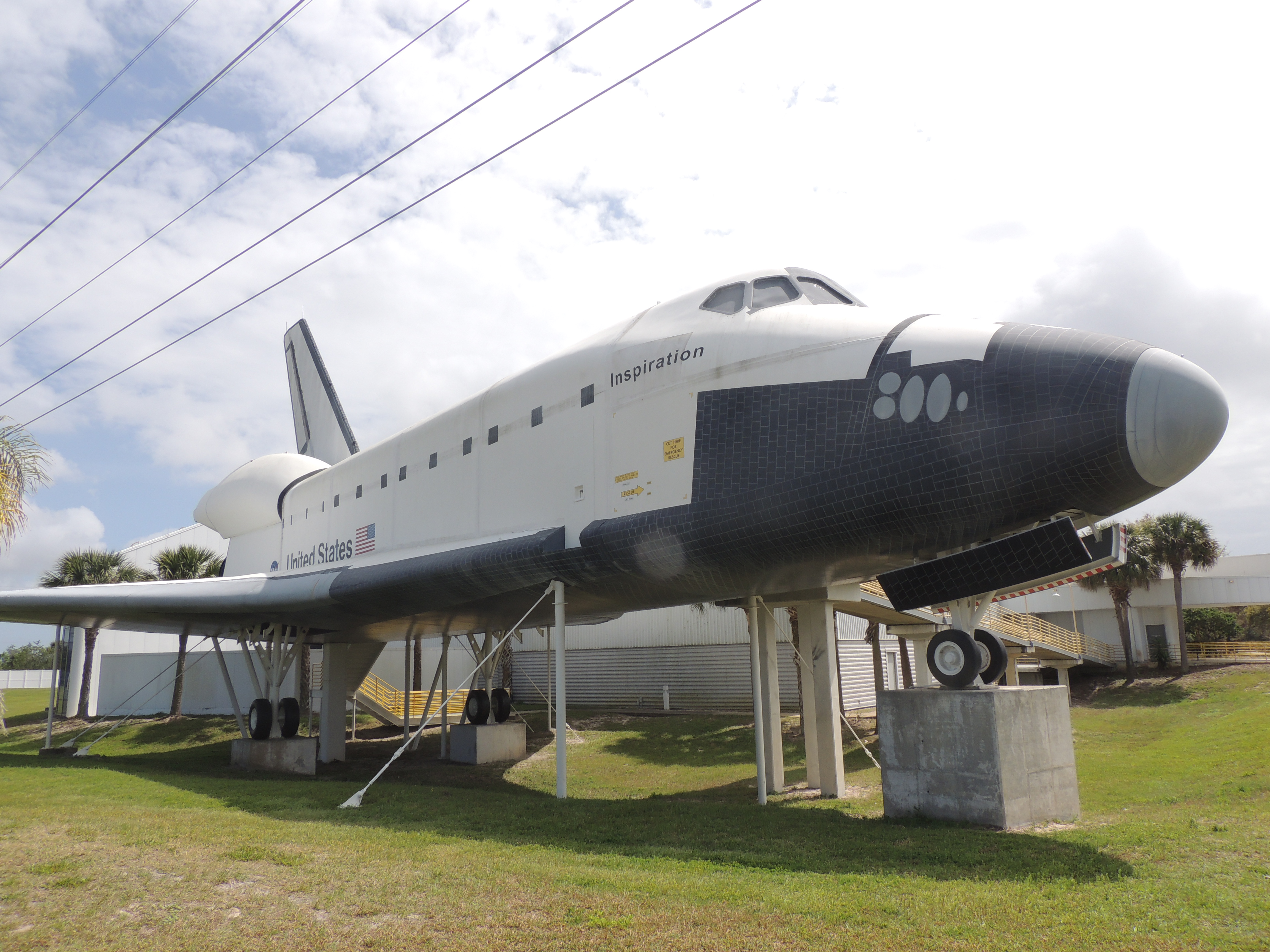
What separates the Astronaut Hall of Fame from a conventional museum is that it keeps growing. A blue ribbon committee of former NASA officials, flight controllers, historians, and journalists selects new inductees annually based on accomplishments in space or contributions to exploration. The 2025 class honored Bernard Harris Jr. and Peggy Whitson. Outside the original building, a full-scale Space Shuttle replica named Inspiration once stood as a static display before being barged away for refurbishment in 2016. The original building itself was renamed the ATX Center and leased to Lockheed Martin in 2020 for work on the Orion crew capsule -- the very spacecraft designed to carry astronauts deeper into space than any Hall of Famer has yet ventured. The building that once celebrated the past now helps build the future.
From the Air
The United States Astronaut Hall of Fame is located within the Kennedy Space Center Visitor Complex on Merritt Island, Florida, at approximately 28.523N, 80.683W. The Visitor Complex campus is visible from the air adjacent to the massive Vehicle Assembly Building and the Crawlerway. The complex sits between the Banana River to the west and the Atlantic Ocean to the east. Nearest airports: NASA Shuttle Landing Facility (KTTS) immediately adjacent, Space Coast Regional / Titusville (KTIX) 8nm northwest, Merritt Island Airport (KCOI) 10nm south, Melbourne Orlando International (KMLB) 25nm south. Overfly from the east at 2,000-3,000 feet for a panoramic view of the entire spaceport.