United States Invasion of Grenada
On the morning of October 25, 1983, some of the American soldiers parachuting onto the Point Salines airfield carried maps of Grenada torn from tourist brochures, with the landing strips drawn on by hand. Operation Urgent Fury - the United States invasion of the smallest independent nation in the Western Hemisphere - was planned in days, executed in confusion, and over within a week. What preceded it was more complicated: a Caribbean revolution, an internal betrayal, the execution of a popular leader, and the geopolitical chess of the Cold War played out on an island smaller than Detroit.
Revolution Devours Its Own
Maurice Bishop came to power in a bloodless coup on March 13, 1979, overthrowing the increasingly authoritarian Eric Gairy. Bishop's New Jewel Movement established a People's Revolutionary Government that built schools, expanded healthcare, launched a literacy campaign, and began constructing an international airport with Cuban assistance at Point Salines. For four years, Grenada was a Marxist experiment in the Caribbean, small enough to ignore, close enough to worry Washington. The trouble came from within. Deputy Prime Minister Bernard Coard, a harder-line Marxist, grew dissatisfied with Bishop's pragmatism. On October 13, 1983, Coard's faction placed Bishop under house arrest. Six days later, a crowd of supporters freed him, only for soldiers loyal to Coard to open fire, killing roughly forty demonstrators. Bishop and seven of his associates were seized and executed. A Revolutionary Military Council under General Hudson Austin declared martial law and imposed a shoot-on-sight curfew.
Six Days in October
The Reagan administration had been watching Grenada with suspicion for years, particularly the airport under construction - its 9,000-foot runway capable, Washington argued, of accommodating Soviet military aircraft. Bishop's murder provided the catalyst. The Organization of Eastern Caribbean States formally requested American intervention, and Governor-General Sir Paul Scoon reportedly made a secret appeal through diplomatic channels. The stated justification was protecting roughly 600 American medical students at St. George's University. On October 25, a combined force of U.S. Marines, Army Rangers, Navy SEALs, and the 82nd Airborne Division, joined by troops from Jamaica, Barbados, and other Caribbean nations, hit the beaches and airfields. The operation was chaotic - different military branches could not communicate on the same radio frequencies, and intelligence was poor. But Grenada's small defense force and the roughly 700 Cuban construction workers and military advisers on the island were overwhelmed within days. The students were evacuated unharmed.
The View from Both Sides
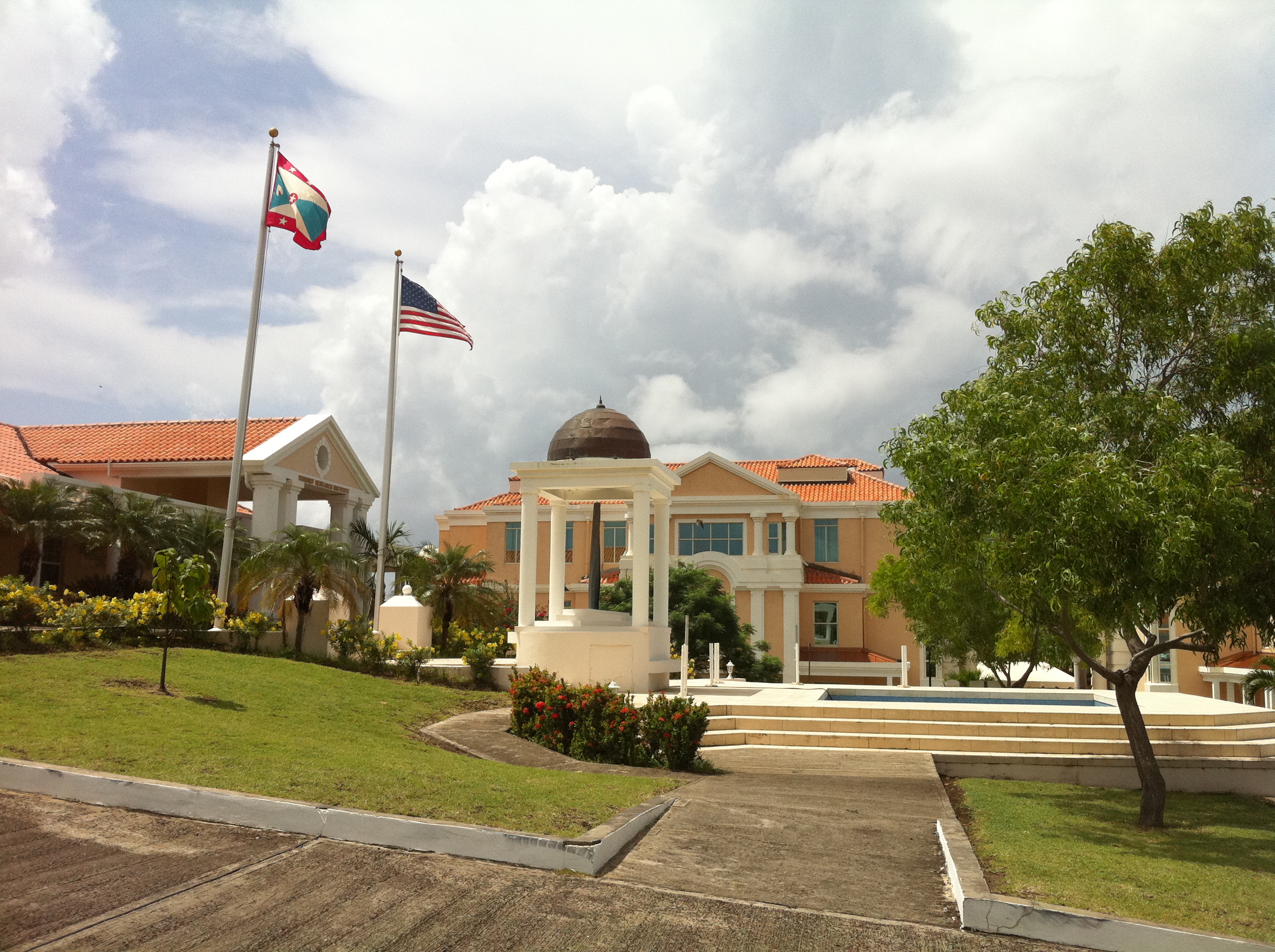
The invasion drew sharp international criticism. The United Nations General Assembly voted 108 to 9 to deplore it, and the United States vetoed a similar Security Council resolution. British Prime Minister Margaret Thatcher, a close Reagan ally, was privately furious - Grenada was a Commonwealth realm with Queen Elizabeth II as head of state, and she had been given almost no advance notice. Yet on the island itself, the response was more complex. A CBS News poll of 304 Grenadians found that 91 percent welcomed the intervention, and 85 percent said they had felt their lives were in danger under Hudson Austin's military council. October 25 is now a national holiday in Grenada, called Thanksgiving Day. St. George's University built a memorial on its True Blue campus honoring the American servicemen killed in the operation. The invasion ended something most Grenadians wanted ended - but the manner of its ending remains contested, a liberation that looked to much of the world like imperialism.
Aftershocks
The immediate aftermath was swift: Governor-General Scoon assumed power as interim head of government, an advisory council was formed under Nicholas Brathwaite, and democratic elections followed in December 1984. Reagan used the operation to proclaim that "our days of weakness are over," framing it as a cure for Vietnam Syndrome - the American public's post-Vietnam reluctance to project military force abroad. The Pentagon drew harder lessons. The communication failures and inter-service coordination problems exposed during Urgent Fury led Congress to pass the Goldwater-Nichols Act of 1986, the most sweeping reorganization of the U.S. military command structure since 1947. In 2009, the Grenadian government renamed Point Salines International Airport after Maurice Bishop. Hundreds turned out for the ceremony. Prime Minister Tillman Thomas called it an act of "the Grenadian people coming home to themselves." The revolution that Bishop started, the coup that killed him, and the invasion that followed are all woven now into one complicated national memory - honored, debated, and still not fully resolved.
From the Air
Located at 12.05N, 61.75W - the invasion centered on two airfields: Point Salines (now Maurice Bishop International Airport, TGPY/GND) on Grenada's southwestern tip, and the former Pearls Airport on the northeast coast. From altitude, the Point Salines runway is clearly visible extending into the sea on the peninsula. Fort Frederick and Fort George on the ridgelines above St. George's were key military positions. The island is only 21 miles long and 12 miles wide. Approach from the west for the sheltered Caribbean coast; the eastern Atlantic side has rougher conditions.