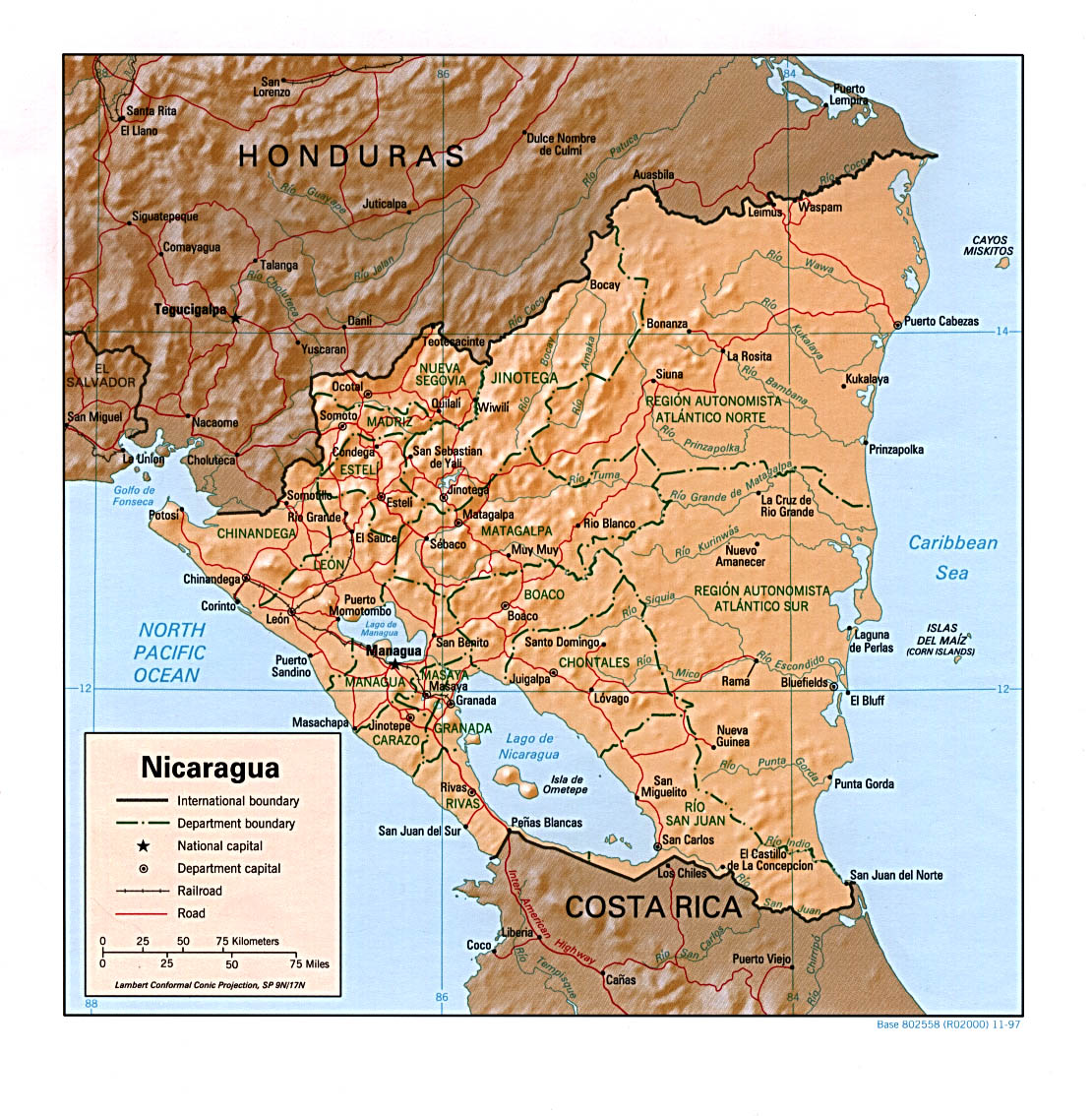
United States Occupation of Nicaragua
On August 4, 1912, one hundred American bluejackets stepped off the USS Annapolis at Managua with orders to protect the U.S. legation. They would not fully leave for twenty-one years. The United States occupation of Nicaragua -- part of what historians call the Banana Wars -- was driven by two fixations: controlling the potential route for a trans-isthmian canal, and ensuring that American banks, not European ones, held sway over Nicaraguan finances. What began as gunboat diplomacy in 1909 evolved into a full military occupation, a puppet presidency, guerrilla war in the mountains, and a withdrawal that left the country's politics permanently scarred.
Dollars for Bullets
The trouble began with a canal that was never built. By 1909, Nicaraguan President Jose Santos Zelaya had grown too independent for Washington's liking -- he was courting European and Japanese investors to finance an Atlantic-to-Pacific waterway that would compete with American interests in Panama. When Zelaya executed two Americans caught laying mines for a conservative rebellion, Secretary of State Philander C. Knox severed diplomatic relations. U.S. warships moved into position off both coasts. Zelaya resigned in December 1909, and by August 1910 the American-backed conservative Juan Jose Estrada held the presidency. President Taft's Dollar Diplomacy followed: American banks loaned money to Nicaragua's government, and the Knox-Castrillo Treaty of 1911 placed the United States in charge of much of the country's financial system. Nicaragua became, in all but name, an American protectorate.
Smedley Butler's War
When the arrangement unraveled in 1912, Washington sent in the Marines -- literally. Major Smedley Butler, already a veteran of interventions in Panama and China, arrived with 350 Marines from the Canal Zone. The spark was General Luis Mena's rebellion: insurgents had captured steamers on Lakes Managua and Nicaragua, bombarded the capital for four hours, and seized control of the railway between the port of Corinto and Managua. Admiral William Southerland commanded a flotilla of eight warships. Butler's Marines fought their way from Granada to Masaya, where insurgents held two hills -- Coyotepe and Barranca -- overlooking the vital railway. In the predawn hours of October 4, 1912, Butler's 250 Marines stormed Coyotepe while 600 Marines under Colonel Pendleton converged from the opposite side. The rebels broke. Their leader, Benjamin Zeledon, was killed by Nicaraguan government troops in the aftermath. Of the 1,100 American servicemen deployed, thirty-seven were killed. The rest withdrew -- except for one hundred Marines left behind to guard the legation in Managua, a garrison that would remain for years.
The Treaty That Bought Silence
In 1916, the Bryan-Chamorro Treaty formalized what the guns had established. For $3 million, Nicaragua granted the United States exclusive rights to any future canal route through its territory, plus 99-year leases on the Corn Islands and a naval base on the Gulf of Fonseca. Nicaragua did not need to be consulted about whether a canal would actually be built -- Washington simply wanted to ensure no rival power could build one. The treaty effectively reduced Nicaragua to a quasi-protectorate, its sovereignty constrained by American financial and strategic interests. Conservative Emiliano Chamorro Vargas assumed the presidency the same year and continued welcoming foreign investment. The American presence became a fixture of Nicaraguan life, unremarkable to Washington, deeply resented by much of the population.
Sandino in the Mountains
Civil war returned in 1926 when liberal forces captured Bluefields and Puerto Cabezas. The United States mediated the Peace of Tipitapa in 1927, persuading most liberal generals to disarm. One refused: Augusto Cesar Sandino, who seized the San Albino gold mine on June 30 and retreated into the northern mountains with a growing army of peasant fighters. For the next five years, Sandino waged a guerrilla campaign against the Marines and the U.S.-trained Nicaraguan National Guard. His forces ambushed patrols, raided towns, and vanished into terrain that American commanders found nearly impossible to control. Sandino became an international symbol of anti-imperialist resistance, celebrated across Latin America and condemned in Washington. The Hoover administration, philosophically opposed to the occupation, began withdrawing troops. By February 1932, only 745 Marines remained.
The Long Shadow
On January 2, 1933, President Herbert Hoover ended the American military intervention in Nicaragua. The Marines went home. But the institution they built -- the Guardia Nacional, the National Guard -- remained, commanded by Anastasio Somoza Garcia, who had served as a translator for the Americans. Within a year, Somoza arranged Sandino's assassination. Within three years, he overthrew the civilian president. The Somoza family would rule Nicaragua for forty-three years, backed by the same military structure the occupation created. The twenty-one-year American presence in Nicaragua accomplished its immediate strategic goals: the canal route was secured, European financial influence was diminished, and conservative governments loyal to Washington held power. But the occupation also demonstrated the cost of that approach -- in Nicaraguan lives, in sovereignty, and in the decades of authoritarian rule that followed the last Marine's departure.
From the Air
Centered at approximately 13.0N, 85.0W over central Nicaragua. Managua, the capital and center of occupation-era events, lies along the southern shore of Lake Managua. Lake Nicaragua stretches to the southeast. The railway from Corinto on the Pacific coast to Managua and south to Granada -- the line Marines fought to control -- is visible as terrain features at lower altitudes. Nearest airports: MNMG (Augusto C. Sandino International, Managua). Bluefields (MNBL) on the Caribbean coast was the other key occupation-era port. Best viewed at 10,000-20,000 feet to see the Pacific-to-lake corridor that shaped the conflict.