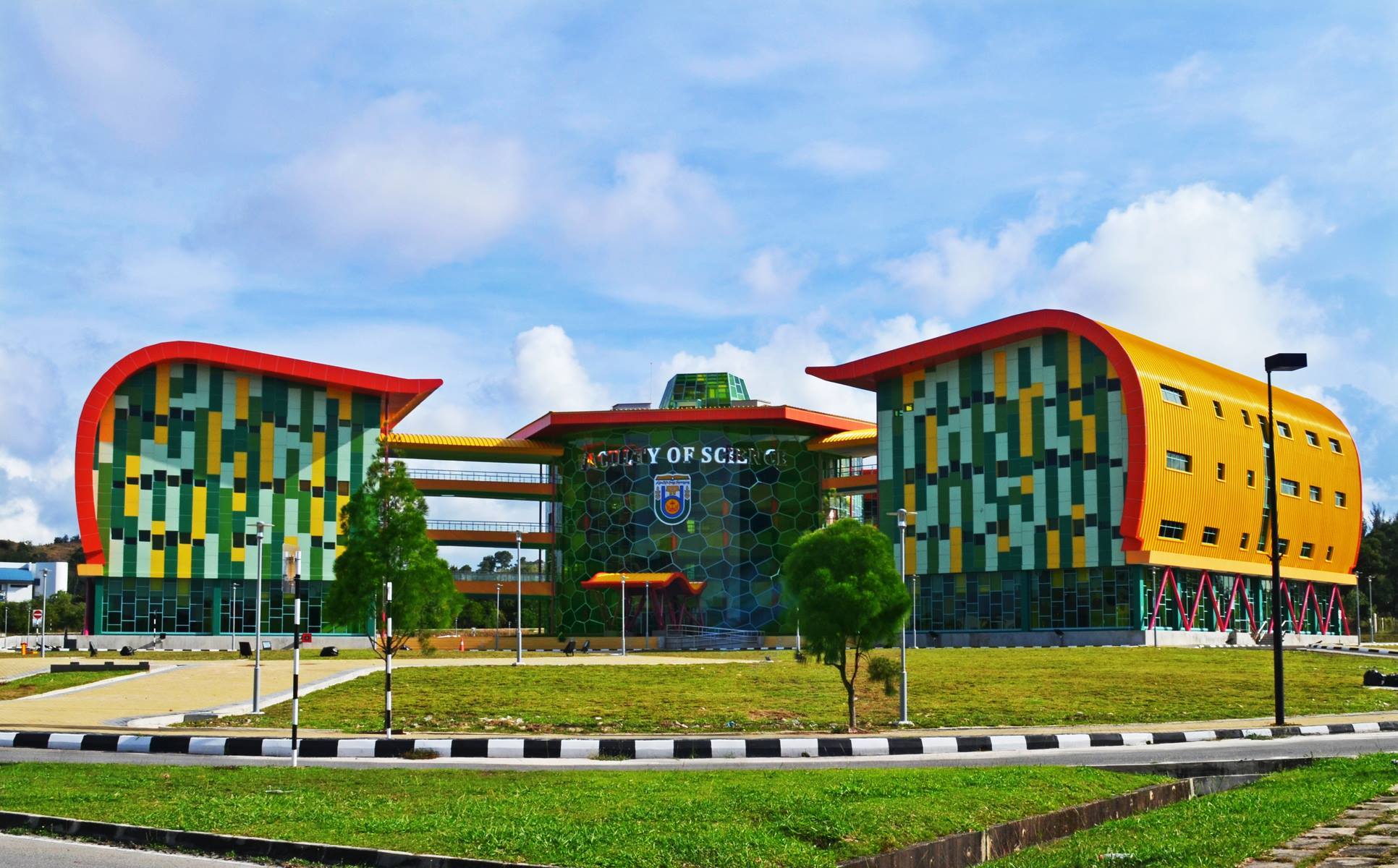
Brunei's First University and Its Forest of No Rice
The Iban word is "Kerangas," and it means land where hill rice cannot grow. Less than one percent of Brunei's forests carry this classification -- rare, nutrient-poor heath woodland growing on sandy soil that drains so quickly the ecosystem stays perpetually dry and fire-prone. It is an unlikely place to build a university. Yet Universiti Brunei Darussalam sits on exactly this kind of ground at Tungku Link, on the outskirts of Bandar Seri Begawan, its buildings rising among trees that have adapted to thrive where almost nothing else will. The metaphor writes itself, but the institution has earned it: founded in 1985 with 176 students and two faculties, UBD has grown into a research university ranked 16th among the world's best small universities by Times Higher Education.
176 Students and a Nation's Bet
Brunei gained full independence from Britain on January 1, 1984. A year and ten months later, on October 28, 1985, the government opened its first university. The timing was deliberate. A newly sovereign nation whose wealth came almost entirely from oil and gas needed an educated workforce that could eventually diversify the economy, and sending every promising student abroad was neither sustainable nor desirable. The inaugural class of 176 students enrolled in two faculties, taught by a mix of Bruneian and foreign lecturers. By 1988, the Sultan Hassanal Bolkiah Institute of Education had merged with the university, expanding its scope into teacher training. The institution relocated to its current campus at Tungku Link in 1995, trading its original facilities for a purpose-built site that could accommodate the growth the government had always intended.
A Supercomputer in the Tropics
On October 15, 2011, Sultan Hassanal Bolkiah inaugurated the UBD-IBM Centre, a research partnership between the university and IBM that brought Southeast Asia's first Blue Gene supercomputer to Brunei. The collaboration focused on climate modeling -- integrating local weather data with hydrological models to predict flooding and assess the effects of climate change on Borneo's rainforests. For a country sitting on one of the world's most biodiverse islands, the work had immediate practical applications. Brunei's lowland rainforests are among the least disturbed in Southeast Asia, but they face mounting pressure from development and shifting rainfall patterns. The supercomputer gave UBD researchers the computational power to model these threats at a resolution previously impossible, turning a small national university into a node in the global network of climate science.
The Botanical Garden That Guards What Remains
In February 2018, the Sultan opened the UBD Botanical Research Centre, making it the nation's first botanical garden. The six-hectare site sits within the campus itself, preserving a patch of the very Kerangas forest that makes the location so unusual. More than five hundred varieties of tropical plants grow here, many indigenous to Borneo and Brunei. Under the direction of the Institute for Biodiversity and Environmental Research, the garden conducts research on species that exist nowhere else and serves as a living seed bank for a forest type that is vanishingly rare. Kerangas woodlands are more susceptible to fire than other tropical forests, and damaged patches are quickly invaded by Acacia trees that crowd out native species. The botanical centre is, in effect, a conservation project disguised as a campus amenity -- a research garden growing in the kind of soil that defeats agriculture.
Royals in the Lecture Hall
UBD's alumni list reads like a cross-section of Bruneian public life. Prince Abdul Malik, several princesses of the royal family, the current Minister of Education, the Attorney General, the Speaker of the Legislative Council, and Brunei's permanent representatives to the United Nations in Geneva all studied here. So did national athletes, diplomats, and the singer-songwriter Fakhrul Razi. The university produces an outsized share of the country's governing class, which is perhaps inevitable in a nation of fewer than half a million people with only a handful of higher education institutions. But it also reflects UBD's position as the country's flagship university -- the place where the sultanate invests its expectations for the next generation.
Small University, Global Reach
The numbers tell an unexpected story. UBD ranks 387th globally in the QS World University Rankings and 71st in Asia, placing it ahead of institutions in far larger countries. Times Higher Education ranks it 301 to 350 worldwide and 60th in Asia. Its business school holds AACSB accreditation, a distinction shared by fewer than six percent of business schools globally. The university maintains research partnerships with Zhejiang University, City University of Hong Kong, and Peking University's HSBC Business School, among others. A mandatory Discovery Year program sends undergraduates abroad or into community service, ensuring that students from this small campus encounter the wider world before graduation. For a university not yet four decades old, operating in one of the world's smallest countries, the trajectory is striking -- built on heath forest soil where rice cannot grow, producing scholars who make their mark well beyond Borneo.
From the Air
Located at 4.975°N, 114.891°E at Tungku Link in Bandar Seri Begawan, Brunei. The campus occupies a hillside site surrounded by tropical vegetation, including patches of rare Kerangas heath forest preserved as the UBD Botanical Research Centre. From 2,000 feet, the university's modern buildings and the distinctive Chancellor Hall are visible amid dense greenery, approximately 8 km west-southwest of Brunei International Airport (ICAO: WBSB). The Brunei River flows to the northeast, and the water village of Kampong Ayer is visible along the riverbanks in central Bandar Seri Begawan.