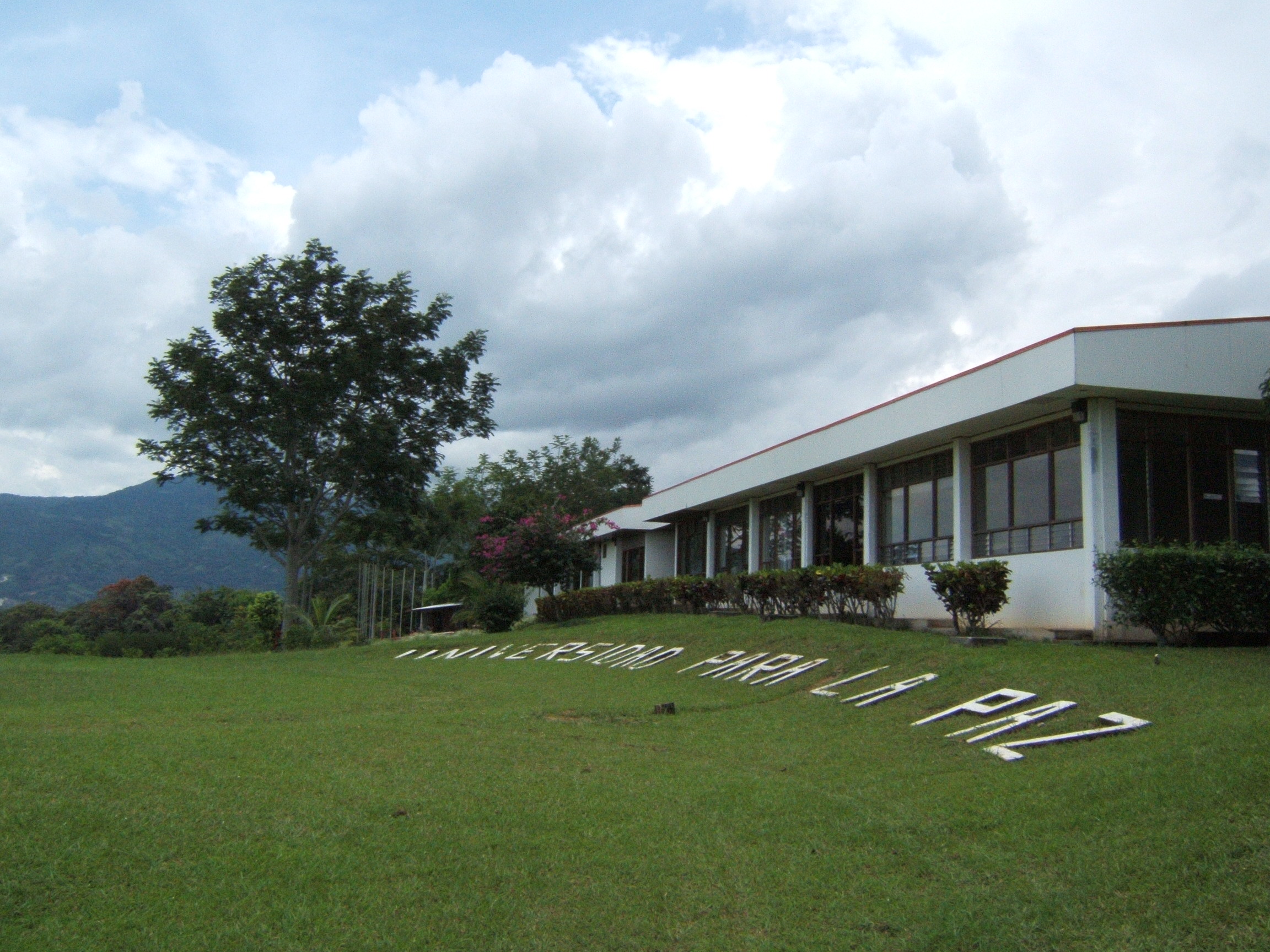
University for Peace
Most universities are founded by governments or churches. This one was founded by the United Nations General Assembly. In 1980, Resolution 35/55 established the University for Peace - UPEACE - as a treaty organization with a singular mandate: teach humanity how to resolve its conflicts without destroying itself. The campus sits on a mountainside 30 kilometers southwest of San Jose, Costa Rica, near the town of Ciudad Colon, surrounded by 303 hectares that include the last remnant of primary forest in the entire Central Valley. Students from dozens of countries arrive here to study international law, peace and conflict resolution, and sustainable development, then scatter back across the globe. The sitting president of Somalia earned his Ph.D. here. So did journalists, activists, and diplomats whose names rarely make headlines but whose work shapes how nations talk to each other.
A Treaty Written into Forest
The idea took shape in 1979, when the General Assembly passed Resolution 34/111 calling for an international commission to design the institution. Costa Rica, a country that abolished its military in 1948, was the natural host. By December 1980 the charter was adopted, granting UPEACE the authority to award master's degrees and doctorates - authority recognized under international law by every UN member state. The campus is named for Rodrigo Carazo, Costa Rica's president when the university was chartered. The UN Secretary-General serves as honorary president and reports periodically to the General Assembly on the university's activities. Governance falls to a 17-member council: ten appointed by the UN Secretary-General and the Director-General of UNESCO, two nominated by the Costa Rican government, and the remainder drawn from senior university and UN leadership.
The Peace Park
What makes UPEACE physically remarkable isn't the lecture halls - it's what surrounds them. The campus sits within a natural reserve called Peace Park, where 200 hectares of primary forest have survived the agricultural conversion that consumed the rest of the Central Valley. Monkeys swing through the canopy. Deer browse the understory. Over 300 bird species have been documented here, along with roughly 100 tree varieties. Hiking trails wind through the forest past monuments to peacebuilders from different eras and traditions. In 2012, the Earth Charter Initiative and UPEACE jointly received a UNESCO Chair on Education for Sustainable Development, and two years later the Earth Charter Center opened on campus. The institution doesn't just teach environmental sustainability - it practices it, preserving a fragment of the ecosystem that once covered this entire region.
Classrooms Without Borders
Four academic departments organize the curriculum: international law, peace and conflict studies, environment and development, and regional studies. Programs range from a Master of Arts in Gender and Peacebuilding to a triple degree in Water Cooperation and Diplomacy shared with IHE Delft and Oregon State University. Joint programs with Brandeis, American University, Pace University, and institutions in Seoul, Manila, and Turin extend the network further. The Africa programme, launched in 2002, has established capacity-building agreements with 27 universities across the continent. In Somalia, UPEACE partners with the Institute for Peace, Security and Development to offer master's and doctoral degrees - 166 students graduated from the Somalia programme in 2022 alone. A European center operates from the Academy Building of the Peace Palace in The Hague, and a Geneva office connects the university to the broader UN system.
Graduates Who Shaped Nations
Hassan Sheikh Mohamud defended his doctoral thesis at UPEACE before becoming president of Somalia. Billene Seyoum, an Ethiopian politician and poet, studied here. So did Rosebell Kagumire, the Ugandan journalist, and Kirthi Jayakumar, the Indian peace educator and activist. The alumni list reads less like a university directory than a map of the world's conflict zones and the people working to resolve them. The UPEACE Human Rights Centre extends the mission beyond the campus, running education and training programs and hosting the Office of Free Legal Assistance for Journalists in Costa Rica. In 2023 that office published a critical report on access to information during Costa Rica's 2022 elections - a reminder that peace studies, done honestly, sometimes means challenging the host country itself.
From the Air
Located at 9.92N, 84.27W on a mountainside near Ciudad Colon, approximately 30km southwest of San Jose, Costa Rica. The campus and its 303-hectare forest reserve are visible as a patch of dense canopy amid the more developed Central Valley lowlands. Juan Santamaria International Airport (MROC/SJO) lies about 25km to the northeast. From the air, the contrast between the preserved primary forest and surrounding agricultural land is striking. The Rodrigo Carazo campus buildings are nestled into the hillside at moderate elevation. Best viewed at lower altitudes in clear weather.