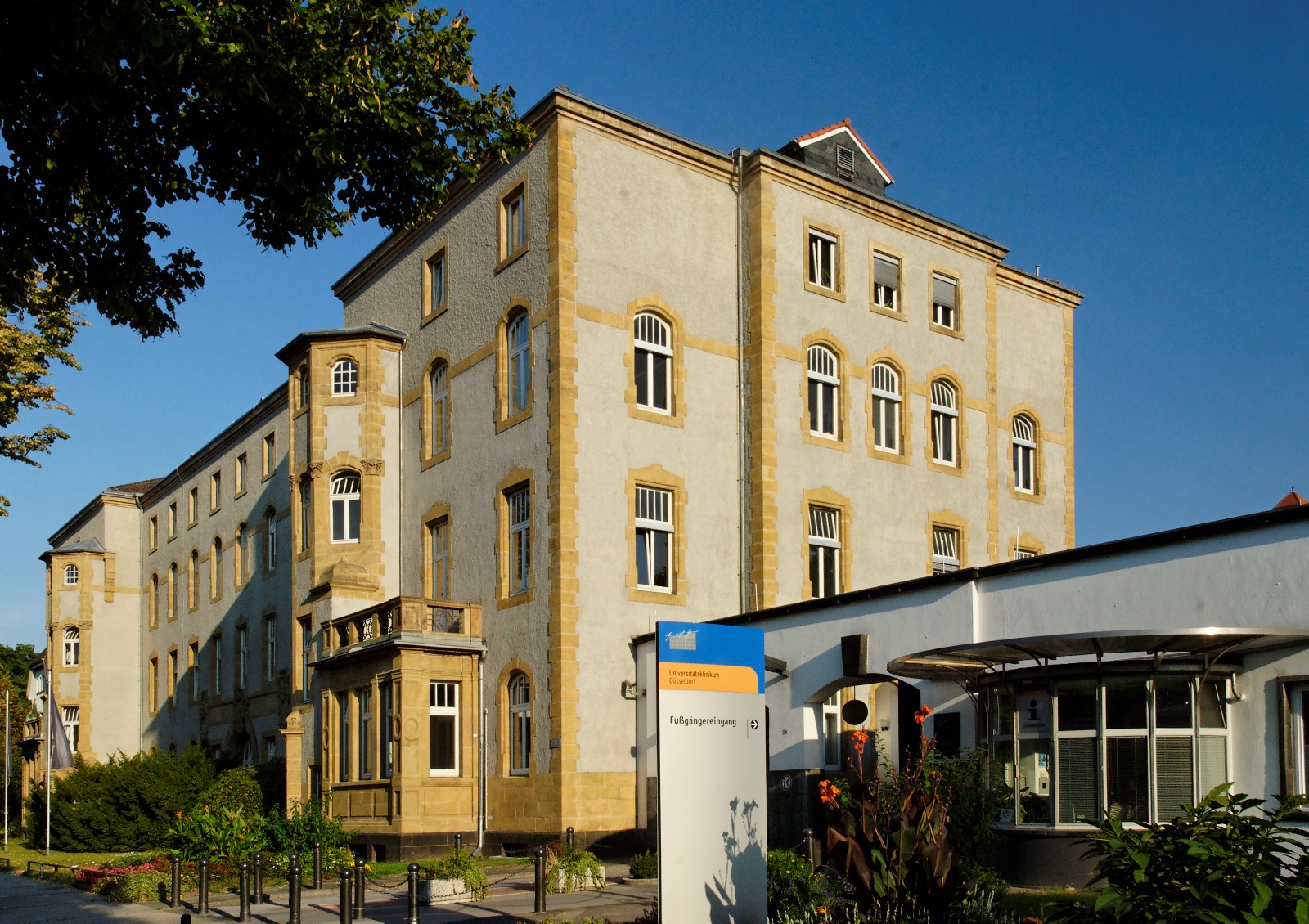
University Hospital of Düsseldorf
On the night of 10 September 2020, a woman in critical condition was being driven to the University Hospital of Düsseldorf when the call came through: divert her, the emergency room is closed. A ransomware attack had taken down the hospital's IT systems, and one of the busiest tertiary centres in Germany had effectively been switched off. The ambulance turned around and headed for Wuppertal, more than thirty kilometres away. The patient died. The North Rhine-Westphalia Cybercrime unit opened what was widely reported as the world's first investigation into a death potentially attributable to a hospital cyberattack - though the investigation was ultimately dropped after medical experts concluded that the patient's underlying condition, not the diversion, was the sole cause of death. It was a strange and terrible chapter in the life of an institution that, for more than a century, had built its reputation on doing the opposite - on getting patients through the door alive.
Born in 1907
The hospital opened on 27 July 1907 as the general municipal hospitals of Düsseldorf, paired with the city's new Academy for Practical Medicine. The founding generation read like a who's who of pre-war German medicine: Oskar Witzel as director, Arthur Schloßmann taking pediatrics, Hugo Sellheim running gynecology, the pathologist Lubarsch in charge of his own institute. Surgery, internal medicine, ENT, ophthalmology, infectious diseases and an experimental therapy unit all opened on the same fenced campus. The psychiatric ward was housed separately, out at the Rhenish Provincial and Nursing Home in Grafenberg. The arrangement of pavilions and specialist clinics on a single site, common in early twentieth-century European medicine, is still visible in the layout of the campus today.
The Heart-Lung Machine
After the Second World War, the institution rebuilt itself around cardiac surgery. The decisive figure was Ernst Derra, head of surgery from 1946 to 1969, who in 1955 performed the first open-heart operation on mainland Europe using surface hypothermia - and who was among the earliest European surgeons to adopt heart-lung machine techniques as they emerged from the United States. It was a procedure barely a few years old anywhere in the world - American surgeon John Gibbon made the first successful clinical use of a heart-lung machine in May 1953 - and Derra's work put Düsseldorf on the international cardiac map. The new surgical clinic building that opened in 1958 was, at the time, considered one of the most advanced clinic buildings in the world. The academy was absorbed into the newly founded University of Düsseldorf in 1965, and on 1 January 1973 the hospitals became formally what they are now: the Universitätsklinikum Düsseldorf, owned by the state of North Rhine-Westphalia.
The Ghost Clinic
Not every chapter has been a triumph. The Center for Operative Medicine II - the great new heart of the campus, housing ENT, neurosurgery, maxillofacial and plastic surgery, accident and hand surgery, orthopedics, operating rooms, an ICU, the central emergency room with its shock rooms and a rooftop helicopter pad - was supposed to open in 2009. Fire-protection problems kept it locked for five years. The press took to calling it the Geisterklinik, the ghost clinic, and the executing contractor, the now-collapsed Imtech, became the target of long-running legal battles. The building finally opened in June 2014. The 1985 Medical-Neurological-Radiological Clinic, the campus's tallest building, had marked the start of the long modernization push; the Center for Operative Medicine II marked, in a sense, its painful completion.
A 40-Hectare City
The campus today is a small city of its own: forty hectares in the Bilk district in the southeast of Düsseldorf, fenced and self-contained, with Moorenstrasse and Witzelstrasse running along its northern edge and Himmelgeister Straße and Christophstraße closing the western and eastern flanks. To the south lies the main campus of Heinrich Heine University, separated only by the A 46 motorway, which here runs through the university tunnel; a green corridor of footpaths and cycle paths bridges the tunnel above, stitching the medical and academic halves of the institution back together. Each year roughly 45,000 inpatients and 300,000 outpatients pass through 32 clinics and 34 institutes. The hospital has more than 1,200 beds and around 5,500 staff, including 1,300 nurses and 800 physicians.
Rankings and a 5G Future
Newsweek has ranked the Gastroenterology Clinic among the world's top seventeen for the speciality. German Cancer Aid added Düsseldorf to its list of leading oncology centres for the first time in 2013, bringing three million euros over three years for the University Tumour Centre, the UTZ. The hospital is now positioning itself as the first 5G-enabled medical campus in Europe under the Giga for Health programme, a partnership pitched at low-latency surgical robotics, rapid imaging transfer, and the kind of bandwidth-hungry workflows modern hospitals are only beginning to design for. Whether the new connectivity will leave them less exposed than they were on that September night in 2020 is a question the entire industry is still trying to answer.
From the Air
The University Hospital of Düsseldorf occupies a fenced 40-hectare site at 51.20°N, 6.79°E in the Bilk district in the south of the city. From the air it is recognizable by the dark vertical mass of the MNR-Klinik, the campus's tallest building, and by the helipad on the roof of the Center for Operative Medicine II. The A 46 motorway disappears here into the short university tunnel that separates the clinic from the Heinrich Heine University campus to the south. Nearest major airport: Düsseldorf International (EDDL), about 12 km north.