University of Amsterdam
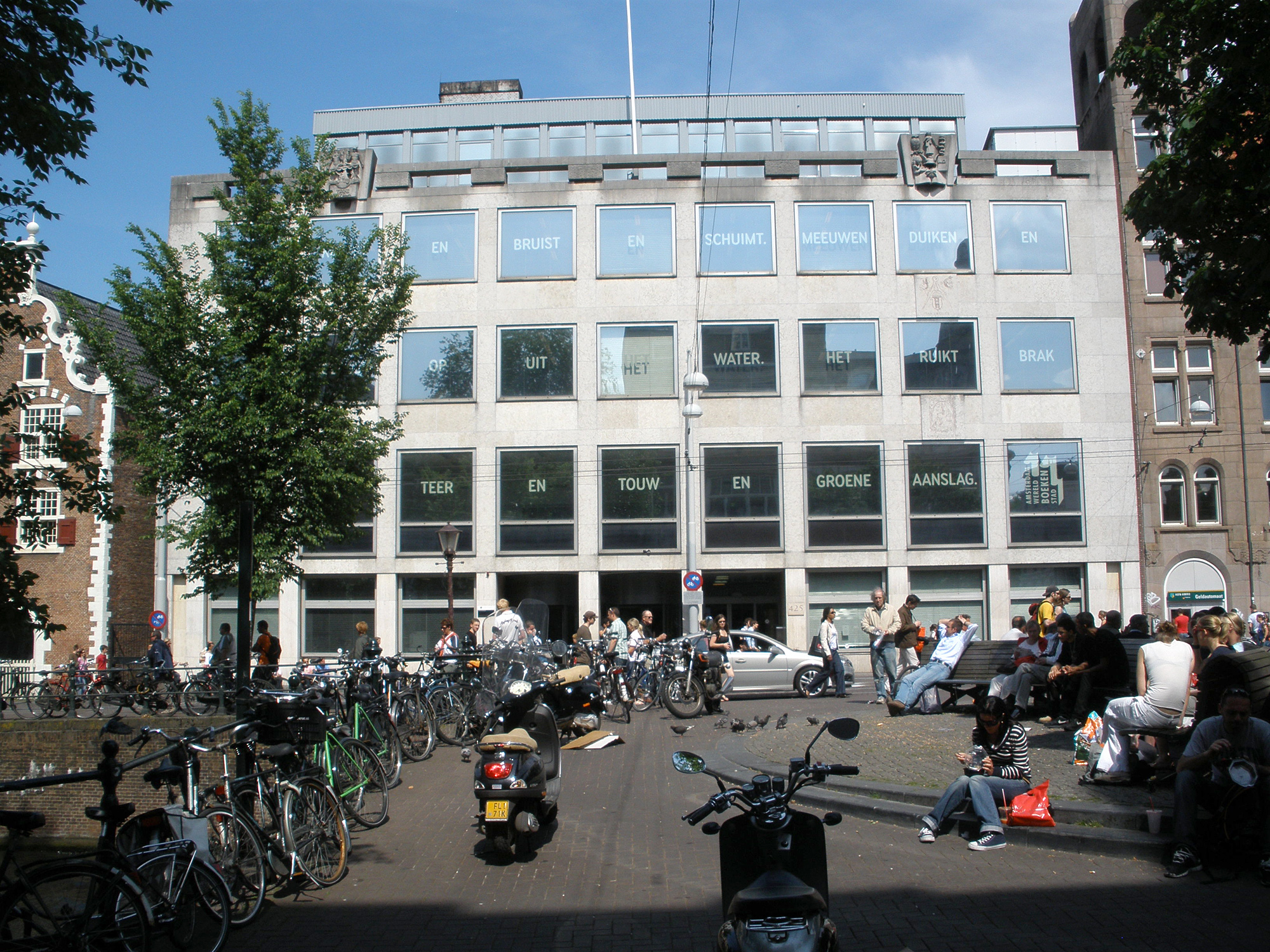
On a wet evening in May 1969, students at the University of Amsterdam pushed past the doors of the Maagdenhuis on the Spui, occupied the central administration building, and renamed it the People's Palace. They were demanding democratic reform of the university. They stayed for five days. When they were finally ordered out by police they had won enough to make 1969 a turning point in Dutch higher education. The building they occupied was already 280 years old, originally a Catholic orphanage for girls - the name means Maidens' House - and it sat at the centre of an institution that traced its own roots to 8 January 1632, when the Athenaeum Illustre opened in the chapel of a former nunnery and Gerardus Vossius delivered the first lecture; Caspar Barlaeus followed the next day. Today the UvA ranks 53rd in the world in the QS rankings, and first globally in the academic field of Communication. The argument over how to run it never quite stopped.
From Athenaeum to University
The institution did not begin as a university. In 1632 it was called the Athenaeum Illustre, a kind of preparatory school for higher learning, allowed to lecture but not to grant degrees. For two and a half centuries it stayed in that intermediate form, with chairs in philosophy, theology, history, and natural science, lecturing in the Agnietenkapel chapel on the Oudezijds Voorburgwal. Rembrandt painted Nicolaes Tulp giving an anatomy lesson in 1632 - the same year as the Athenaeum's founding - and Tulp's successors taught anatomy at the Athenaeum. Only in 1877 did the city of Amsterdam upgrade it to a full university with degree-granting rights. Six Nobel laureates would later be associated with it, three in physics alone: Van der Waals, Zeeman, and Zernike, plus the chemist Van 't Hoff. A century after gaining the right to award PhDs, the UvA was awarding more of them in the social sciences than any other continental university.
A Campus With No Edges
The UvA does not have a campus in the American sense; it has Amsterdam. Faculties are spread through old buildings across the city centre. The Agnietenkapel near the Oude Manhuispoort. The Bushuis on Kloveniersburgwal, originally the armoury of the Voetboogdoelen civic guard. The Oost-Indisch Huis, where the Dutch East India Company once made decisions that moved continents. The Maagdenhuis on the Spui, still the administrative seat. The University Library on the Singel, on the spot where the crossbowmen of the Voetboogdoelen used to shoot. The science faculty has its own newer site at the Roeterseilandcampus and at Science Park to the east, but the heart of the UvA is the 17th-century city - libraries in canal houses, lecture rooms in former chapels, a research university woven into the Grachtengordel.
Five Museums and Four Million Books
The central University Library holds over four million books, 70,000 manuscripts, 500,000 letters, and 125,000 maps. The collection includes the Bibliotheca Rosenthaliana, one of the world's important Jewish history libraries, founded on the personal collection of a 19th-century Hebraist; the Department of Documentation on Social Movements; and rare-book holdings stretching back to the cradle of Dutch printing. Beyond books, the UvA has five museums. The Allard Pierson holds antiquities from Egypt, Greece, the Near East, and central Italy, with an Egyptian sarcophagus from around 1000 BCE on permanent display. The Museum Vrolik keeps anatomical and teratological specimens that would horrify a modern medical school's intake committee. The J.A. Dortmond Museum traces the history of Western writing from 3000 BCE to today. The Computer Museum shows how calculation worked before electronics. And the Zoological Museum at the Artis Zoo holds millions of specimens - shells, insects, mammals - used in active research.
The Maagdenhuis Comes Back
In February 2015 - 46 years after the 1969 occupation - students occupied the Maagdenhuis again. This time the complaint was about the financialisation of the university: real estate decisions, debt service, austerity programmes that were squeezing teaching budgets. The occupation lasted six weeks. It produced national headlines, a wave of academic critique culminating in the book How Finance Penetrates Its Other, and a partial restructuring of UvA governance. The building has now been occupied twice within living memory and each time the underlying argument has been the same: how should a 17th-century institution be governed in a 21st-century city? The administration moved out for a while during repairs. They have moved back in. The building's name has not been changed again.
A University Without Cars
Walk the canals on a Tuesday in October and almost everyone passing you on a bicycle is a UvA student. Some are heading to the medical centre at the AMC, far southeast of the city. Some are heading to lectures at Roeterseilandcampus or Science Park. Most are threading between buildings whose addresses are written on canal houses: Oudezijds Voorburgwal, Spuistraat, Nieuwe Doelenstraat. The CREA Cultural Centre runs courses in drama, music, film, and visual art, with its own bar and theatre. Room for Discussion, the student-run interview platform, has hosted Christine Lagarde, Mario Draghi, Charles Michel, and Sviatlana Tsikhanouskaya. The university urges first-year internationals not to come to Amsterdam at all unless they have already secured housing - the rental market is that brutal. But if you have a room, and a bicycle, and the right student card, the city for several years is yours to learn in.
From the Air
The University of Amsterdam is centred at roughly 52.368 N, 4.890 E, with main buildings scattered through the medieval and Grachtengordel core. The Maagdenhuis on the Spui, the University Library on the Singel, the Agnietenkapel on Oudezijds Voorburgwal, the Oost-Indisch Huis on Kloveniersburgwal, and Roeterseilandcampus east of the Amstel form a rough triangle visible from low altitude. Science Park, the science and computing campus, lies 4 km east near the Watergraafsmeer. Nearest airport is Amsterdam Schiphol (EHAM), 14 km southwest. The whole UvA footprint passes under the Buitenveldertbaan approach corridor; recommended viewing altitude 2,000-4,000 feet on a clear day.