University of Arkansas-Fort Smith
The university has changed its name four times, and each renaming tells a chapter in the story of a small Arkansas city reaching for something bigger. What started in 1928 as Fort Smith Junior College -- run by the public school superintendent doubling as college president and the high school principal moonlighting as dean -- has become the University of Arkansas-Fort Smith, the sixth-largest university in the state. Its campus is a living arboretum with 1,182 GPS-inventoried trees representing 81 species, and standing guard at the entrance to the athletics center is a bronze leaping lion claimed to be the largest of its kind in the world.
Four Names, One Ambition
Fort Smith Junior College operated inside borrowed high school facilities until 1950, when it incorporated as a private institution with its own governing board. In 1952, it moved to its current site. A vocational-technical division was added in 1960, and in 1965, Sebastian County voters approved a tax levy to make it a public institution. The school became Westark Junior College in 1966, then Westark Community College in 1972, then simply Westark College in 1998. Each name change marked a widening ambition. The final transformation came on January 1, 2002, when Westark merged with the University of Arkansas System as a four-year institution. The Sebastian County electorate voted to support the merger, and UAFS was born -- a university that offers everything from technical certificates to baccalaureate degrees.
A Campus That Grows
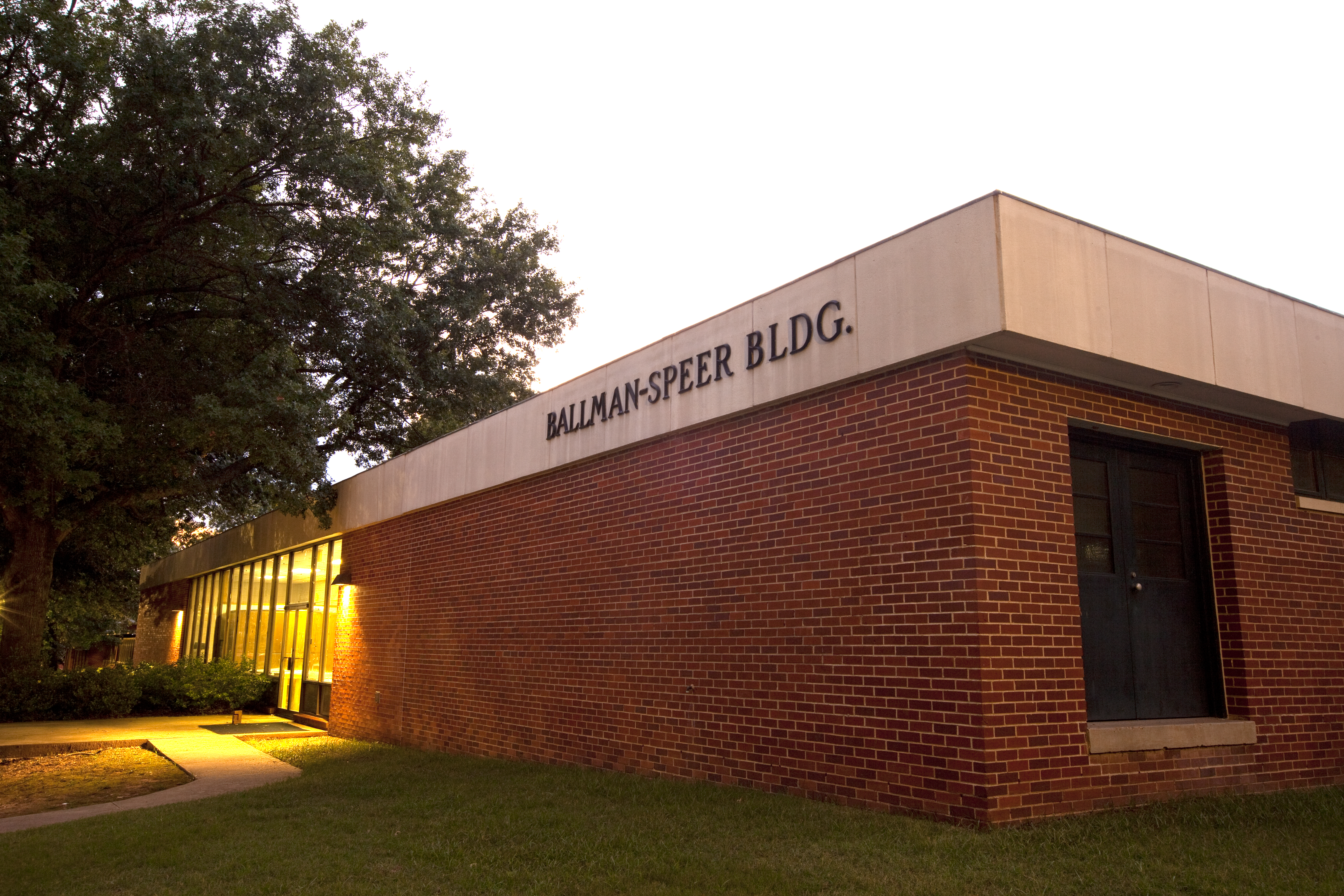
The $15.5 million Windgate Art and Design building, funded by the Windgate Charitable Foundation, opened in 2015 with a letterpress and printmaking studio, a film theater, and a photography studio. The Recreation and Wellness Center, known as the RAWC, followed in 2016 with basketball courts, a three-lane running track, and a rock-climbing wall. Three art galleries are free and open to the public: the Mary Tinnin Jaye Gallery and the Sally Boreham Gallery house permanent collections, while the Smith-Pendergraft Campus Center's Traveling Art Gallery features rotating exhibits. The Baldor Technology Center teaches students automotive technology, animation, electronics, robotics, and unmanned aerial systems -- skills calibrated to the industries of western Arkansas.
Bell Tower and Bronze Lion
Two landmarks define the UAFS campus skyline. The Donald W. Reynolds Bell Tower, commissioned in 1993 and dedicated in 1995, rises seven stories and is the largest free-standing belfry in the South Central United States. At the Stubblefield Center, home of the Lions basketball and volleyball teams, the Numa statue -- a bronze leaping lion unveiled in 2010 -- is claimed to be the largest statue of a leaping lion in the world. The university's teams, the Lady Lions and Lions, compete in NCAA Division II as members of the Mid-America Intercollegiate Athletics Association across ten sports. For 2024, U.S. News and World Report ranked UAFS number 34 among 132 Regional Universities South and number 7 among Top Public Schools.
Rooted in the River Valley
The entire UAFS campus has been designated an arboretum, with more than 69 species of trees mapped by GPS technology. The campus grounds have won national awards, including the Green Star Grand Award for Best Maintained Landscape in the Nation from the Professional Grounds Management Society in 2003. The university serves the broader Fort Smith region alongside the Arkansas College of Osteopathic Medicine, a private institution that welcomed its inaugural class in 2017. UAFS remains what its many name changes always pointed toward: an institution shaped by the needs and ambitions of the river valley community it calls home.
From the Air
Located at 35.384N, 94.375W in Fort Smith, Arkansas. The campus is identifiable from the air by the seven-story Reynolds Bell Tower rising above the tree canopy. Fort Smith Regional Airport (KFSM) is the nearest facility. The Arkansas River runs to the north and west of the campus. Best viewed at 2,000-3,000 ft AGL.