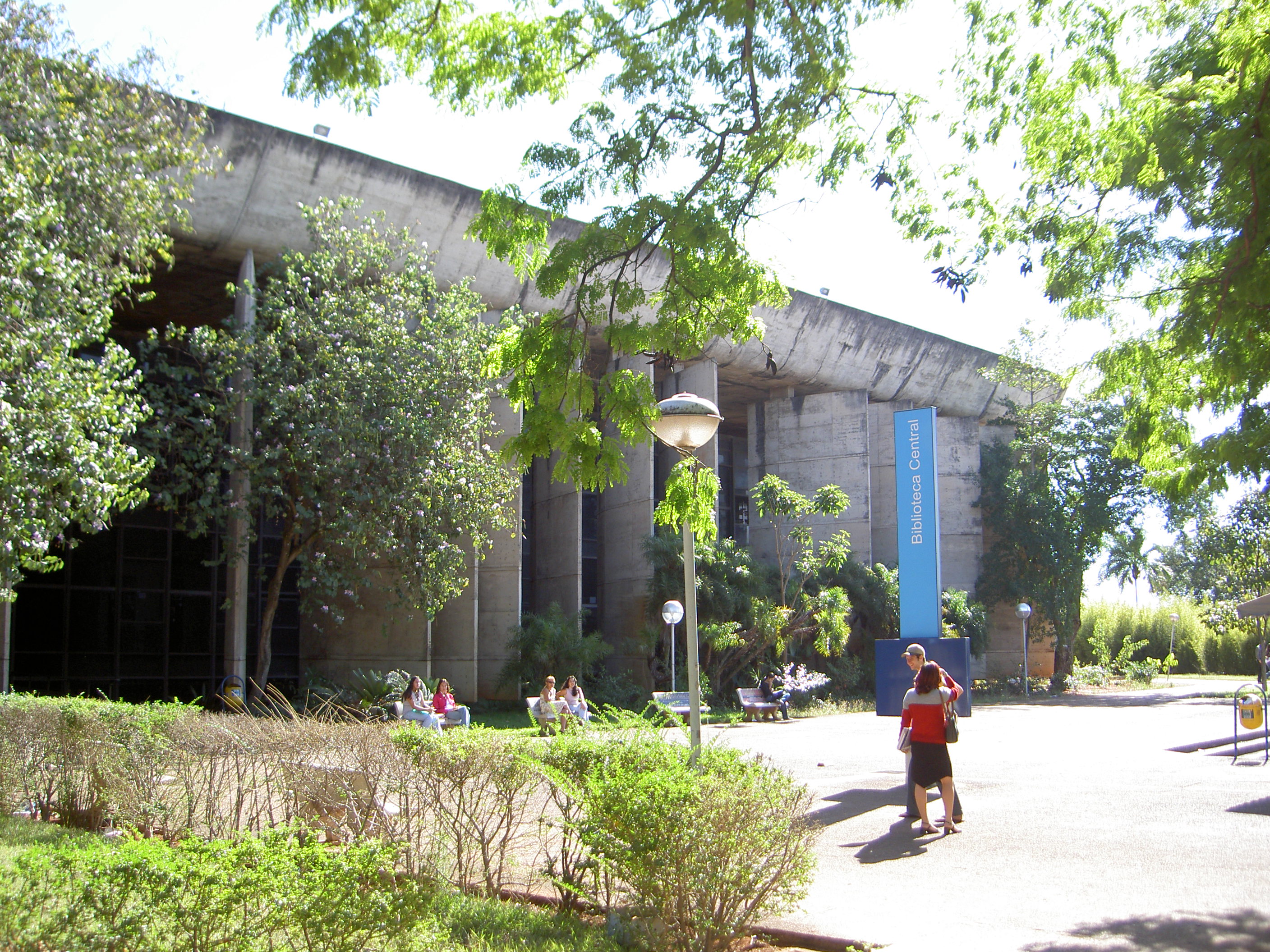
University of Brasília
The students call it the Minhocão - the Big Worm. It curves across the campus for 700 meters, a single sinuous concrete building that houses much of the University of Brasília under one roof. Oscar Niemeyer designed it that way on purpose. When Brazil's new capital rose from the cerrado in the late 1950s and early 1960s, everything was a fresh page - the streets laid out in the shape of an airplane, the ministries cast in white concrete, the national congress crowned with twin bowls. The university, founded on the lake's edge in 1962, was supposed to be its mind. Niemeyer gave it a body to match.
A University Built on an Idea
Two men dreamed UnB into being. Anísio Teixeira, an educator who had spent his career fighting to open Brazilian schools to Brazilian children, and Darcy Ribeiro, an anthropologist who had lived among the indigenous peoples of the Amazon before turning to the question of what a modern Brazilian republic owed its citizens. In 1961 they convinced the government to create a foundation for the new federal university. On April 21, 1962, they opened its doors. Ribeiro became the first leader. Niemeyer and his collaborator, the muralist and tile artist Athos Bulcão, threw themselves into the physical design. They were not building a university to look like Oxford or Coimbra. They were building one for a country that had just invented a capital.
The Long Shadow of the Worm
The Instituto Central de Ciências - the Central Institute of Sciences - is the Minhocão. From the air it looks like a single ribbon of concrete bending across the campus on the northwestern bank of Paranoá Lake. Inside, it does what Niemeyer wanted Brazilian modernism to do: it flows. Classrooms, labs, and corridors run into each other without the hard segmentation of traditional academic buildings. Students learn geology and economics under the same long roof. Around it, twenty-two institutes, fifty departments, a university hospital, a seismological observatory, and a library holding Central-West Brazil's largest archive fan out in the modernist idiom that defines Brasília itself. The campus is part of the city, and the city was built to be read as a single architectural thought.
The Clean Water Farm
Not everything at UnB is concrete. Just outside the federal district sits the Fazenda Água Limpa - the Clean Water Farm - where the university runs its ecological, agricultural, and forestry research. Students in forestry programs tag trees in the cerrado there. Veterinary students work at the university's animal hospital. The farm is a practical answer to a practical question: how does a country with the Amazon rainforest, the Pantanal wetlands, and the cerrado savanna train the scientists who will steward them? UnB's answer has been to put those scientists in front of the land itself. The university's 260 research groups work in more than 400 laboratories, from plasma physics to protein sequencing, but the Clean Water Farm remains one of the places students learn to see Brazil as a living system.
Vestibular and the Long Test
Brazilian students traditionally spend a year or two after high school preparing for the vestibular - a marathon entrance exam that, until relatively recently, was the single gate through which a candidate had to pass to reach any major university. UnB was one of the first to experiment with a different path. The Programa de Avaliação Seriada - the Continuing Evaluation Program - tests students once a year across all three years of high school, spreading the pressure and rewarding sustained effort rather than a single day's performance. Each semester the university still accepts about 2,000 incoming students from roughly 25,000 candidates, admitting them to 61 undergraduate programs. Programs in economics, international relations, and political science rank first among Brazilian public universities. The PAS was UnB's answer to a question every founder of Brasília would have recognized: what does a university owe to talent that does not grow up near a capital?
The People on the Walls
Walk the halls of the ICC and you encounter the university's own memory in its tile. Athos Bulcão's geometric panels run along the corridors, turning a concrete building into a work of art. On the faculty lists, the names read like a register of Brazilian intellectual life: Niemeyer himself, who won the Pritzker Prize in 1988. Darcy Ribeiro, who went on to lead the reform of Brazilian education. Antônio Augusto Cançado Trindade, who was later elected to the International Court of Justice. Francisco Rezek, a former justice of the Brazilian Supreme Court. Gilmar Mendes, a current one. The university, like the city around it, was designed to be a declaration: that Brazil could imagine itself as modern, as scientific, as international, from the ground up. Sixty years on, the Minhocão is still there, still curving across the lake's edge, still holding its students inside.
From the Air
Located at 15.76 degrees south, 47.87 degrees west on the northwestern bank of Paranoá Lake, in the federal district of Brasília. Nearest airport is Brasília-Presidente Juscelino Kubitschek International (SBBR), about 15 km to the southeast. From cruising altitude over the central plateau, the modernist grid of Brasília is unmistakable, and the ICC's long curved line stands out as a distinctive feature of the university campus at the lake's edge.