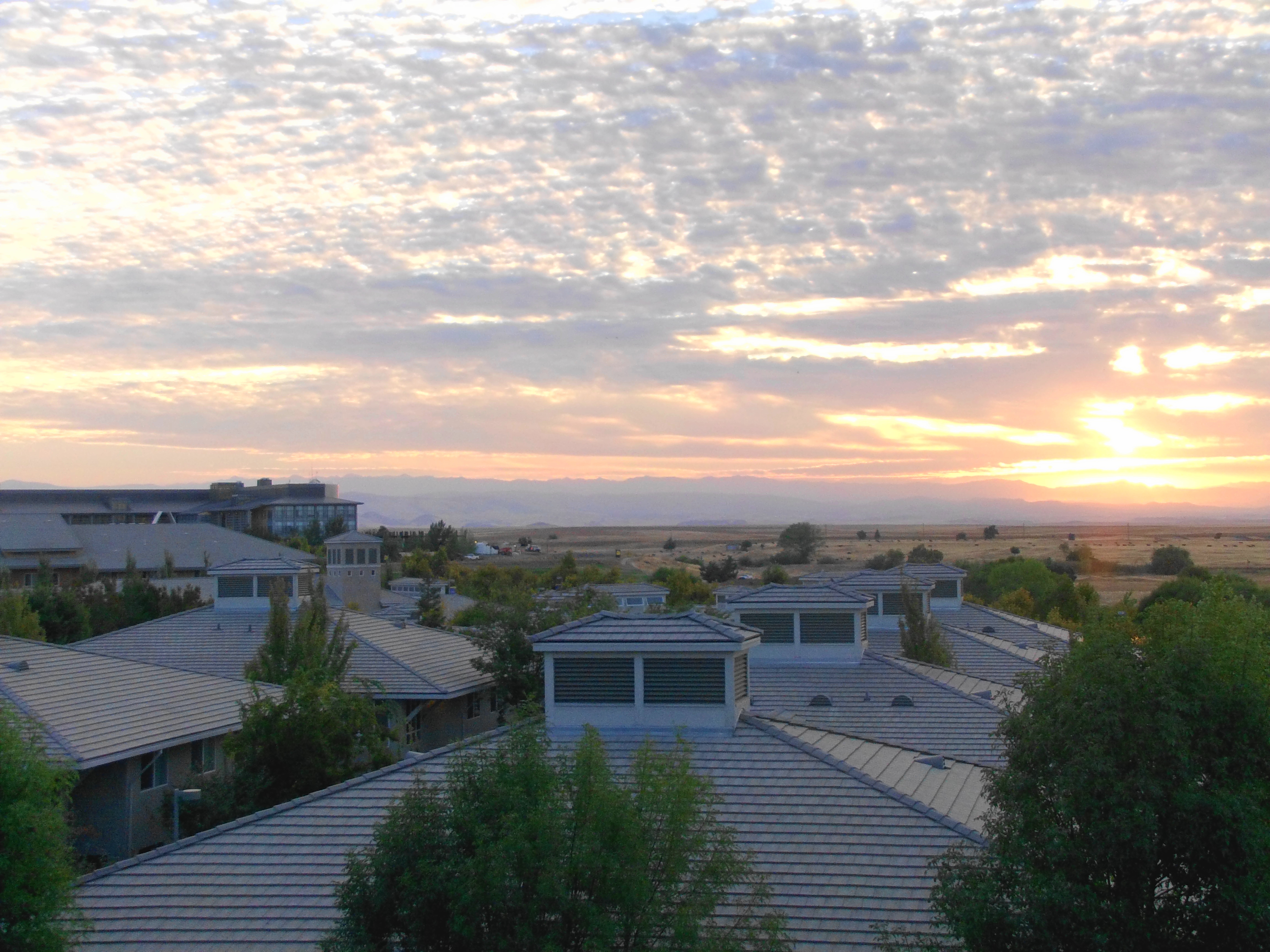
The University That Fairy Shrimp Built
The site where the University of California, Merced now stands was, until the 1990s, a public golf course. Before that, it was a cattle ranch. The university was never supposed to be here. It was supposed to be built three miles north, on land adjacent to Lake Yosemite, where planners envisioned a campus framed by water and grassland. Then biologists found endangered fairy shrimp hatching in the vernal pools, and the entire project had to move. That relocation - forced by creatures smaller than a thumbnail - may be the most fitting origin story for a university that has spent its entire existence defying expectations in California's most underserved region.
Twenty Years of Trying
The idea of a UC campus in the San Joaquin Valley dates to the early 1980s, when the UC Regents recognized that the largest and most densely populated region in California had no University of California presence. Residents who wanted a UC education had to travel to coastal cities or Sacramento. In 1988 the Regents voted to establish a new campus in the region, driven partly by enrollment projections called "Tidal Wave II" - the wave of baby boomers' children expected to flood the system. By 1992 the field had narrowed to three finalists: Fresno, Madera, and Merced. State Senator John Burton called the entire project the "biggest boondoggle ever." Budget crises stalled the decision until 1995, when the Regents finally chose Merced. Even then, environmental lawsuits, inadequate impact assessments, and the fairy shrimp discovery pushed the actual opening back another full decade. The groundbreaking ceremony took place on October 25, 2002. The first day of classes arrived on September 6, 2005 - seventeen years after the Regents' original vote.
A Campus on Borrowed Ground
The physical campus tells the story of its compromises. It sits on roughly 1,026 acres of what was once the Merced Hills Golf Course, surrounded by protected grasslands and vernal pools that the university is legally obligated to preserve. The Merced Vernal Pools and Grassland Reserve eventually grew to approximately 6,428 acres, making it one of the largest protected habitats in the UC Natural Reserve System. In 2001, the David and Lucile Packard Foundation pledged more than $11 million to help acquire 7,030 acres from the Virginia Smith Trust - land that was then divided between university use and conservation. Two irrigation canals still run through the campus. Lake Yosemite borders one edge. Skidmore, Owings & Merrill designed the master plan, and from the beginning every building was required to meet LEED certification standards. UC Merced claims to be the only institution in the United States where every building on campus is LEED-certified.
875 Students and a Library
UC Merced opened with 706 freshmen, 132 transfer students, and 37 graduate students. The Kolligian Library was the first building completed, and during the fall 2005 semester, every class was held inside it while the rest of campus was still under construction. The library's official motto captures the university's self-image: "Not what other research libraries are, what they will be." It holds more electronic resources than physical ones - about 70,000 online journals and nearly four million electronic books, compared to 102,000 print volumes. First Lady Michelle Obama gave the commencement address for the university's first full graduating class, her first commencement speech as First Lady. During the Great Recession, faculty members at UC San Diego wrote a letter urging that UC Merced, UC Riverside, and UC Santa Cruz be closed to save money, dismissing them as "in substantial measure teaching institutions." UC President Mark Yudof shut the proposal down.
The Valley's Research Engine
The university that skeptics wanted to close has become the Central Valley's only R1 Carnegie research institution - a designation it earned in 2025, less than twenty years after opening. That speed is nearly without precedent. UC Merced now enrolls roughly 8,000 undergraduates and 700 graduate students across three schools: Engineering, Natural Sciences, and Social Sciences, Humanities and Arts. Research grant funding exceeded $168.9 million by 2013 and has continued to climb. The campus has leveraged its location, studying the environmental systems of the Central Valley and Sierra Nevada and drawing on the region's diverse population for research in language acquisition and cultural studies. A partnership with UCSF and UCSF Fresno is building a medical school program, with the SJV PRIME Program specifically training physicians to serve the Valley's underserved communities - a region with some of California's highest poverty rates and most severe healthcare shortages.
Golden Bobcats on the Ranch
UC Merced's athletic teams are the Golden Bobcats, competing in the NAIA's California Pacific Conference in nine varsity sports. The Joseph Edward Gallo Recreation and Wellness Center - named for the Gallo wine family - opened in 2006 with an NCAA-sized basketball court. The campus runs its own public transit system, CatTracks, ferrying students the 6.5 miles to downtown Merced. Student publications include a newspaper called The Prodigy and a literary journal named The Vernal Pool, a nod to the ecological features that shaped the campus's fate. In November 2015, the UC Regents approved a $1.14 billion expansion, the 2020 Plan, to double the campus's capacity. The new buildings were completed in early 2021. From the air, UC Merced still looks like what it is: a cluster of modern architecture rising from flat ranch land at the edge of the Sierra foothills, seven miles from downtown Merced and a long way from the coastal campuses that nearly prevented it from existing.
From the Air
Located at 37.37N, 120.42W in the San Joaquin Valley, approximately 5 miles north of the city of Merced and 7 miles north of downtown. The campus sits adjacent to Lake Yosemite and is surrounded by protected grasslands and vernal pools. Modern buildings are visible amid flat agricultural and ranch land. Elevation approximately 180 feet MSL. Merced Regional Airport (KMCE) is 7nm south; Castle Airport (KMER) is 12nm west. Fresno Yosemite International (KFAT) is approximately 50nm southeast. The Sierra Nevada foothills rise to the east. Summer haze is common in the Valley; excellent visibility most other seasons.