The Golden Experiment
In 1868, California was barely two decades old as a state when its legislature did something audacious: it chartered a public university and wrote it directly into the state constitution. Not as an agency to be funded at the whims of future politicians, but as a co-equal branch of government with its own board of regents and constitutional autonomy. The gold that had drawn millions to California was already thinning in the riverbeds, but the state's founders were betting on a different kind of wealth -- one built on knowledge, research, and the radical idea that a public university could rival anything the Ivy League had to offer.
A Constitution's Wager
The University of California began as a merger. In 1853, a private institution called the College of California had established itself in Oakland, offering a classical education modeled on Yale and Harvard. Meanwhile, the state had created an Agricultural, Mining, and Mechanical Arts College under the federal Morrill Act of 1862. Neither institution thrived alone. In 1868, the two combined to form the University of California, with its new campus rising on land the College of California had acquired in what would become Berkeley. The state's constitutional convention of 1879 took the unusual step of granting the university constitutional autonomy -- shielding it from direct legislative control. It was a bet that academic freedom, protected from political interference, would serve California better than any bureaucratic oversight. That bet has paid extraordinary dividends.
Ten Campuses, One Constellation
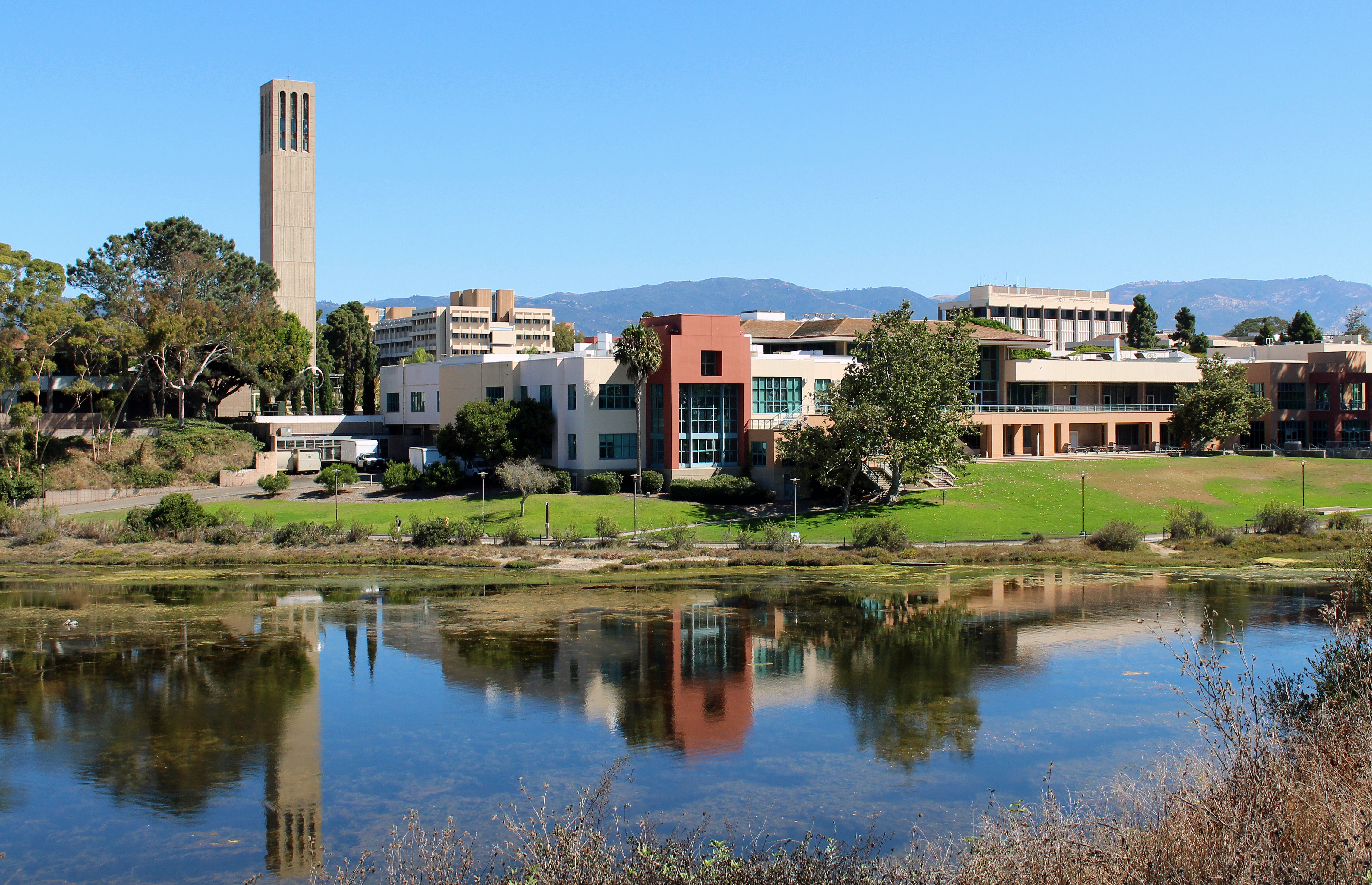
What began as a single campus in Berkeley grew into a system that now spans the length of California. UCLA opened in 1919 as the system's southern branch and has since become one of the most applied-to universities in the world. UC San Francisco, uniquely, has no undergraduates at all -- it exists solely as a medical and health sciences campus, with its School of Medicine ranked among the top three in the nation. UC San Diego, founded in 1960, brought with it the Scripps Institution of Oceanography, which had been studying the Pacific since 1903. UC Santa Cruz adopted a residential college system inspired by Oxford and Cambridge, grouping students into small communities rather than losing them in the mass of a large university. The youngest campus, UC Merced, opened in 2005 in the San Joaquin Valley, deliberately placed to serve one of California's most underrepresented regions. Each campus developed its own identity, yet all share a common mission written into their founding: teaching, research, and public service.
Laboratories That Changed the World
The University of California's research enterprise operates on a scale that few institutions in the world can match. Lawrence Berkeley National Laboratory, perched in the hills above the Berkeley campus, has been the site of seventeen Nobel Prize-winning discoveries. It was here that Ernest Lawrence invented the cyclotron in 1931, launching the age of particle physics. Across the bay and inland, Lawrence Livermore National Laboratory has focused on national security research since 1952, while Los Alamos -- where the Manhattan Project built the first atomic bombs -- maintains its UC ties through a joint management partnership. Beyond weapons and physics, UC researchers have shaped fields from agriculture to genomics. The university's 40.8-million-volume library system is among the largest in the world, and its Natural Reserve System protects over 756,000 acres across 42 reserves, giving scientists undisturbed ecosystems for long-term research that would be impossible on a typical campus.
The Public Ivy Paradox
For decades, the University of California embodied a democratic ideal: a world-class education available to any qualified California resident for minimal tuition. The Master Plan for Higher Education, adopted in 1960 under President Clark Kerr, guaranteed the top 12.5 percent of California high school graduates a spot in the UC system. That compact held for a generation. But rising costs, declining state funding, and surging demand have strained the promise. UC Berkeley and UCLA now accept fewer than 15 percent of applicants, and the system has faced criticism for admitting growing numbers of out-of-state and international students who pay higher tuition. Governor Jerry Brown, at a 2015 Board of Regents meeting, put the tension bluntly: the ordinary California student with good-but-not-perfect grades was getting frozen out. A 2020 state audit found that at least 64 wealthy students had been improperly admitted as favors to influential figures, most of them at Berkeley. The university's challenge going forward is the same one it has faced since 1868: how to remain both excellent and accessible.
The View from the Hills
From the air, the Berkeley campus is the easiest to spot -- its Campanile tower rising above the eucalyptus groves, the oval of California Memorial Stadium carved into Strawberry Canyon, and the white dome of the Lawrence Hall of Science gleaming on the ridge above. But the university's footprint extends far beyond any single campus. Its agricultural research stations dot the Central Valley. Its telescopes watch the skies from Lick Observatory on Mount Hamilton and the W.M. Keck Observatory in Hawaii. Its medical centers in San Francisco, Los Angeles, San Diego, Davis, and Irvine treat over five million patients a year. The system enrolls nearly 300,000 students and employs over 230,000 people, making it one of the largest employers in California. What the gold miners of 1849 could not have imagined is that their state's most enduring wealth would come not from the ground, but from the institution their successors built to outlast the mines.
From the Air
The UC system's administrative headquarters (the Office of the President) is located in downtown Oakland at 37.802N, 122.271W. The Berkeley campus, visible from the air, features the 307-foot Sather Tower (the Campanile) and California Memorial Stadium. Nearest airports include Oakland International (KOAK) and San Francisco International (KSFO). Best viewed at 3,000-5,000 feet AGL for campus detail; the hillside Lawrence Berkeley National Laboratory is visible at higher altitudes.