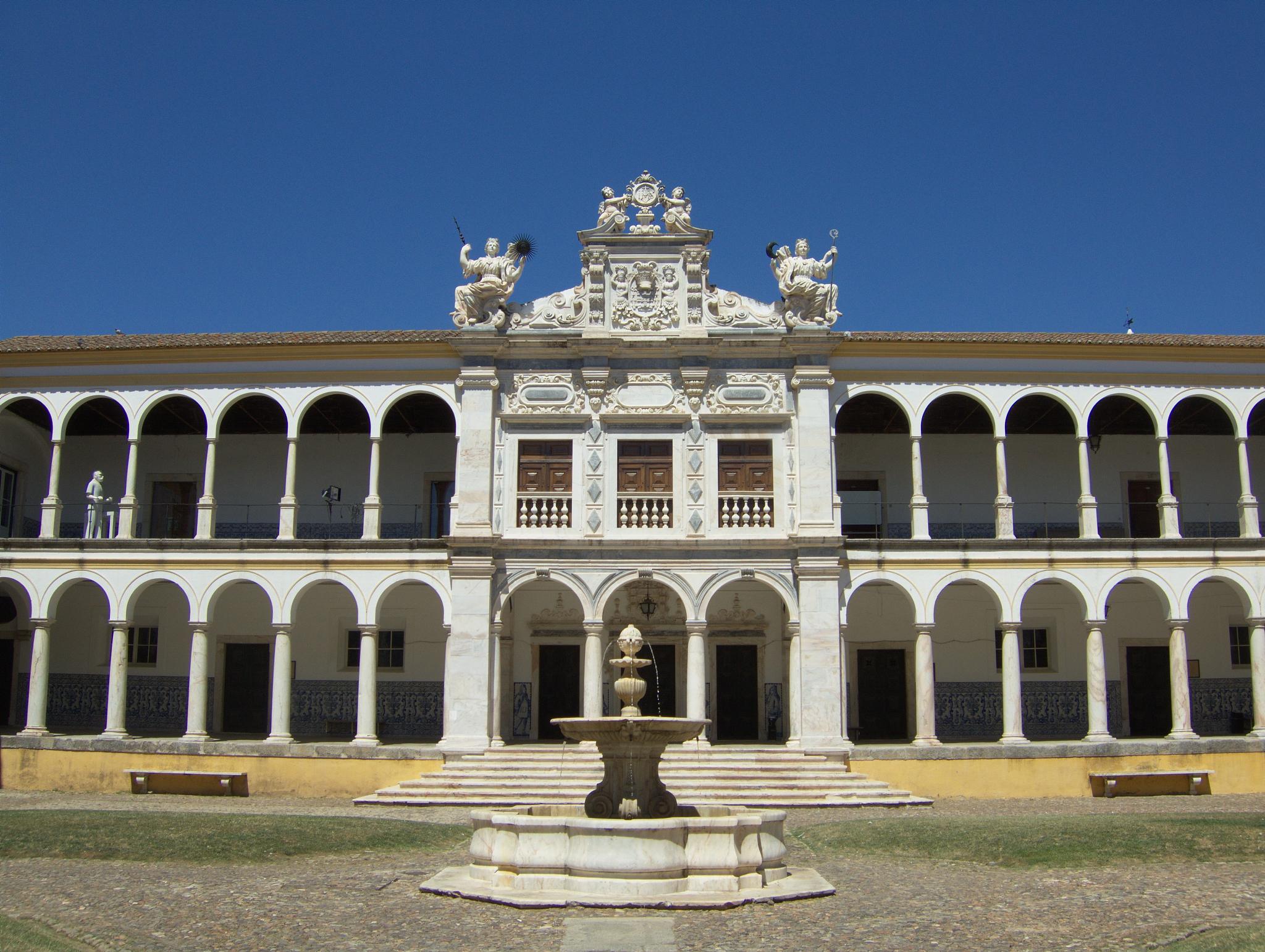
University of Evora
On February 8, 1759, cavalry troops surrounded the Jesuit college in Evora. The Marquis of Pombal -- the powerful minister who was reshaping Portugal in his own image -- had ordered the suppression of the Society of Jesus, and the university that the Jesuits had run for exactly two hundred years was finished. Its professors were arrested or exiled. Its doors closed. Nearly two centuries would pass before students returned to the same Renaissance cloister, the same azulejo-lined classrooms, the same baroque chapel where degrees are still conferred today.
A Cardinal's Foundation
The University of Evora was established in 1559 by Cardinal Infante Dom Henrique, the Archbishop of Evora who would later become Cardinal-King of Portugal. Pope Paul IV granted it university status that same year through the papal bull Cum a nobis. Henrique handed administrative control to the newly formed Society of Jesus, part of a broader strategy to attract the Jesuits to Portugal. The institution was housed in the Colegio do Espirito Santo -- the College of the Holy Spirit -- and it quickly became a rival to the University of Coimbra, Portugal's oldest. Its theologians and philosophers gained international renown. Luis de Molina, whose theories on free will and divine grace influenced Catholic theology for centuries, taught here. So did Pedro de Fonseca, often called the Portuguese Aristotle.
Where Plato Teaches in Tile
The classrooms of the Colegio do Espirito Santo are decorated with azulejos -- the hand-painted ceramic tiles that are one of Portugal's most distinctive art forms. The scenes are deliberately chosen to match the subjects taught in each room: one panel depicts Plato teaching his followers, another shows Aristotle instructing Alexander the Great. These are not mere ornament. They are visual arguments for the continuity of intellectual tradition, a claim that the knowledge passed from Athens to Evora traveled an unbroken line. The cloister at the heart of the complex is a Tuscan-arched Renaissance courtyard, elegant and restrained, a counterpoint to the elaborate tilework inside. Diplomas are still granted in the 18th-century baroque chapel, the Sala dos Actos, which was restored in 1973 when the university reopened.
Pombal's Purge
The Jesuit college operated for exactly two hundred years, from 1559 to 1759. Its fall was part of a larger convulsion. The Marquis of Pombal -- Sebastiao Jose de Carvalho e Melo -- was consolidating state power in Portugal after the devastating 1755 Lisbon earthquake, and the Jesuits stood in his way. He accused them of undermining royal authority, expelled the entire order from Portuguese territory, and seized their properties. The university in Evora was one of the casualties. Its masters were imprisoned or driven into exile, its libraries confiscated, its intellectual community dispersed. The buildings survived, but the institution died. It would not reopen until 1973, when Minister of Education Jose Veiga Simao established the Instituto Universitario de Evora as part of a reform of Portuguese higher education. The name changed to Universidade de Evora in 1979.
Prelates, Poets, and a Bishop of Japan
During its Jesuit centuries, the university trained many of the prelates who administered Portugal's sprawling empire. Afonso Mendes, who served as Patriarch of Abyssinia (modern-day Ethiopia), studied here. So did Pedro Martins, who became the first bishop of Japan. The theologian Manuel Alvares, whose Latin grammar became a standard textbook across Jesuit schools worldwide, taught within these walls. St. Joao de Brito, martyred in India, was another alumnus. The university's reach was disproportionate to its size -- a school in a small Alentejo city that shaped minds from Lisbon to Nagasaki. Today it operates as a state-run institution, its enrollment modest, its setting still magnificent. The azulejos still tell their stories. The cloister still catches the late-afternoon light. And degrees are still granted in Henrique's chapel, exactly where they were in 1559.
From the Air
Located at 38.57N, 7.90W in the historic center of Evora, Portugal, just east of the cathedral and Roman temple. The university's Renaissance cloister courtyard is identifiable from low altitude. Nearest airports: Evora (military, LPEV); Lisbon-Humberto Delgado (LPPT), approximately 130 km northwest. Best viewed at 1,000-2,000 ft AGL. The entire historic center is a UNESCO World Heritage Site.