University of Lille
Louis Pasteur was 31 years old when he took the job of dean of the science faculty in Lille. The year was 1854. He was about to do the work, in this same northern French city, that would lead him to germ theory - studying how local brewers ruined their beer, then noticing the tiny living things in the spoiled vats. The university Pasteur led was already 300 years old then. It is older still today. The current University of Lille, founded in its modern form by a 2018 triple merger, claims an institutional descent that begins in Douai in 1559 - a thread of teaching, fragmenting and re-fusing and renaming itself, that has somehow kept going for more than four and a half centuries.
The Long Genealogy
Universite de Douai was chartered by Philip II of Spain in 1559, in what was then the Spanish Netherlands. When Louis XIV took the region for France, the university passed under French jurisdiction. The Revolution swept it away in 1793. It was rebuilt in pieces under Napoleon as faculties, not a unified university. The science faculty moved to Lille in 1854. Pasteur arrived three years later. Across the 19th and 20th centuries the institution grew and reorganised, splintering after the May 1968 reforms into three separate universities - Lille 1 for science, Lille 2 for health and law, Lille 3 for humanities - each on its own campus, each with its own administration. In 2018, they merged back. The new University of Lille is one of the largest in France, with more than 80,000 students and an endowment of 500 million euros.
Five Campuses, One City
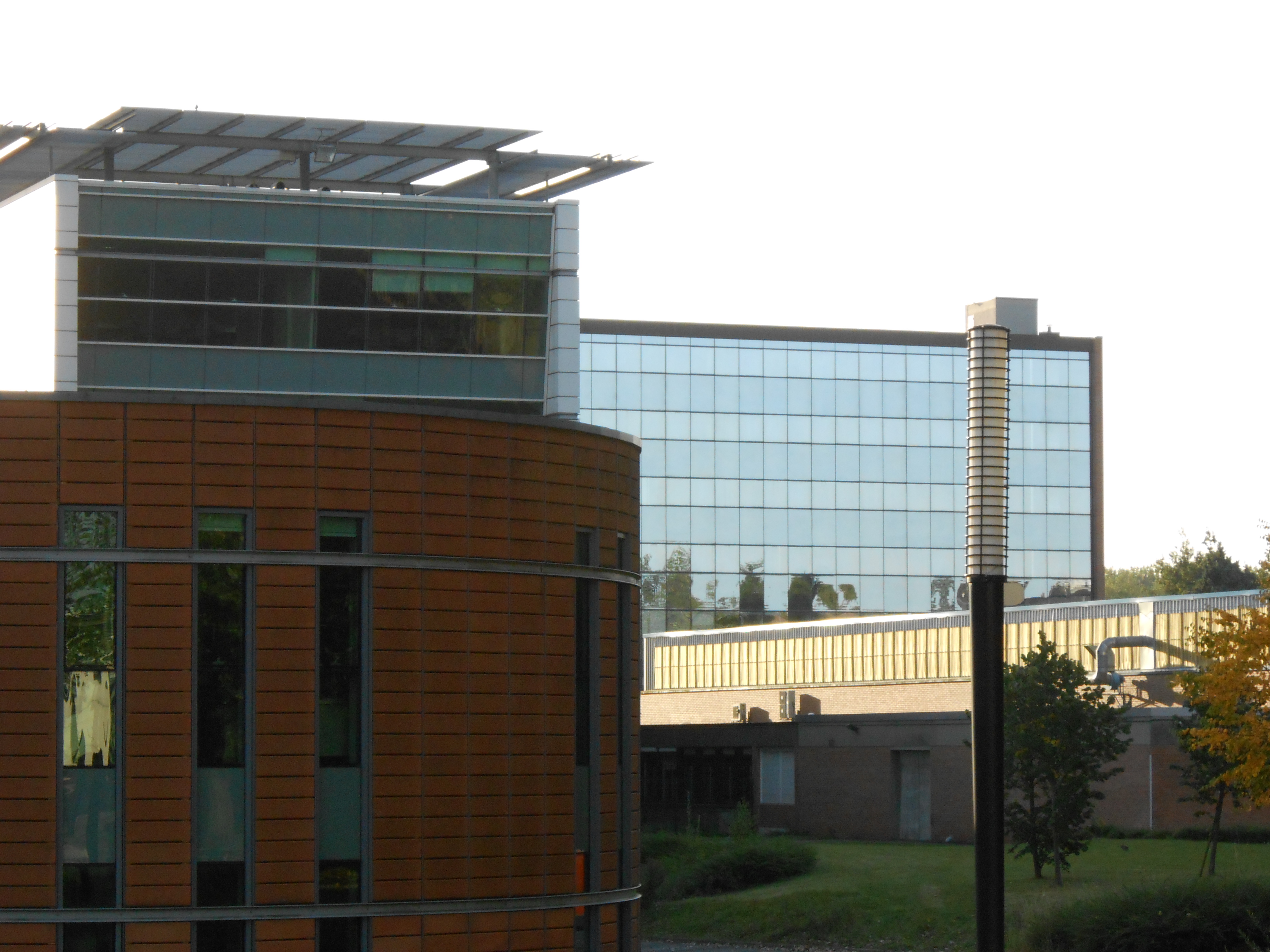
The university spreads across the metropolitan area in five main campuses, each with its own character. Cite Scientifique sits in Villeneuve-d'Ascq, a 150-hectare science city built around the LILLIAD Learning Center and surrounded by engineering schools - the Ecole Centrale de Lille, the IMT Lille Douai, the Ecole nationale superieure de chimie. Campus Sante shares premises with CHU Lille, the largest university hospital complex in Europe at 350 hectares. Campus Pont de Bois holds the humanities and languages. Campus Lille-Ronchin handles law, management, Sciences Po Lille, and the renowned Ecole superieure de journalisme. Campus Roubaix-Tourcoing keeps the textile and applied-foreign-language schools where the region's industrial past intersects its globalised present. The headquarters - 42 rue Paul Duez in the city centre - is the still point at the middle of all of it.
What Got Invented Here
The BCG vaccine, which has prevented uncounted millions of tuberculosis deaths, was developed at the Pasteur Institute of Lille by Albert Calmette and Camille Guerin and first administered in 1921 - the B and the C in BCG are Calmette and his city, the G is Guerin. Claude Auguste Lamy, professor of chemistry at Lille, isolated and named the element thallium in 1862. Roger Gabillard, a Lille physicist, co-invented the Vehicule Automatique Leger - the driverless metro that now runs in Lille, Paris, Rennes, Toulouse and Turin. Faustin-Archange Touadera earned two doctorates in mathematics here before becoming Prime Minister and then President of the Central African Republic. The CNRS gold medal - France's highest scientific honour - has gone to seven Lille professors, including Henri Cartan and the sociologist Pierre Bourdieu. The list of useful things invented or proved within this institution's walls is unusually long.
Pasteur's Beer Problem
It was a local beet-sugar brewer named Bigo who first asked Pasteur for help. The brewers of Lille kept finding their fermentation tanks going sour - the lactic acid turning ropy, the yields collapsing. Pasteur, the new dean, took samples to his microscope and found something the chemists had not predicted: the spoiled vats contained different living organisms than the healthy ones. Fermentation was not a chemical process. It was biological. From that observation he reasoned forward, year by year, to the proposition that microscopic life caused both disease and decay - germ theory, the foundation of modern medicine. Pasteur left Lille in 1857, the same year he arrived, called to Paris for higher posts. But the work that made him Pasteur began here, in industrial Flanders, peering into a brewer's bad batch.
The Modern Institution
Today the University of Lille graduates 350 PhDs a year and produces 3,000 scientific publications. It is one of the few French universities funded under the 'universities of excellence' programme. Its medical faculty trains doctors who will work across the Hauts-de-France region - the most populous, most industrial, and one of the most economically pressured parts of France. The students are predominantly French and predominantly local, the way French public universities tend to be: an inexpensive, accessible institution doing the unglamorous work of producing the lawyers, doctors, teachers and engineers that the surrounding region needs. The 466-year-old thread of teaching that started in Douai has not been romantic, mostly. But it has been remarkably durable.
From the Air
Located at 50.632 N, 3.075 E - the headquarters at 42 rue Paul Duez in central Lille. The university's campuses scatter across the Metropole europeenne de Lille: Cite Scientifique in Villeneuve-d'Ascq (southeast), Pont de Bois nearby, Sante south of the centre, Lille-Ronchin in the south. Nearest airport is Lille (LFQQ/LIL), 6 km southeast. Brussels (EBBR) is 110 km east. Recommended altitude 3,000-5,000 ft to take in the metropolitan sprawl. The CHU Lille hospital complex and the Villeneuve-d'Ascq science campus are the most visible features from the air.