University of Southern Mississippi
Pick a rose on this campus and it will cost you five hundred dollars. The All-American Rose Garden at the University of Southern Mississippi contains 32 beds of rare hybrid varieties, tended since 1972, and the university enforces the penalty with a straight face. It is an unexpectedly delicate detail for an institution that has weathered Category 5 hurricanes, fired tenured professors for dissent, sent its marching band to a presidential inauguration, and produced Brett Favre, Jimmy Buffett, and an astronaut. Founded in 1910 as Mississippi Normal College -- a modest teachers' college in Hattiesburg -- Southern Miss has reinvented itself across more than a century into a dual-campus research university stretching from the pine forests of Forrest County to the barrier islands of the Gulf Coast.
From Normal School to Research Giant
The Mississippi state legislature chartered Mississippi Normal College on March 30, 1910, to train the state's public school teachers. The school opened its doors in 1912 with a handful of buildings that still anchor the historic district today: Ogletree Alumni House, the Honor House, College Hall, Forrest Hall, and Hattiesburg Hall. As the curriculum broadened, the name changed -- State Teachers College in 1924, Mississippi Southern College in 1940, and finally the University of Southern Mississippi in 1962. That trajectory from single-purpose normal school to R1 research university is written in the architecture. The Lucas Administration Building, known simply as "The Dome" for its prominent copper cupola, marks the Hardy Street entrance. Behind Southern Hall stands a three-ton golden eagle sculpture called "Lofty Return," 22 feet tall and 20 feet wide on an eight-foot pedestal. Today Southern Miss offers 189 degree programs across four colleges and is accredited in all four fine arts areas -- art, dance, theatre, and music -- one of only a dozen American universities to hold that distinction.
Two Campuses, One Storm
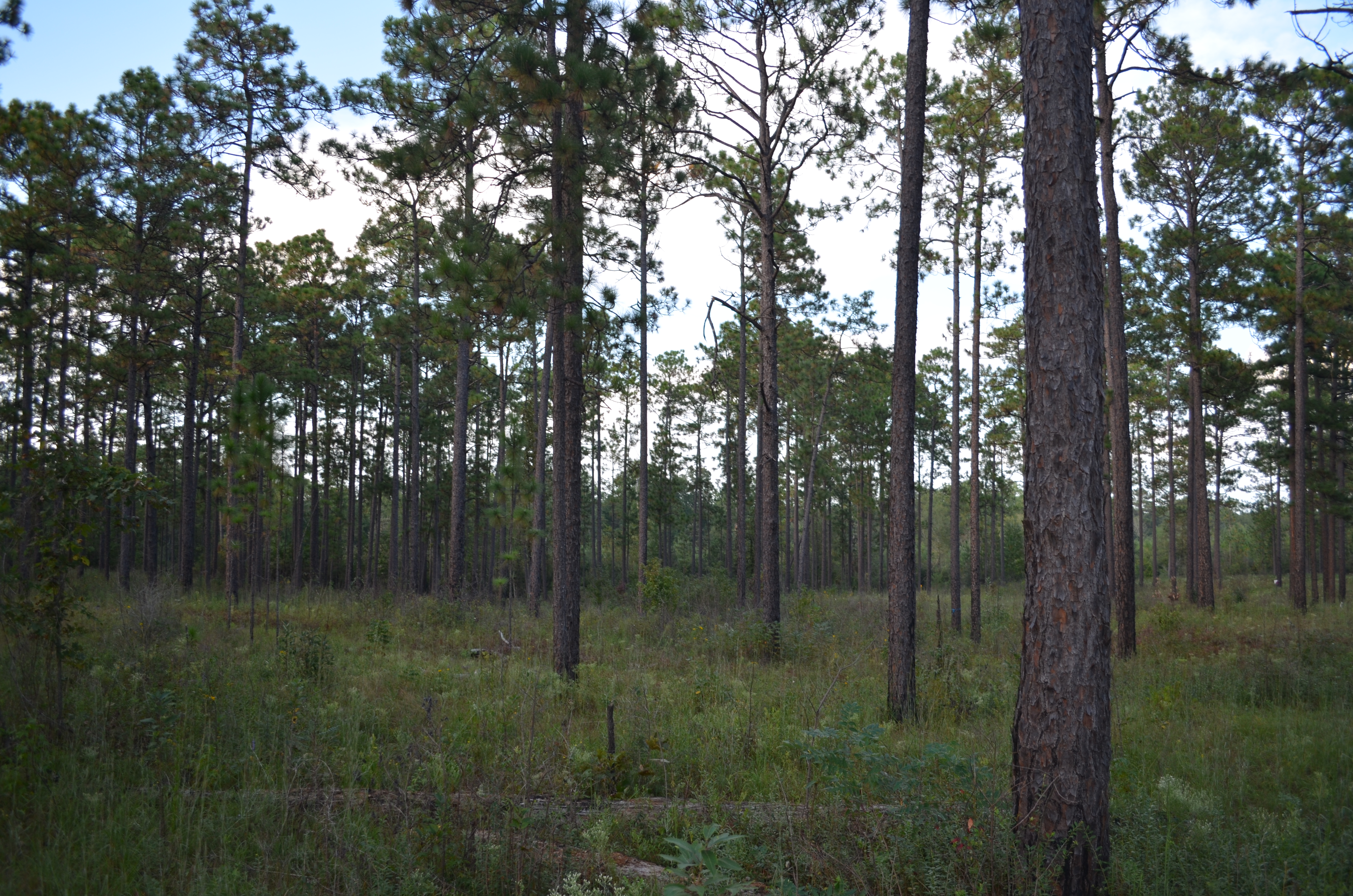
Southern Miss is the only comprehensive university in Mississippi with dual-campus status. The Hattiesburg campus sits in the longleaf pine belt of south-central Mississippi, while the Gulf Park campus occupies a stretch of Highway 90 in Long Beach, overlooking the Gulf of Mexico. Gulf Park began life as the Gulf Park College for Women in 1921, and the university acquired it in 1972. Its most treasured landmark is the Friendship Oak, a massive live oak dating to approximately 1487 -- more than five centuries of growth on that coastal lawn. On August 29, 2005, Hurricane Katrina slammed into the Gulf Coast and inflicted roughly $115 million in damage to Gulf Park. Classes relocated to a facility in Gulfport for seven years. The Friendship Oak survived, just as it had endured Hurricane Camille in 1969. Under president Shelby Thames, the university refused to lay off a single employee after Katrina, a decision that stood in sharp contrast to Tulane University in New Orleans, which cut 25 percent of its staff.
Legends in Black and Gold
The Golden Eagles -- named so since 1972, replacing the original Mississippi Southerners moniker -- have built a storied athletic tradition. Southern Miss has claimed two national football titles and three in track and field. On November 13, 1982, the Golden Eagle football team upset Bear Bryant's Alabama Crimson Tide in the legendary coach's final home game in Tuscaloosa. M.M. Roberts Stadium, capacity 36,000, hosts the Eagle Walk two hours before kickoff: a cannon fires, and the ROTC, the Pride of Mississippi Marching Band, coaches, and players march through a corridor beneath the upper deck while thousands of fans line the route. That same marching band performed at President Jimmy Carter's inauguration and at the Macy's Thanksgiving Day Parade in 2010. The university's list of notable alumni reads like a roster of American celebrity: quarterback Brett Favre, singer-songwriter Jimmy Buffett, Iron Chef Cat Cora, Olympic gold medalist Tori Bowie, NFL Hall of Fame punter Ray Guy, and astronaut Robert L. Stewart.
Mardi Gras and Secret Societies
Hattiesburg sits close enough to New Orleans, Biloxi, and Mobile that Mardi Gras runs in the region's blood. In 1981, student body president Ken Stribling campaigned for an official Fat Tuesday holiday. The university's Calendar Committee refused, but Stribling appealed directly to President Aubrey Lucas, who agreed to a trial run in 1982. It stuck. By 1983, Fat Tuesday was a permanent part of the academic calendar, and in 2003 the student government added the Monday before Ash Wednesday, creating a four-day weekend. The holiday has become an actual recruiting tool. Campus life carries other quirks too. A small boulder in the historic district, known as the Little Rock, is repainted weekly to promote events -- and occasionally surfaces bearing the logos of secret societies. At Shoemaker Square, pranksters routinely fill the bricked fountain with soap suds. These small traditions give Southern Miss a personality that transcends rankings and research budgets.
Where Research Meets the Sea
Southern Miss extends far beyond its two main campuses. The university operates teaching and research sites at NASA's Stennis Space Center -- the agency's largest rocket engine test facility -- where the Department of Marine Science is based. The Gulf Coast Research Laboratory in Ocean Springs houses the Department of Coastal Sciences and a 97-foot research vessel, the R/V Tommy Munro. The School of Polymer Science and Engineering, the School of Ocean Science and Engineering, and the Hydrographic Science Research Center give the university an outsized footprint in coastal and materials research for a school of its size. According to the National Science Foundation, Southern Miss spent $61 million on research and development in 2018. The McCain Library and Archives preserves the de Grummond Children's Literature Collection alongside Mississippi oral history and Civil War manuscripts, making it a quiet treasure for scholars and storytellers alike.
From the Air
Located at 31.33N, 89.33W in Hattiesburg, Mississippi. The Hattiesburg campus is visible southeast of the US-49 and Hardy Street intersection. Nearest airport is Hattiesburg Bobby L. Chain Municipal Airport (KHBG), approximately 5 miles southeast. Hattiesburg-Laurel Regional Airport (KPIB) is about 13nm northeast. The Gulf Park campus in Long Beach is visible along Highway 90 on the Gulf Coast. From 3,000-5,000 feet AGL, the campus layout, M.M. Roberts Stadium, and Lake Byron are identifiable landmarks.