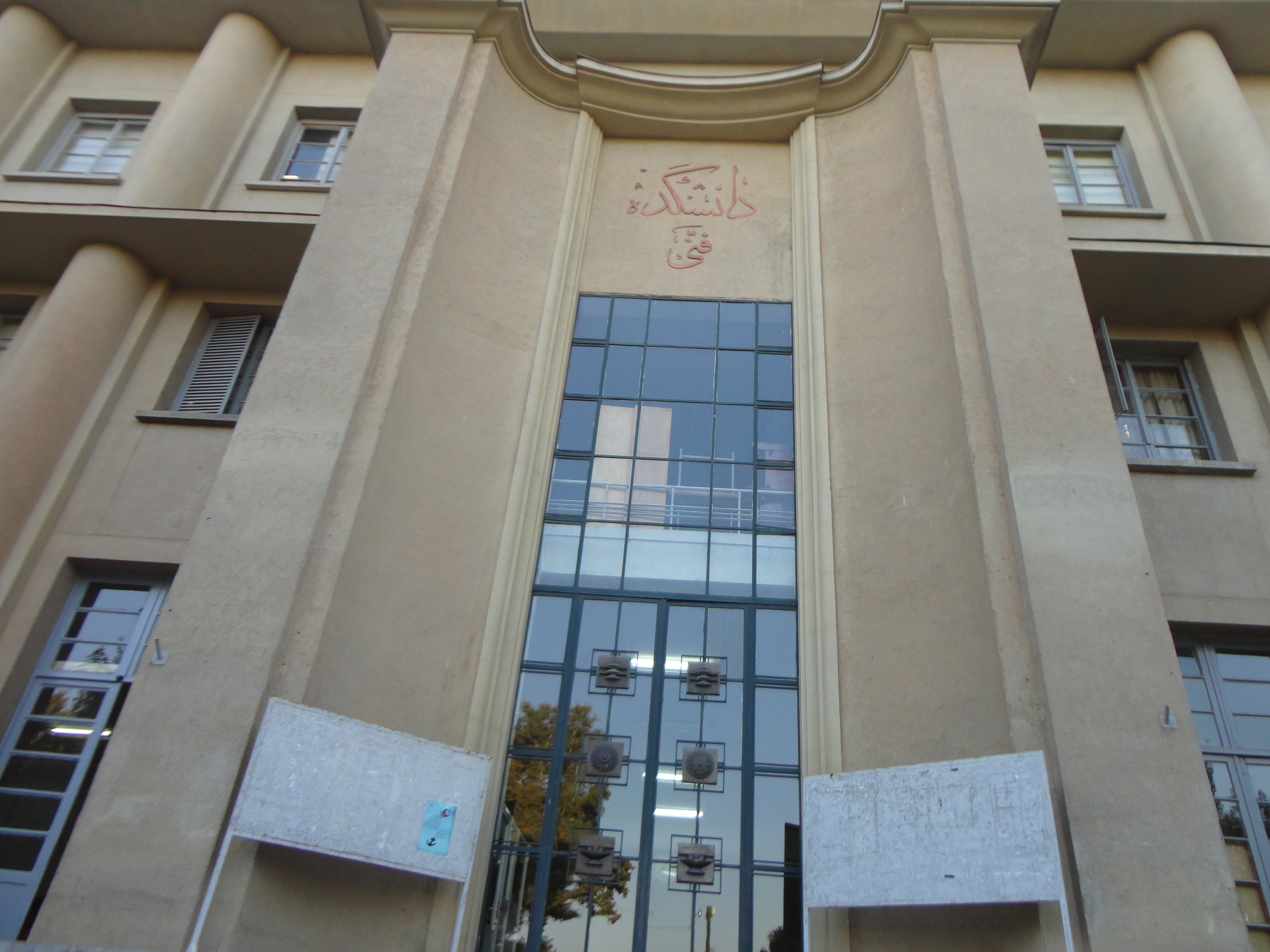
University of Tehran
Its gates appear on the back of Iran's 50,000-rial banknote. That fact alone tells you something about the University of Tehran's place in the national consciousness. Founded in 1934, it absorbed departments from institutions that stretched back much further -- the Dar al-Funun, Persia's first modern polytechnic institution, established in 1851, and the Tehran School of Political Sciences, founded in 1899. Iranians call it the Mother University, and the name carries both affection and gravity. This is the campus where the Shah's army opened fire on dissident students, helping to trigger the 1979 Islamic Revolution. It is the campus where, twenty years later, students confronted police again during the 1999 protests. Scholarship and upheaval have shared these grounds from the beginning.
Roots in Modernization
The university's origins trace to the early Pahlavi era, when Reza Shah undertook sweeping modernization of Iranian institutions. The University of Tehran was established to consolidate scattered schools into a single national university. Its initial eight colleges covered theology, science, medicine, pharmacy, dentistry, engineering, law, and the humanities. The Faculty of Fine Arts followed in 1941, veterinary medicine in 1943, agriculture in 1945. By the 1970s, the university offered programs spanning nearly every academic discipline. But the roots go deeper than 1934. The Dar al-Funun, founded by Amir Kabir in 1851, had introduced Western-style education to Persia -- Persia's first modern polytechnic institution, teaching medicine, engineering, and military science with European instructors. When the University of Tehran incorporated these older departments, it inherited not just curricula but a tradition: the idea that knowledge was the engine of national transformation.
The Campus and Its Emblem
The main campus sits on Enghelab Avenue in central Tehran, one of the city's most important thoroughfares. The iconic main entrance gate, designed in 1965 by Korosh Farzami -- then a student in the Faculty of Fine Arts -- has become the university's logo and a recognizable landmark of the capital. Multiple campuses spread across the city, including the Baghe Negarestan Campus in the east and the Amirabad Campuses to the west. Admission is fiercely competitive: only the top one percent of students passing Iran's national entrance examination gain entry. The university's emblem draws from even older sources. It is based on a stucco relief from the Sasanid period, discovered in the ancient city of Ctesiphon. The motif, placed between two eagle wings and composed of Pahlavi script reading 'Afzoot' -- meaning plentiful and increasing -- connects the modern university to a civilization that predates Islam by centuries.
Where Revolutions Took Root
No Iranian university has been as politically consequential. The campus and its surrounding streets have served as the site for Tehran's Friday prayers since the 1979 Islamic Revolution, blending religious observance with political mobilization. In the decades before the revolution, the university was a center of opposition to the Shah's regime. The shooting of students at the university gates became one of the catalyzing events of the revolution itself. In July 1999, the pattern repeated when student protests erupted following the closure of a reformist newspaper, leading to violent clashes and a police raid on university dormitories. In the wake of the contested 2009 presidential elections, 119 faculty members reportedly submitted resignations to protest attacks on student dormitories. The resignations were not accepted, but the gesture captured the university's enduring position at the intersection of intellectual life and political dissent.
A Library That Holds a Civilization
The Central Library and Documentation Center is the largest academic library in Iran, holding over one million books, periodicals, manuscripts, and scientific documents. The collection spans Persian, English, French, German, Russian, and Italian, and includes roughly 17,000 volumes of manuscripts in Persian and other languages. Historical documents, microfilms, lithography books, and handwriting samples from scholars and politicians fill the archives. A member of the International Federation of Library Associations and Institutions since 1967, the library also maintains a Conservation and Restoration Department with specialized labs. But the library is more than a repository. It is a working record of Iranian intellectual life across centuries -- pre-Islamic scientific texts alongside revolutionary-era pamphlets, Qajar-period calligraphy next to doctoral dissertations in nuclear physics. The accumulation is staggering, and it speaks to the university's self-understanding as custodian of an entire nation's learning.
The Mother University Today
The University of Tehran offers more than 111 bachelor's programs, 177 master's programs, and 156 doctoral programs, making it the most comprehensive research institution in the country and the premier knowledge-producing institute among all Organisation of Islamic Cooperation nations. In 2011, it received the highest budget of any Iranian university, equivalent to roughly 70 million dollars. The medical faculties separated in 1992 to become the Tehran University of Medical Sciences, though they remain on the main campus. For all its institutional weight, the university's significance extends beyond rankings and budgets. It remains the place where Iranian society argues with itself most intensely -- about tradition and modernity, authority and freedom, what the country has been and what it might become. The gates on the banknote are not just a symbol of education. They are a symbol of how much rides on the answers.
From the Air
Located at 35.700N, 51.395E on Enghelab Avenue in central Tehran. The main campus is identifiable from the air as a large institutional complex with distinctive architecture amid the dense urban grid. Mehrabad International Airport (OIII) is approximately 8 km to the west. Imam Khomeini International Airport (OIIE) is about 50 km south. The campus sits between the Grand Bazaar area to the south and the Alborz mountain foothills to the north, along one of Tehran's primary east-west arterials.