University of Texas at El Paso
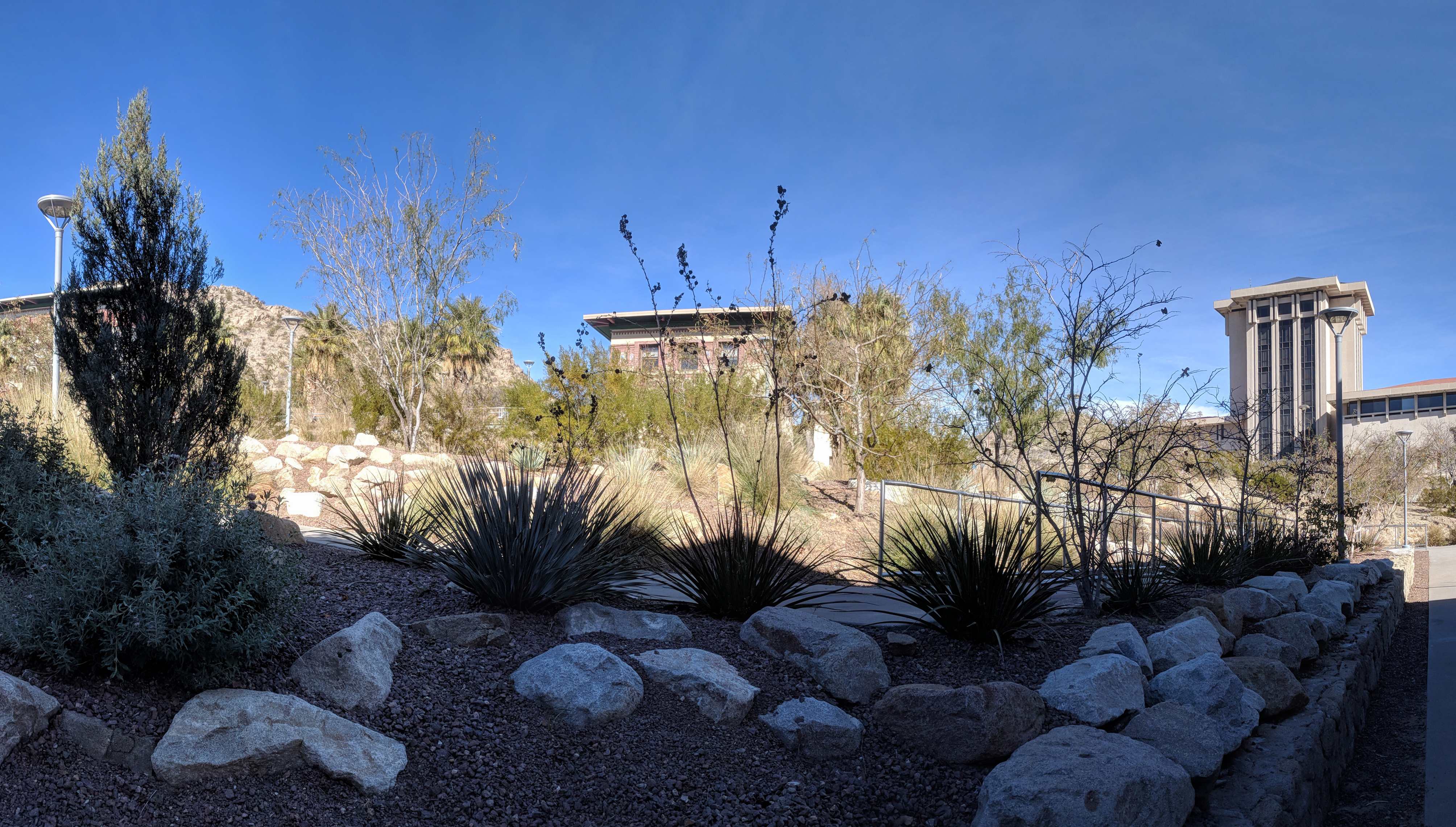
Perched on hillsides overlooking the Rio Grande with Ciudad Juarez in view across the border, the University of Texas at El Paso presents one of America's most distinctive campuses -- its buildings styled after the dzong monasteries of the Himalayan kingdom of Bhutan. This unlikely architectural marriage of West Texas desert and Buddhist fortress emerged from tragedy and serendipity, while the university itself became the stage for one of sports history's most transformative moments. Founded in 1913 as a mining school with 27 students, UTEP is now the nation's largest and oldest Hispanic-serving R1 research university.
A Fire and a Magazine
The State School of Mines and Metallurgy opened in 1914 adjacent to Fort Bliss, complete with a practice mineshaft that survives today. Two years later, fire destroyed the main building, forcing relocation. When Kathleen Worrell, wife of the school's first dean, saw photographs of Bhutanese dzong architecture in an April 1914 issue of National Geographic, she noticed something remarkable: the mountainous terrain of that Himalayan kingdom resembled the Franklin Mountains rising behind El Paso. She proposed rebuilding in that style -- massive sloping walls, markedly overhanging roofs, bands of colored decoration. The idea was enthusiastically accepted. El Paso architect Henry Trost executed the designs, and successive administrations continued the tradition through the Sun Bowl stadium and even parking garages. In 2009, the Kingdom of Bhutan presented UTEP with a hand-carved wooden temple in gratitude for this unexpected architectural tribute.
The Game That Changed Everything
UTEP became the first college in the American South to integrate its intercollegiate sports programs in the 1950s. When Don Haskins became basketball coach in 1961, he aggressively recruited Black players at a time when many claimed they lacked the mental and emotional 'necessities' to compete at high levels. In 1966, his Texas Western Miners -- as UTEP was then known -- won the NCAA basketball championship, defeating an all-white Kentucky team 72-65. Haskins started his usual lineup: five Black players, the first all-Black starting five in championship game history. The Miners finished 28-1. The story became the 2006 film Glory Road. Haskins coached his entire career at UTEP, compiling a 719-353 record with only five losing seasons. The entire 1966 team was inducted into the Basketball Hall of Fame in 2007.
Triumphs and Tensions
UTEP's athletic programs have won 21 NCAA Division I national championships, tying for 10th overall among schools in men's sports -- one basketball title plus seven in cross country and thirteen in indoor and outdoor track and field. But success came with controversy. In 1968, the track program revoked scholarships of eight Black athletes who boycotted a meet at Brigham Young University to protest perceived racism. Among them was Bob Beamon, who would soon set a world record long jump at the Mexico City Olympics. The coach later regretted the decision. The 'Battle of I-10' rivalry with New Mexico State University, just 40 miles away, remains fierce.
Picks Up for the Miners
The school's 'Miners' nickname likely came from a clerical error in the 1913 bill establishing the institution, when Senator Claude Hudspeth wrote 'State School of Miners and Metallurgy' instead of 'Mines.' UTEP students flash the 'Picks Up' hand symbol -- representing a miner's pickaxe striking the ground -- at basketball free throws and football kickoffs. The gesture resembles the Hawaiian shaka sign. In the late 1980s, with permission from the estate of Marty Robbins, the music department wrote new words to his Grammy-winning hit 'El Paso,' giving UTEP a fight song recognized across the nation. Today the university offers the USA's only bilingual MFA creative writing program and trains the nation's first Peace Corps class in 1961, preparing students who look across the border and see not a barrier, but a horizon.
From the Air
UTEP's distinctive Bhutanese-style campus sits at approximately 31.77N, 106.51W on hillsides northwest of downtown El Paso, clearly visible from the air due to its unusual architecture and the massive Sun Bowl stadium (51,500 capacity). The campus is immediately recognizable by the sloped walls and overhanging roofs that distinguish it from surrounding development. The Rio Grande and US-Mexico border run just south of campus, with Ciudad Juarez sprawling across the Mexican side. The Franklin Mountains rise dramatically to the north. El Paso International Airport (KELP) is approximately 7 nm northeast. The Sun Bowl stadium is the most prominent landmark; look for it tucked into the hillside terrain. Best viewed from the east or south to appreciate how the campus terrain mirrors the Himalayan inspiration.