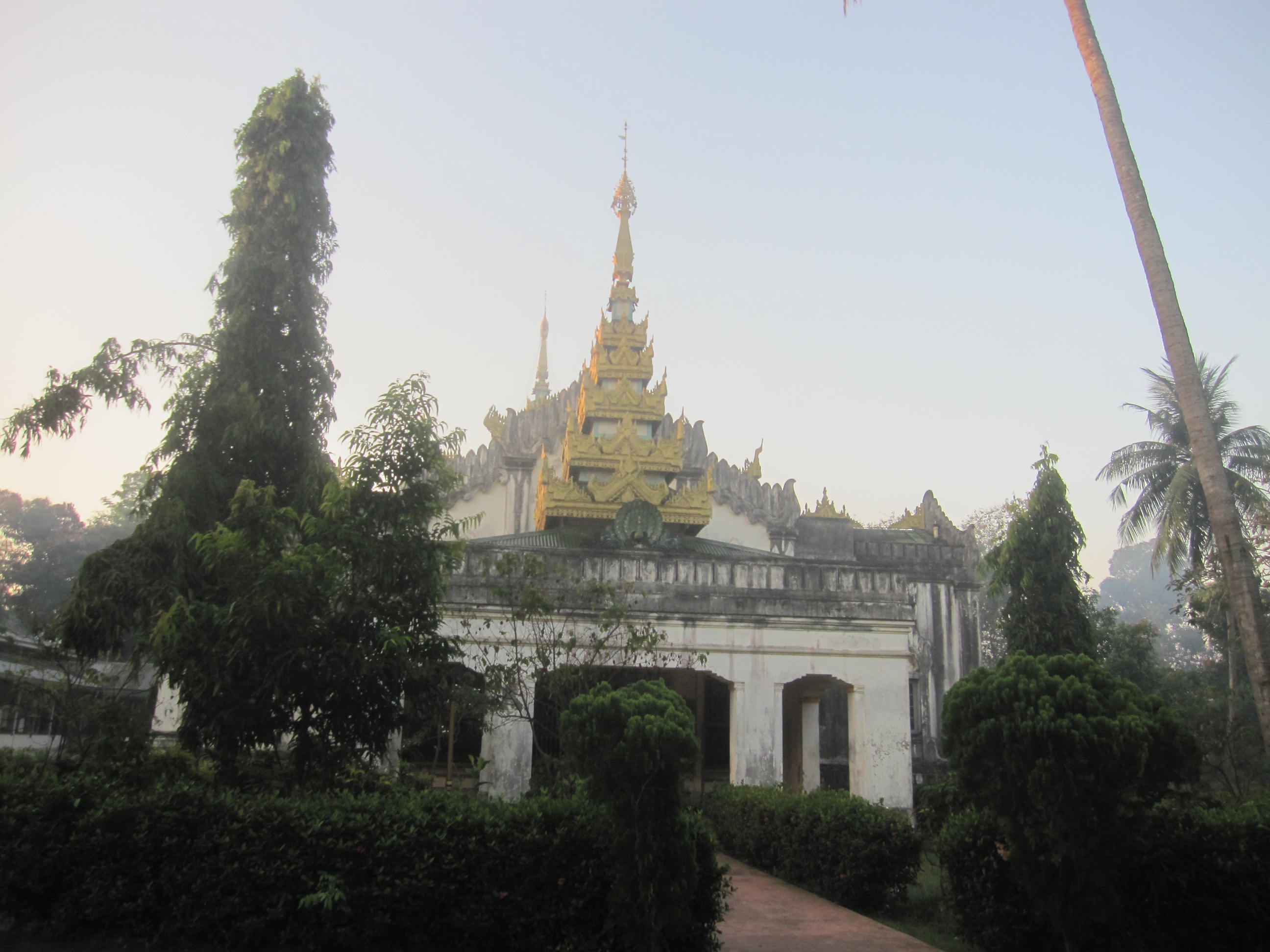
University of Yangon
The list of alumni reads like a roll call of modern Myanmar itself: Aung San, the father of Burmese independence. U Nu, the first prime minister. U Thant, the third Secretary-General of the United Nations. Aung San Suu Kyi, Nobel laureate and democracy icon. But the University of Yangon has shaped its nation through more than its graduates. Established in 1878 as a modest college affiliated with the University of Calcutta, it became the crucible in which Burmese nationalism was forged, the site where students first challenged colonial power, and the place where -- decades later -- they would challenge military power at the cost of their lives. For most of the 20th century, to attend Yangon University was to be drawn into the orbit of political history whether you wanted to be or not.
From Calcutta's Shadow
Rangoon College began in 1878 under the British colonial administration's Education Syndicate, an outpost of the University of Calcutta serving the elites of Lower Burma. It was renamed Government College in 1904, then University College in 1920, the same year it merged with the Baptist-affiliated Judson College under the University of Rangoon Act. The merger created something new: a university that would anchor all higher education in the country. Every subsequent institution the British founded -- Mandalay College in 1925, Teachers Training College and Medical College in Yangon in 1930, Agriculture College in Mandalay in 1938 -- fell under Rangoon University's administration. By the time Myanmar gained independence in 1948, the university was not merely a school. It was the intellectual infrastructure of the entire nation, the single institution through which every educated Burmese professional had passed.
The Crucible of Resistance
From its earliest days, the university was political. Students protested the Rangoon Act, which placed the British governor as chancellor, making the university an instrument of colonial control. That friction between academic aspiration and authoritarian governance never resolved -- it only changed forms. After independence brought a golden period of intellectual flourishing, the military coup of 1962 extinguished it. But suppression bred defiance. On August 8, 1988, students from Yangon University and campuses across the country launched what became the 8888 Uprising, a mass protest against military rule supported by hundreds of thousands of civilians. General Saw Maung's army crushed the movement through the State Law and Order Restoration Council. The military government claimed around 350 deaths; independent estimates from human rights organizations and foreign diplomats put the overall toll between 3,000 and 10,000. Many more were imprisoned in the months and years that followed. The university paid the highest price: full-time bachelor's degrees were suspended from the main campus after further student protests in 1996, not resumed until 2014.
An Extraordinary Alumni Roll
The range of people who studied within these grounds is staggering. Aung San, who founded the Burmese armed forces and negotiated independence from Britain, walked these paths. So did B. R. Ambedkar, one of the architects of the Indian Constitution. U Thant served as UN Secretary-General from 1961 to 1971. Ma Saw Sa, who attended Judson College, became the first Burmese woman physician, a suffragist, and a member of parliament. In literature, the university nurtured the Khit-San literary movement of the 1930s, producing writers like Theippan Maung Wa and Saya Zawgyi who modernized Burmese prose. Ludu Daw Amar led the 1936 student strike before becoming one of Myanmar's most celebrated journalists. The economists who graduated here -- Hla Myint, a pioneer of development economics; Ezra Solomon, economic adviser to President Nixon -- carried the university's influence to global institutions.
Silence and Renewal
For nearly two decades, the main campus in Kamayut was a hollow version of itself. Without undergraduate programs, the grounds that had incubated independence movements fell quiet. The transition to a new government in 2011 brought tentative change. In 2013, Aung San Suu Kyi -- herself the daughter of the university's most famous alumnus -- was named head of the Yangon University Upgrading and Restoration Committee. Bachelor's degrees returned to the campus in 2014. The Diamond Jubilee Hall, built for the university's 75th anniversary celebration in 1995, stood as a reminder that the institution had survived every attempt to diminish it. Today the university offers degrees in political science, social work, geology, and other fields to a new generation of students. Whether they will face the same tests as their predecessors remains an open question in a country where the relationship between education and power has never been simple.
From the Air
Located at 16.83°N, 96.14°E in the Kamayut Township of Yangon. The university campus is visible as a green, tree-covered area distinct from the surrounding urban density, situated near Inya Lake. Recommended viewing altitude 3,000-5,000 feet. Nearest airport: Yangon International (VYYY), approximately 7 nm north-northeast. The campus is identifiable by its colonial-era buildings and the Convocation Hall.