Upper Missouri River Breaks National Monument
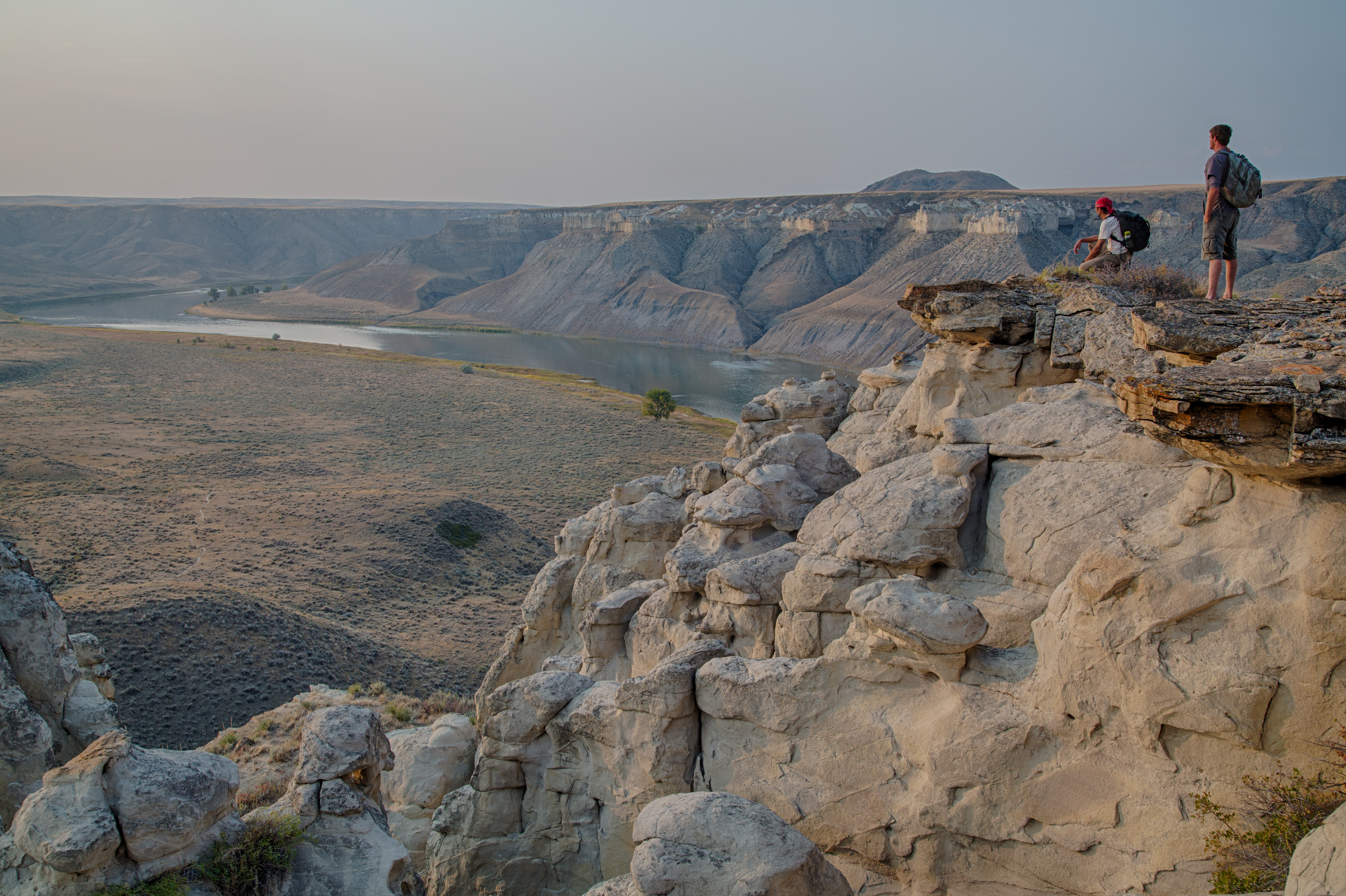
The landscape painter Charles M. Russell spent years trying to capture what he saw along the Upper Missouri: white sandstone cliffs rising like Gothic cathedrals from the river, badlands so tortured they seem to writhe under the Montana sun, and a silence so complete you can hear the river talking to itself. Locals call it simply "The Breaks," and when you see the land shatter into a labyrinth of coulees and bluffs at the river's edge, the name makes perfect sense. This is the Missouri that Lewis and Clark knew, largely unchanged since they paddled through in 1805, a 149-mile corridor of wild river protected as one of America's most remote national monuments.
An Ancient Sea Made Stone
The Breaks began as sediment on the floor of an inland sea that once stretched across the Great Plains. Layer after horizontal layer accumulated, shorelines shifting, creatures dying and becoming rock. Then the earth moved. Faults fractured the strata; volcanic activity warped them; glaciers scraped across the surface during ice ages. What erosion has done since tells the story you see today: a dramatic landform where the Missouri has cut down through millions of years of geologic time, exposing white cliffs of sandstone, dark bands of shale, and fossil-rich formations that make paleontologists giddy. The Bearpaw shale, laid down 75 million years ago, contains ammonites and marine reptile bones from that vanished ocean.
The Longest River in America
The Missouri begins where three rivers converge near Three Forks, Montana, then flows more than 2,500 miles to meet the Mississippi at St. Louis. Within this monument, the river threads through 149 miles of protected corridor, from the historic town of Fort Benton downstream to James Kipp Recreation Area. Congress designated this stretch a Wild and Scenic River in 1976, calling it an irreplaceable legacy of the historic American West. Fort Benton itself holds a singular distinction: it was the farthest west that paddle-wheeled steamboats could navigate on the Missouri, making it the jumping-off point for the Montana gold rush and a vital link in America's westward expansion.
A Living Wilderness
At least 60 mammal species roam the Breaks, and hundreds of bird species patrol the sky above. Pronghorn antelope dot the bench lands; mule deer browse in the coulees; bighorn sheep navigate cliffs that would make a mountain goat think twice. Along the river itself, you might spot beaver working the cottonwood groves or golden eagles riding thermals above the white cliffs. The Missouri here holds 49 fish species, including one of the six remaining paddlefish populations in America, with fish averaging larger than anywhere else in the country. These prehistoric giants, unchanged for 75 million years, occasionally roll at the surface like something from the age of dinosaurs.
Floating Through Time
The classic float trip covers the 44 miles from Coal Banks Landing to Judith Landing, traveling three to four days through the most spectacular white cliff scenery. Paddlers in canoes and kayaks drift past rock formations that Russell painted, camp on sandbars where Lewis and Clark likely stopped, and experience a silence broken only by geese honking and the dip of paddles. The lower stretch from Judith Landing to James Kipp offers 68 miles of even more rugged remoteness, typically done in four to five days. Note the access warning that applies to the entire monument: the roads become impassable when wet, turning to a clinging mud locals call "gumbo" that defeats even four-wheel-drive vehicles.
A Monument Preserved
President Bill Clinton proclaimed the Upper Missouri River Breaks a national monument on January 17, 2001, protecting 495,502 acres of this landscape. The Charles M. Russell National Wildlife Refuge borders the monument to the east, creating an enormous protected corridor along the river. The Bureau of Land Management runs the show here, and they enforce a simple ethic: bring everything you need, pack out everything you brought, and respect both the land and the private property that checkerboards through parts of the monument. Cell service does not exist. The nearest help might be hours away. This is wilderness in the original sense of the word, demanding self-reliance and rewarding those who arrive prepared.
From the Air
Coordinates: 47.78N, 109.02W. Best viewed at 3,000-5,000 feet AGL to appreciate the dramatic white cliffs and winding river corridor. The Breaks extend 149 miles along the Missouri from Fort Benton (KFBT unattended) to James Kipp Recreation Area. Great Falls International Airport (KGTF) lies 40 miles southwest. The badlands topography creates distinctive shadows in morning and evening light. Look for the dramatic contrast between green river bottoms and tan/white cliff formations.