UPS Flight 1354: The Cost of Fatigue
On the cockpit voice recorder, both pilots talked about not getting enough sleep. Captain Cerea Beal, Jr. and First Officer Shanda Fanning were flying a UPS Airbus A300 cargo jet from Louisville, Kentucky, to Birmingham, Alabama, on the overnight shift of August 14, 2013. They were scheduled to arrive at 4:51 a.m. Central time. A NOTAM had closed runway 06/24 -- the longest runway at Birmingham-Shuttlesworth International Airport and the only one equipped with an instrument landing system -- from 4:00 to 5:00 a.m. That left only the shorter runway 18, which offered only a non-precision approach. In the darkness before dawn, descending toward a runway they could not yet see, the crew flew their aircraft into the trees. Both pilots died. They were the only people aboard.
The Crew on the Red-Eye
Captain Beal was fifty-eight years old and had spent decades in aviation. Before UPS, he flew for TWA as a flight engineer and first officer on the Boeing 727. He joined UPS in October 1990, worked his way up through the 727, and transitioned to the Airbus A300 as first officer in 2004, then as captain in 2009. At the time of the crash, he had logged 6,406 flight hours at UPS, including 3,265 on the A300. First Officer Fanning came to UPS in 2006 as a 727 flight engineer, became a first officer on the Boeing 757 in 2007, moved to the 747 in 2009, and began flying the A300 in June 2012. She had 4,721 total flight hours, 403 of them on the A300. Both were experienced pilots. Both were tired. The cockpit voice recorder captured them discussing their lack of sleep before the flight began.
Sixteen Seconds
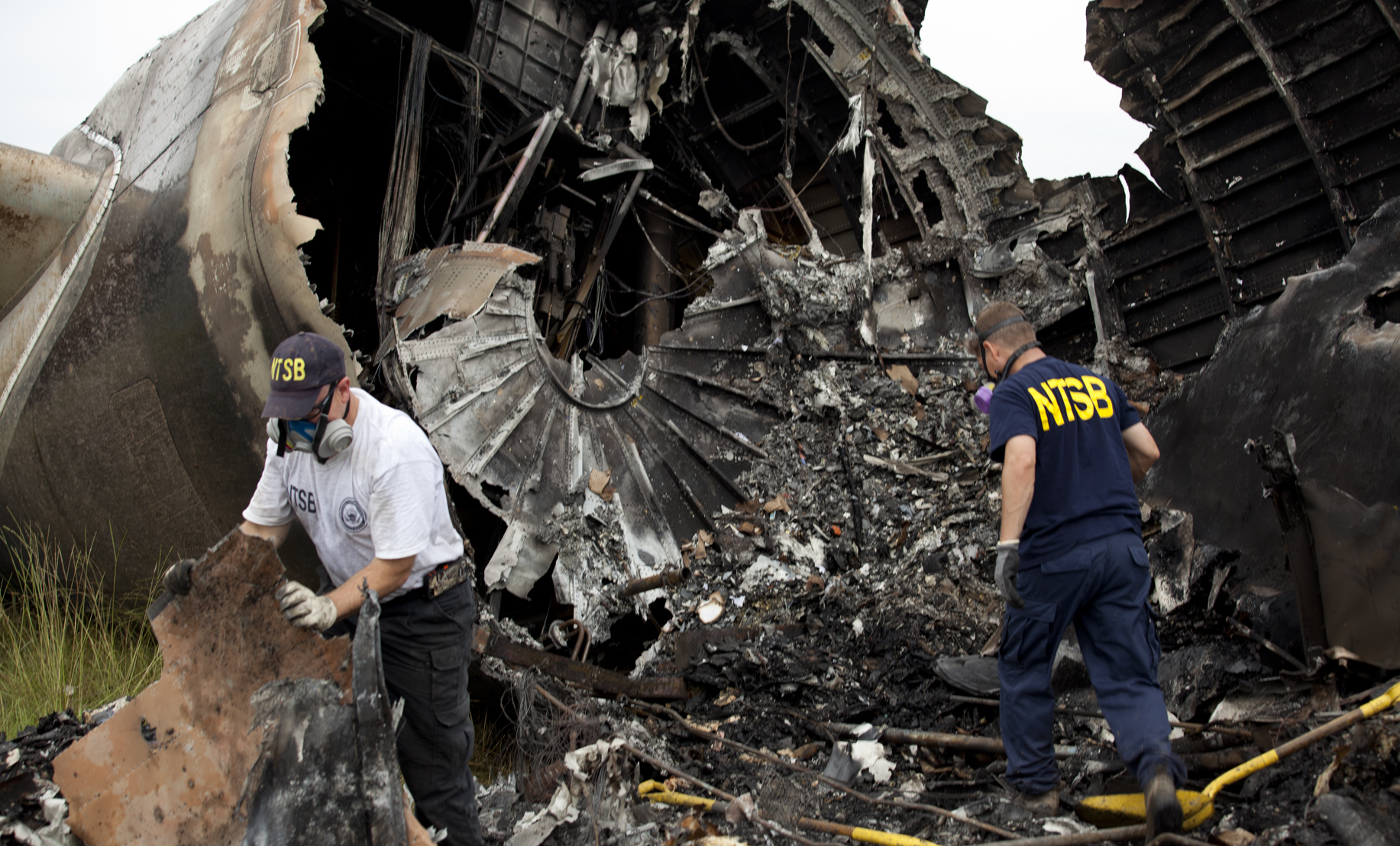
The aircraft, registration N155UP, was a nearly ten-year-old Airbus A300F4-622R powered by two Pratt & Whitney PW4158 engines. It had accumulated about 11,000 flight hours in 6,800 cycles. The flight from Louisville was routine until the approach to Birmingham. The crew briefed for runway 18 and received clearance to land. At sixteen seconds before the end of the cockpit voice recording, the ground proximity warning system sounded two 'sink rate' alerts -- the aircraft was descending too fast. Three seconds later, Captain Beal reported the runway in sight. First Officer Fanning confirmed. Three seconds after that, the recorder captured the sound of the aircraft striking trees. A final 'too low terrain' alert sounded, then the sounds of impact. The Airbus crashed and burned short of the runway threshold. There was no distress call.
Unraveling the Chain
The National Transportation Safety Board sent a twenty-six-member team to Birmingham. The cockpit voice recorder and flight data recorder were recovered the next day. No mechanical anomalies were found. On September 9, 2014, the NTSB announced its findings: the crew had flown an unstabilized approach, failed to adequately monitor their altitude, and descended below the minimum descent altitude while the runway was not yet in sight. The result was controlled flight into terrain. The contributing factors read like a cascade of compounding errors: the crew failed to properly configure the flight management computer for the approach; the captain did not communicate his intentions when the vertical profile was not captured; the first officer did not make the required minimums callouts; incomplete weather information led both pilots to expect they would break out of the clouds earlier than they actually could. Fatigue threaded through everything -- the captain's performance deficiencies, the first officer's acute sleep loss from ineffective off-duty time management.
The Cargo Exemption
UPS Flight 1354 was the airline's second fatal crash, and the aftermath raised questions about a regulatory gap that separated cargo pilots from passenger pilots. In 2014, the Independent Pilots Association sued the FAA to end the cargo airplane exemption from flight crew minimum rest requirements. Passenger airline pilots had received stricter rest rules after the 2009 Colgan Air crash near Buffalo, but those rules explicitly excluded cargo carriers. In 2016, a Washington, D.C., court dismissed the lawsuit, ruling that the FAA had acted reasonably in excluding cargo airlines based on cost-benefit analysis. The distinction remains: the pilots who fly packages through the night operate under different fatigue rules than those who carry passengers through the day. Bret Fanning, Shanda Fanning's husband, filed a separate lawsuit against Honeywell Aerospace, alleging the ground proximity warning system failed to alert the crew in time. The NTSB's own data showed the system had sounded a sink rate warning eight seconds before tree impact.
The Hill Before the Runway
The crash site lies just south of Birmingham-Shuttlesworth International Airport, in the hilly terrain that surrounds the field. From the air, the approach to runway 18 crosses rising ground dotted with trees -- the terrain that swallowed N155UP in the predawn darkness. The airport sits in a valley, and the hills to the south create a deceptive landscape on a non-precision approach at night. The accident changed nothing in federal cargo rest regulations, but it became a case study in how fatigue, a closed primary runway, a non-precision approach in darkness, and a series of small procedural failures can align into catastrophe. The NTSB report runs hundreds of pages. The cockpit voice recording runs less than a minute at the end. Sixteen seconds separated a routine approach from controlled flight into terrain.
From the Air
Crash site located at approximately 33.59°N, 86.75°W, just south of Birmingham-Shuttlesworth International Airport (KBHM) on the approach path to runway 18. The terrain south of the airport rises with hills and trees that figured in the accident. Pilots approaching KBHM from the south on runway 18 should note the rising terrain and non-precision approach characteristics. The airport elevation is 644 feet MSL. The area where N155UP struck trees is approximately one mile short of the runway 18 threshold.