Urho Kekkonen National Park
According to the Finns, Father Christmas lives here. Not in Rovaniemi, where he keeps his public reception -- that is merely the office. His actual home is Korvatunturi, a fell inside Urho Kekkonen National Park whose shape, seen on a map, resembles an ear pressed to the earth, listening. It is the kind of detail that suits a park where silence is the dominant feature: 2,550 square kilometers of fell country, boreal forest, and open bog stretching along the Russian border in Finnish Lapland, making it the second-largest national park in Finland. Outside the well-traveled trails near Saariselka, you can walk for days and meet other people only at the wilderness huts.
A Landscape Carved by Ice
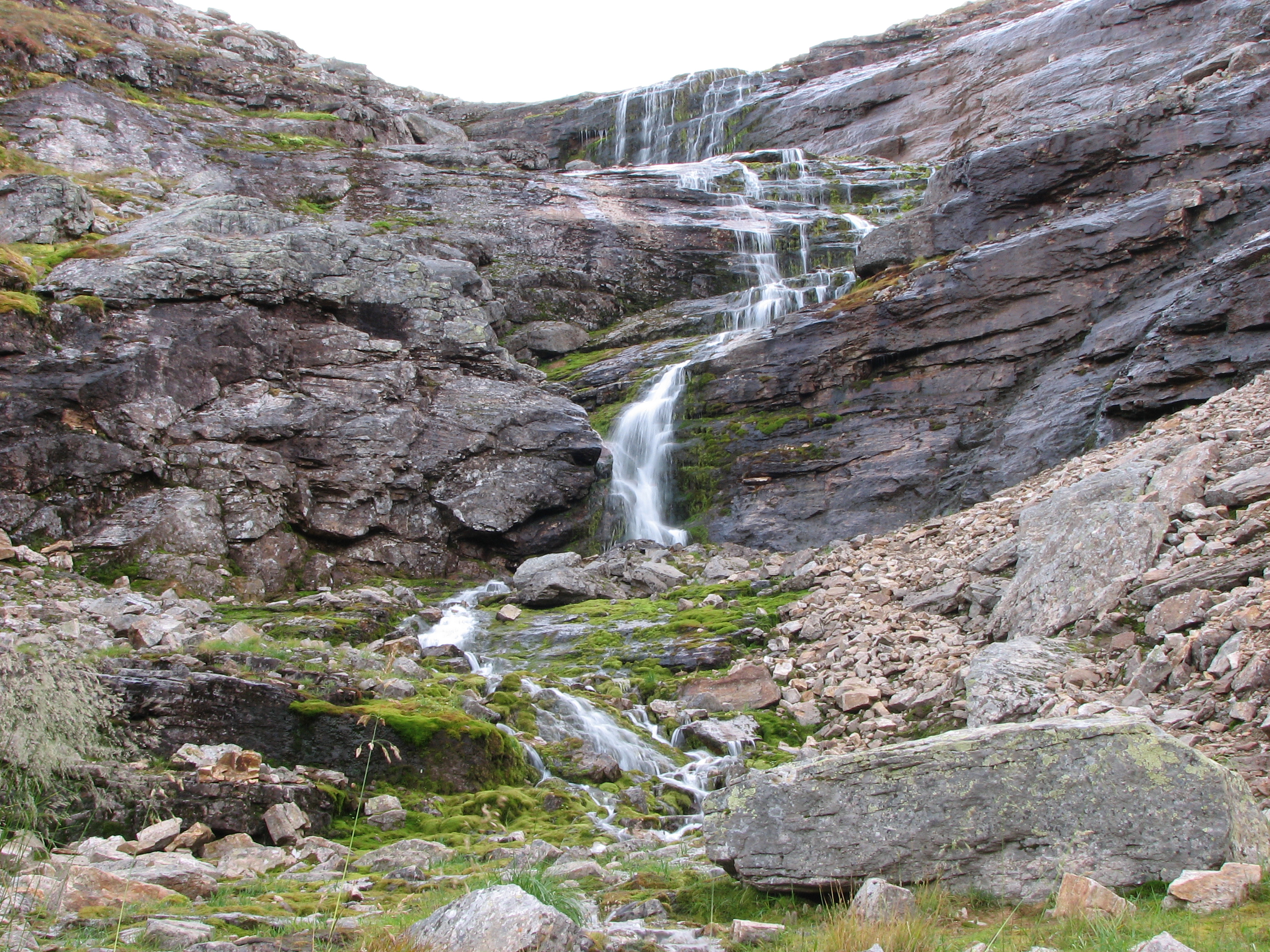
The heart of the park is the Raututunturi-Saariselka fell area, a landscape shaped by the last Ice Age into a terrain of gorges, fell heaths, and boulder fields that is surprisingly easy to traverse on foot. To the north, the river valleys of Luttojoki, Suomujoki, and Muorravaarakkajoki carve through the terrain. The southern reaches are dense forest wilderness -- pine and spruce broken by isolated fells and the vast, open aapa bogs that are characteristic of Finnish Lapland. These bogs, difficult to cross and partly closed during bird nesting season, give way to drier ground where reindeer lichens carpet the forest floor in pale green. The park straddles a watershed: some rivers flow north to the Arctic Ocean, others south toward the Gulf of Bothnia. Water defines everything here, whether frozen solid or flowing free.
Wings and Antlers
Golden eagles soar over the fells -- the species is the park's official emblem. More than 130 bird species have been recorded, including the gyrfalcon and peregrine falcon, both endangered in Finland. Most birds are migratory, the earliest arriving in February when the land is still locked in snow. Bramblings, willow warblers, meadow pipits, redwings, and redpolls make up the bulk of the summer population. In the forests, Siberian jays and three-toed woodpeckers keep year-round residence. On the ground, the park supports brown bears, wolverines, wolves, and lynx -- the full complement of Nordic large predators. Reindeer, semi-domesticated and tended by the indigenous Sami people, wander freely across the fells, their presence a reminder that this landscape has been managed, not merely preserved, for centuries.
Polar Night and Midnight Sun
Winter in the park is not a season so much as a transformation. During kaamos -- the polar night -- the sun does not rise above the horizon, and the landscape is lit by a few hours of blue-gray twilight, the moon, stars, and the northern lights. Temperatures regularly drop to minus 20 or minus 30 degrees Celsius, and extremes of minus 50 have been recorded. On the exposed fells, wind chill compounds the cold into something genuinely dangerous. Spring arrives gradually, bringing ideal skiing conditions: bright sun, firm snow in the mornings that softens by afternoon. By June, the midnight sun takes over, and the park enters its brief, intense summer -- long days of warmth that feel almost feverish after months of darkness. Early autumn brings the ruska, when the fell birches and ground vegetation blaze in reds and yellows for a few brilliant weeks before the first snow falls again.
Trails, Huts, and Wilderness Protocol
The western edge of the park, accessible from the ski resort of Saariselka and the Kiilopaa fell center, offers 200 kilometers of marked trails and 250 kilometers of groomed cross-country ski tracks in winter. This is the busy zone -- day trippers, families, guided tours. Step beyond it, into the wilderness zones deeper in the park, and the infrastructure thins to a network of roughly 50 huts: some open wilderness shelters heated by wood you chop yourself, some reservable cabins, and a scattering of day huts not intended for overnight stays. There are no blankets in the open huts, often no mattresses. You carry your own gear, navigate with map and compass (GPS is no substitute in conditions where batteries die and satellite reception is unreliable), and leave word of your plans at the visitor center with a deadline for when a rescue operation should be launched if you fail to report back.
The Sami Thread
Remnants of old Sami villages are scattered through the park, traces of a people who have lived in and moved through this landscape for thousands of years. The reindeer that graze on the fells are not wild animals but a managed herd, part of a pastoral system that predates Finland's national borders. The park sits in the municipalities of Inari, Sodankyla, and Savukoski, and the Sami presence is woven into the place names, the trail routes, and the quiet understanding that this land was not empty before it became a national park in 1983, named for Finland's longest-serving president. The Sompio Strict Nature Reserve, which borders the park, carries even tighter restrictions -- no straying from paths, a reminder that conservation here means balancing access against the needs of a fragile, ancient ecosystem and the people who have always depended on it.
From the Air
Coordinates: 68.34°N, 28.35°E in Finnish Lapland, near the Russian border. The park is an enormous expanse of fell country and boreal forest visible as a roadless wilderness east of the E75 highway corridor. Nearest airports: Ivalo Airport (EFIV) approximately 30 km to the north, Rovaniemi Airport (EFRO) approximately 250 km to the south. The Saariselka resort area on the western boundary is visible as a small cluster of development. The fells rise above the treeline as rounded, open summits. In winter, the landscape is entirely snow-covered; in autumn, the ruska color change is visible from altitude.