Ursulines of Quebec
The massive wooden door to the Ursuline Monastery has a doorknob only on the inside. It was designed to keep the outside world from getting in. For nearly four centuries, behind that door, women have taught, prayed, composed dictionaries in Algonquin and Iroquois, sheltered a kidnapped Puritan girl who became their leader, and quietly built the oldest institution of learning for women in North America. Founded in 1639 under the leadership of Mother Marie of the Incarnation, the Ursuline Monastery of Quebec City predates Harvard by just three years and has outlasted virtually every other colonial-era institution on the continent. In 2018, when all but four of the remaining sisters left the monastery for a care facility, the Globe and Mail noted that the door designed to keep outsiders from getting in ultimately could not keep out the realities of advancing age and a secular world.
Crossing the Atlantic to Teach
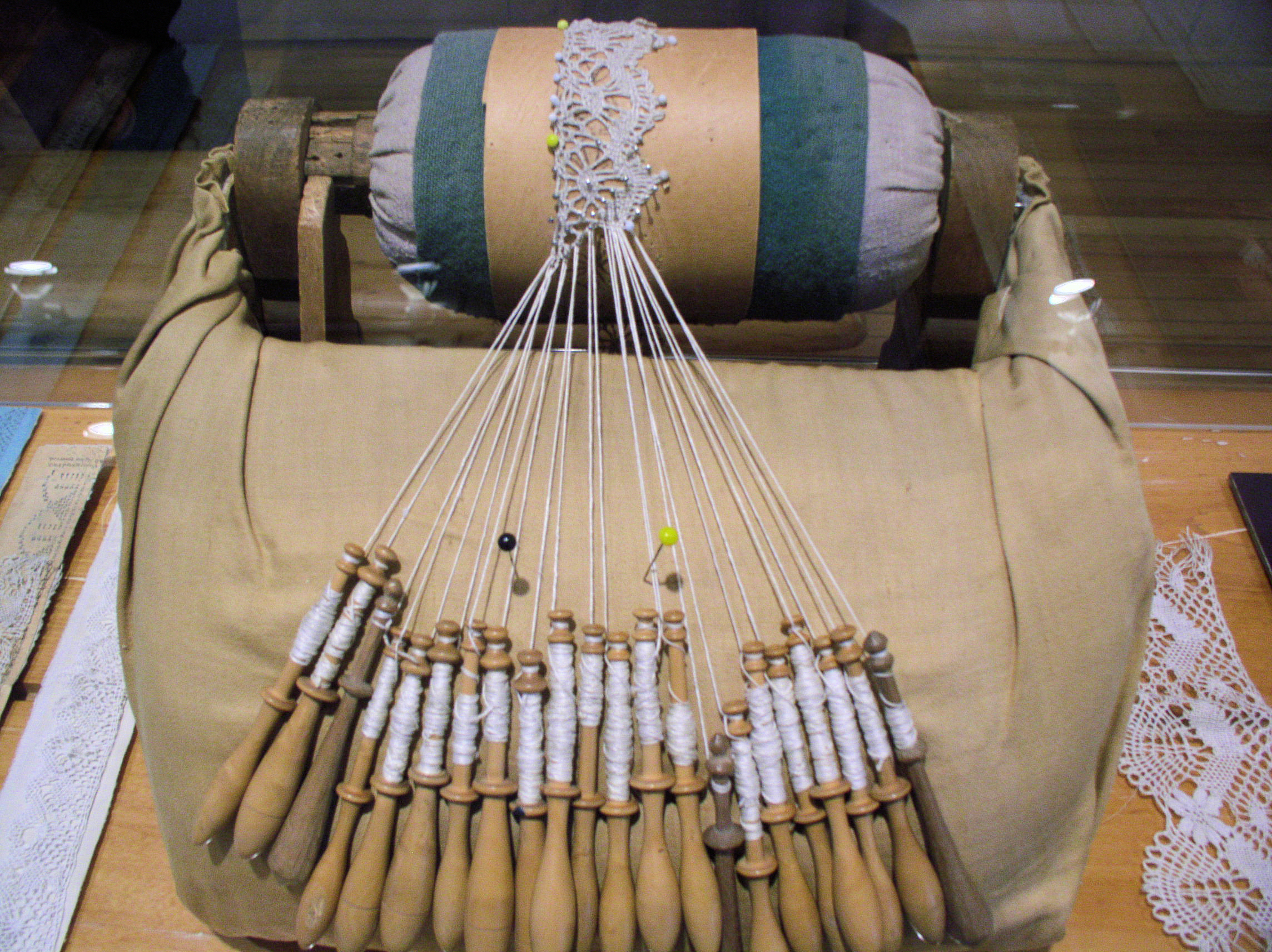
The Ursuline order was founded in 1535 at Brescia, Italy, by Angela de Merici for the education of girls and the care of the sick and needy. A century later, a small group of Ursuline nuns arrived in Quebec City in the summer of 1639, determined to bring that mission to the wilderness of New France. Their first act was not to build a school but to study -- immersing themselves in the languages of the Indigenous peoples before attempting to teach their children. They taught reading, writing, needlework, embroidery, and drawing. After three years in the Lower Town, the nuns moved to a new monastery on ground ceded by the Company of New France. Their first pupils were Indigenous girls, and contemporary accounts noted that they succeeded with their students more readily than the Jesuits did with their native boys. The first monastery burned to the ground in 1650, but the nuns rebuilt without hesitation.
The Linguist and the Captive
Mother Marie of the Incarnation was far more than a foundress. She mastered multiple Indigenous languages and composed dictionaries in both Algonquin and Iroquois, a sacred history in Algonquin, and a catechism in Iroquois -- works of scholarship that doubled as acts of cultural bridge-building in a colony where survival depended on understanding your neighbors. Generations later, the monastery's most unlikely leader emerged. Esther Wheelwright, born into a Puritan family in New England, was captured by Abenaki raiders as a child. Rescued by a Jesuit priest named Father Bigot and taken under the wing of Governor Vaudreuil, she entered the Ursuline order and eventually became the first superior elected after the British conquered the colony in 1760. A New England captive leading a French Catholic monastery in British-held Quebec -- her story captures the tangled, improbable threads that wove colonial North America together.
Masterworks Smuggled from Revolution
The monastery's chapel houses paintings that have no business being in a convent in Quebec. During the French Revolution, several French refugee priests served as chaplains to the Ursulines. Among them was Abbe L.P. Desjardins, who later returned to France and died as the Vicar General of the Archdiocese of Paris. Through his connections, the monastery acquired valuable paintings by Philippe de Champaigne, Charles Le Brun, Hyacinthe Collin de Vermont, and Pietro da Cortona -- masterworks of European art that survived the Revolution by crossing the Atlantic to hang in the quiet chapel of a teaching order. The complex was designated a National Historic Site of Canada in 1972, recognizing not only its architectural significance but the extraordinary cultural heritage preserved within its walls.
A Network That Spanned the Continent
From their Quebec motherhouse, the Ursulines built a network of communities that stretched far beyond the St. Lawrence Valley. They founded monasteries at Three Rivers in 1697, Roberval in 1882, Stanstead in 1884, and Rimouski in 1906. Their missionaries reached New Orleans in 1822, Boston in 1824, Galveston in 1849, and Montana in 1893. They even established houses in Japan, beginning in Sendai in 1936 and later in Hakodate, Tokyo, and other cities. The Rimouski monastery eventually became the Universite du Quebec a Rimouski. Among the alumnae of the Quebec institution were Jeanne Le Ber, the saintly recluse of Montreal, and Saint Marie-Marguerite d'Youville, foundress of the Grey Sisters. Genevieve Boucher served in the order for over sixty years and was known in its annals as the Methuselah of our history.
The Door Closes Outward
By 2018, the community that once staffed schools across two continents had dwindled to fifty-two sisters. That September, forty-eight of them moved to a care facility, leaving just four behind in the vast monastery. The era of cloistered teaching nuns shaping Quebec's intellectual life was drawing to a close, but the institution's legacy remains woven into the province's identity. The monastery still operates a historical museum and serves as the General Motherhouse of the Ursuline Sisters of the Canadian Union. Anne Bourdon, known as Mere de Sainte-Agnes, had been the first Canadian-born superior in 1644. Nearly four centuries later, the tradition she inherited from Mother Marie of the Incarnation endures -- diminished in numbers but unbroken in its mission to educate, preserved in stone and story at the heart of Old Quebec.
From the Air
The Ursuline Monastery sits at 46.8121N, 71.2081W in Old Quebec, a few blocks south of the Séminaire de Québec and west of the Château Frontenac. From the air, look for the large enclosed compound with interior courtyards characteristic of cloistered communities, nestled within the old walled city. The monastery's chapel and attached buildings form a distinctive cluster visible at lower altitudes. Best viewed at 2,000-3,000 feet AGL. Nearest airport is CYQB (Jean Lesage International Airport), approximately 10 nm to the west. The old walled city is unmistakable on the promontory above the St. Lawrence narrows.