Uruk
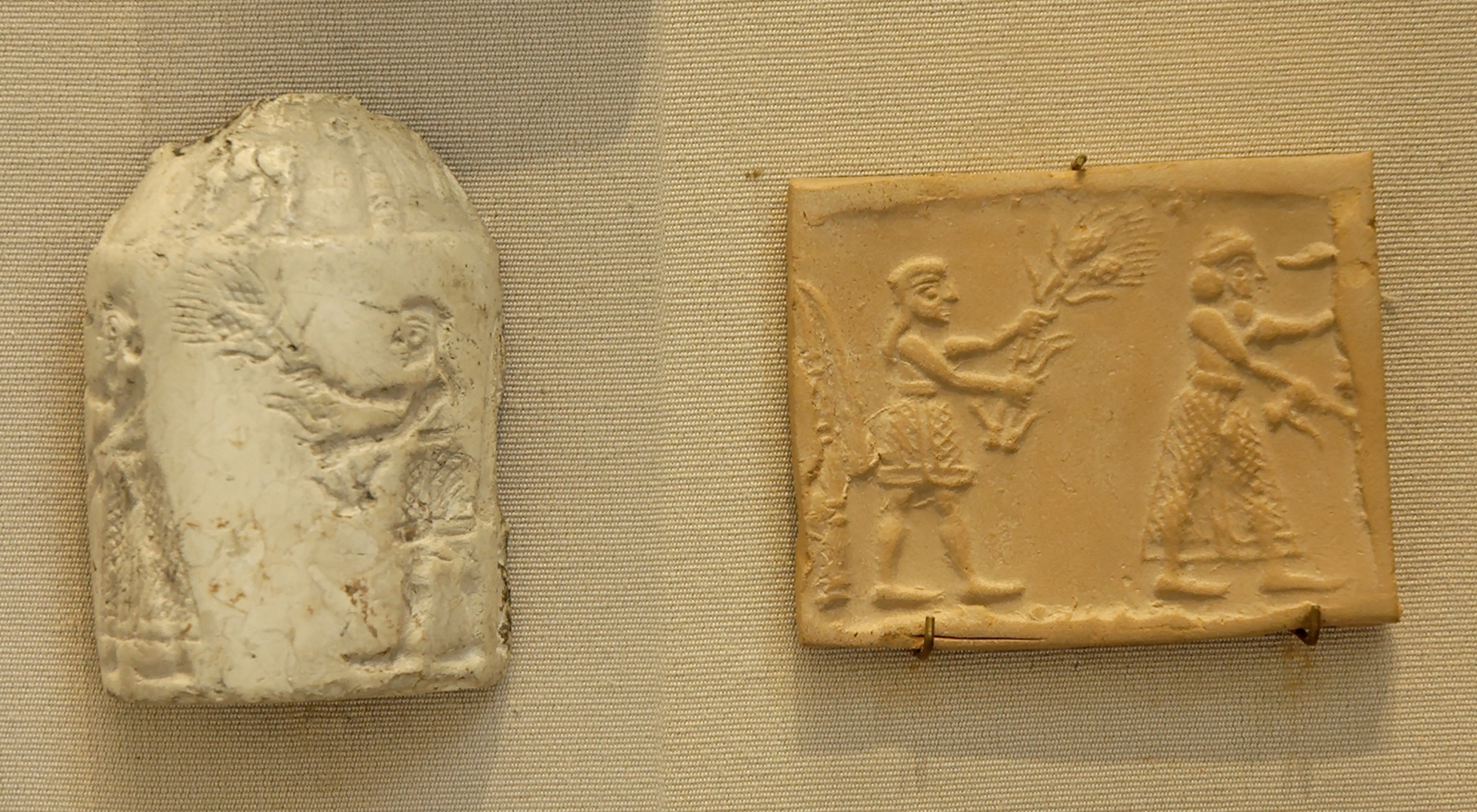
Five thousand years ago, 40,000 people lived here. Canals threaded through the streets -- archaeologists have called it "Venice in the desert" -- connecting temples, workshops, and warehouses to the Euphrates River and the trade routes beyond. Uruk, known today as the archaeological site of Warka in southern Iraq's Muthanna Governorate, was not merely an early city. By the late 4th millennium BCE, with as many as 90,000 people in its metropolitan area, it was almost certainly the largest urban settlement on Earth. And within its mud-brick walls, someone pressed a reed stylus into wet clay and invented writing.
The First City
Uruk's origins reach back to around 5000 BCE, during the Eridu period, but its explosive growth came during the Uruk period (4000-3100 BCE). Over those nine centuries, what had been a cluster of agricultural villages transformed into something the world had never seen: a city with a full-time bureaucracy, a standing military, and a stratified society. The Eanna District, dedicated to the goddess Inanna, contained the earliest monumental public architecture and the earliest examples of writing -- administrative tablets tracking goods, labor, and offerings. The Anu District held a massive ziggurat built of limestone and bitumen over a podium of rammed earth. By 3100 BCE, the city stretched across 250 hectares and its 9-kilometer wall enclosed a population that dwarfed every other settlement in Sumer. Competing city-states were typically a tenth of its size.
Gilgamesh's City
According to the Sumerian King List, Gilgamesh ruled Uruk in the 27th century BCE. The Epic of Gilgamesh -- the oldest surviving work of great literature -- credits him with building the city wall and describes his restless search for immortality across the known world. Whether Gilgamesh was a historical king embellished by legend or a purely mythic figure remains debated, but the city he supposedly ruled was real and extraordinary. The King List records an entire dynasty of Uruk's rulers stretching back to the semi-mythical Enmerkar, who is said to have founded the city and built the House of Heaven for Inanna. Kingship, in Sumerian cosmology, had been lowered from heaven itself -- and for a time, Uruk held it.
Written in Clay
The archaeological haul from Uruk is staggering. Around 190 "numerical tablets" survive from the Uruk V period (roughly 3500 BCE), followed by 1,776 tablets from Uruk IV and over 3,000 from Uruk III. These proto-cuneiform records evolved from simple accounting marks into a full writing system capable of recording literature, law, and scholarship. The oldest known writing to feature a person's name was found here: several tablets mentioning Kushim, an accountant who tracked barley transactions. If Kushim was an individual rather than a title, this anonymous bureaucrat holds a distinction no king or conqueror can match -- the first named person in recorded history. Later periods yielded astronomical texts, legal documents, and scholarly works. The last dated cuneiform tablet from Uruk, an astronomical almanac, was inscribed around 79 or 80 CE -- more than three thousand years after the first.
The Face Behind the Mask
Among Uruk's most remarkable artifacts is the Mask of Warka, a carved marble face dating to around 3100 BCE. Roughly 20 centimeters tall, it is one of the earliest naturalistic representations of a human face ever created -- probably depicting the goddess Inanna. The mask was looted from the Iraq Museum during the 2003 invasion but recovered six months later. It now sits behind glass again, its empty eye sockets once inlaid with shell or lapis lazuli, its expression serene across five millennia. The Warka Vase, another treasure from the same period, is one of the earliest surviving works of narrative relief sculpture, depicting a procession of offerings to Inanna. These are not crude artifacts. They reveal a society with sophisticated artistic traditions and a confident sense of its own grandeur.
Layers Upon Layers
Archaeologists have identified at least 18 distinct layers of construction at Uruk, each city built atop the rubble of its predecessor. The site was first noted by Western explorers Fraser and Ross in 1835. William Loftus conducted the earliest excavations between 1850 and 1854, though he admitted the work was superficial -- his financiers demanded museum-quality artifacts on a minimal budget. German archaeologists arrived in 1912 and have spent 39 seasons at the site, discovering temples adorned with colorful stone-cone mosaics, the massive city wall, and thousands of cuneiform tablets. Work resumed in 2016 under Margarete van Ess of the German Archaeological Institute, using magnetometers and electrical resistivity probes to map what lies beneath the surface. A digital twin of the archaeological landscape was produced with sediment cores drilled as recently as 2024 and 2025. Uruk finally fell silent sometime around 700 CE, after the Islamic conquest, but the ground still has secrets to yield.
From the Air
Located at approximately 31.32°N, 45.64°E in the flat alluvial plain of Muthanna Governorate, southern Iraq. The site appears as a low mound (tell) rising from the desert floor, roughly 5.5 km in circumference. The ancient Euphrates channel has shifted; the modern river lies to the west. Nearest city is Samawah, about 35 km northeast. Nearest airports: Basra International (ORMM), approximately 200 km southeast; Baghdad International (ORBI), approximately 320 km northwest. Best viewed at 5,000-8,000 feet to appreciate the outline of the ancient city walls and canal system. The surrounding terrain is flat and featureless, making the tell easy to spot in good visibility.