USS Higbee
Her crew called her "Leaping Lenah," and the nickname captured something essential about the destroyer that would serve the United States Navy for three decades and three wars. USS Higbee (DD/DDR-806) was the first American warship ever named for a female member of the Navy, honoring Chief Nurse Lenah S. Higbee, who had led the Navy Nurse Corps during World War I. Launched in 1944, the Gearing-class destroyer would earn eight battle stars, survive a direct hit from a North Vietnamese MiG-17, and eventually meet her end as a target in the waters west of San Diego.
A Pioneering Namesake
Lenah Sutcliffe Higbee served as Superintendent of the Navy Nurse Corps from 1911 until 1922, transforming military nursing through World War I. She was the first woman to receive the Navy Cross for her wartime leadership. When the Navy chose to honor her by naming a warship in her memory, it marked a significant shift in naval tradition. The destroyer was launched on November 13, 1944, at Bath Iron Works in Maine, sponsored by Mrs. A.M. Wheaton, the late Mrs. Higbee's sister. Commissioned on January 27, 1945, Higbee immediately sailed to Boston for conversion into a radar picket destroyer.
Three Wars, Eight Stars
After shakedown in the Caribbean, Higbee sailed for the Pacific in May 1945, joining Carrier Task Force 38 within 400 miles of Tokyo Bay just weeks before Japan's surrender. She screened the carriers during heavy air attacks on the Japanese mainland and spent seven months clearing minefields and supporting occupation forces before returning to San Diego in April 1946. During the postwar years, Higbee made diplomatic visits to the newly independent nations of India and Pakistan in 1948. She earned one battle star for World War II service and seven more during the Korean War, where she provided fire support and screened carrier operations.
Under Attack at Dong Hoi
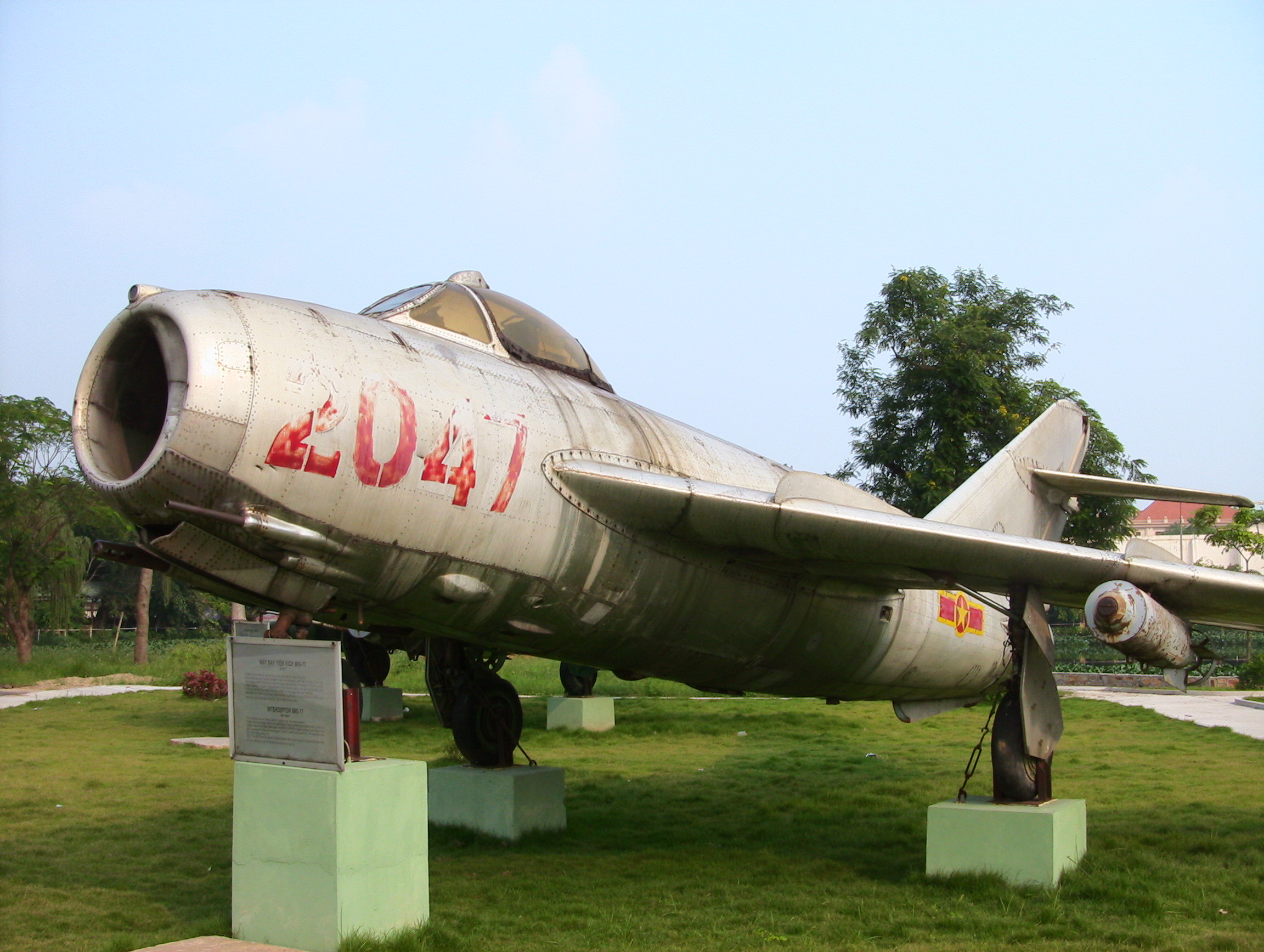
On April 19, 1972, during operations off the coast of Vietnam, two North Vietnamese MiG-17s from the 923rd Fighter Regiment made an audacious low-level attack on American warships. Pilot Le Xuan Di dropped a 250-kilogram bomb directly onto Higbee's rear 5-inch gun mount, destroying it completely. Fate intervened for the gun crew, who had stepped outside their turret moments before due to a misfire within the mount. Four sailors were wounded, but none killed. The second MiG, flown by Nguyen Van Bay B, proceeded to bomb the light cruiser USS Oklahoma City, causing only minor damage. Witnesses aboard accompanying vessels claimed one of the attacking MiGs was hit by a surface-to-air missile fired from USS Sterett, though no official aircraft losses were confirmed. Higbee was repaired at Subic Bay in the Philippines.
Final Duty
After Vietnam, Higbee served with the Naval Reserve Force, homeported in Long Beach and later Seattle. In 1978, she achieved the highest Naval Gunfire Support score of any ship in the U.S. Navy, earning recognition in Surface Warfare magazine. But her age and lack of modern capabilities made continued service impractical. The Board of Inspection and Survey conducted their final assessment in October 1978, recommending decommissioning. Higbee was struck from the Navy list on July 15, 1979. On April 24, 1986, she met her end approximately 120 miles west of San Diego, sunk as a target vessel. One of her anchors is preserved outside the medical building at Naval Station Mayport, a fitting tribute to the ship named for a pioneering nurse.
From the Air
The wreck of USS Higbee lies at approximately 32.47N, 119.97W, roughly 120 miles west of San Diego in approximately 3,000 feet of water. No surface features mark the location. Nearest airports include San Diego International (KSAN) and North Island NAS (KNZY).