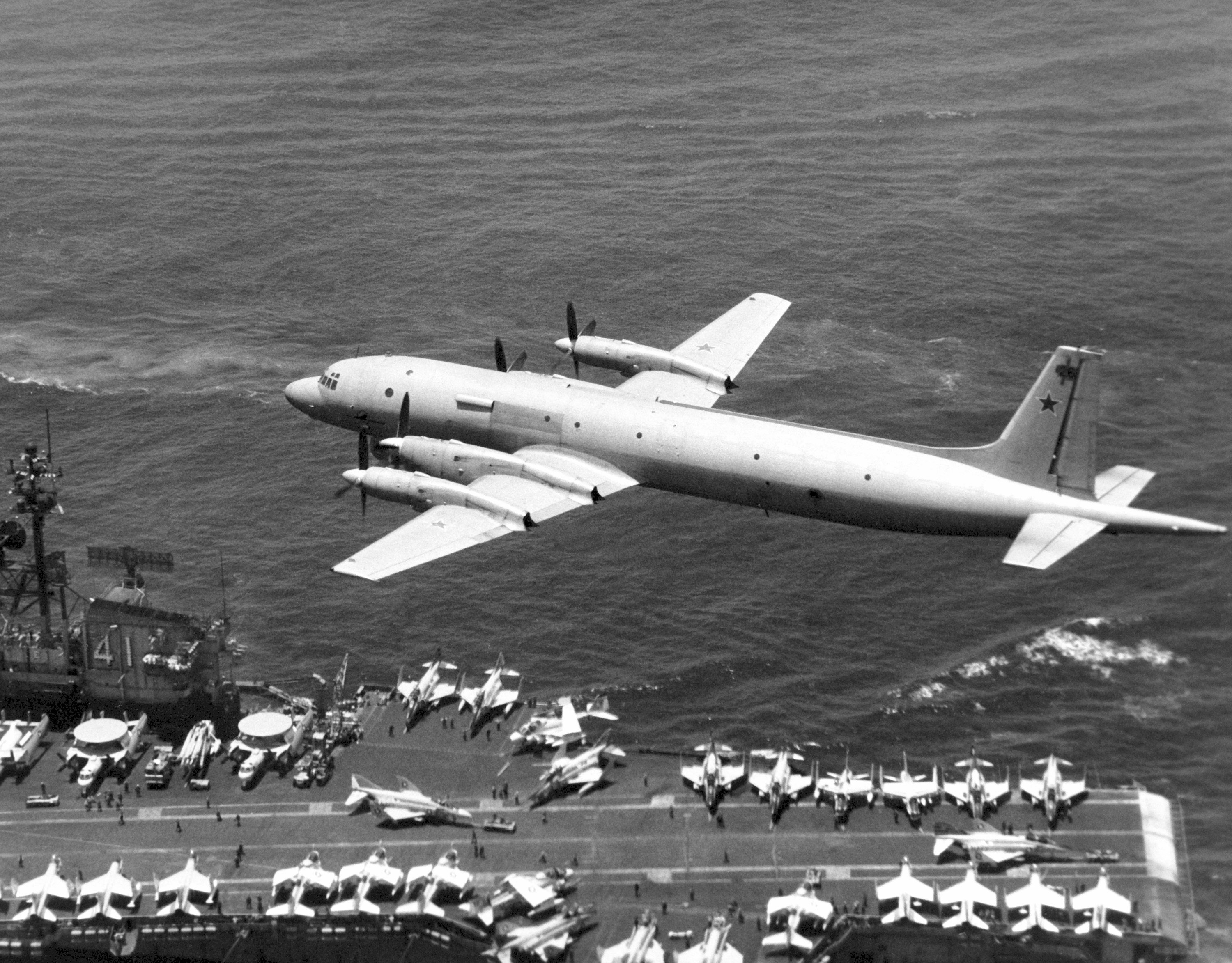
USS Midway (CV-41)
The handwritten note fluttered down to the flight deck, dropped from a circling Cessna packed impossibly tight with seven souls. "Can you move the helicopter to the other side, I can land on your runway. Please rescue me! Major Buang, wife and 5 child." It was April 29, 1975, and aboard USS Midway, Captain Larry Chambers faced an impossible choice. Within minutes, millions of dollars worth of Huey helicopters were being shoved over the side into the South China Sea, clearing a landing strip for a father who had bet everything on finding this ship somewhere in the vast Pacific. The Cessna touched down safely, and Major Buang became the first Vietnamese pilot to land a fixed-wing aircraft on an American carrier. That moment captures something essential about Midway: a ship that spent 47 years doing what others said could not be done.
First Blood Over Vietnam
On June 17, 1965, aviators from Midway's Attack Carrier Wing 2 made history when VF-21 pilots downed the first two MiGs credited to American forces in Southeast Asia. It was a distinction that bookended the war itself: aircraft from Midway would also claim the last air-to-air victory of the conflict a decade later. Between those kills stretched ten years of continuous combat operations, carrier deck fires, midnight launches into hostile skies, and the relentless rhythm of a floating city at war. By the time Saigon fell in 1975, Midway had become something more than a weapons platform. She had become a sanctuary. As North Vietnamese forces closed in, her helicopters ferried hundreds of American personnel and Vietnamese civilians to safety across the South China Sea.
The Rock'n Roll Carrier
Midway earned her nickname the hard way. In 1986, engineers added hull blisters meant to improve stability, but the modification backfired spectacularly. In moderate seas, she rolled so severely that waves crashed over the flight deck, making aircraft operations nearly impossible. During a typhoon in the Sea of Japan in October 1988, the ship that was never supposed to exceed 24 degrees of roll survived a terrifying 26-degree lurch that sent sailors scrambling for handholds. Congress debated scrapping her. Instead, the Navy approved a $138 million refit. The old carrier was too valuable to lose. She had already proven herself indispensable during the Iran hostage crisis, spending 118 consecutive days in the Indian Ocean during 1980, her presence a silent message to the Ayatollah's regime.
Desert Storm's Opening Salvo
At 2:00 AM on January 17, 1991, Midway launched aircraft from Carrier Air Wing 5 for the first carrier strikes of the Gulf War. An A-6E Intruder from VA-185 Nighthawks became the first carrier aircraft over the Iraqi coast. Four hours later, Intruders attacked Shaibah Air Base at 350 feet, threading through a wall of antiaircraft fire that convinced pilots to abandon low-level tactics for the rest of the war. On February 2, an F/A-18 Hornet from Midway destroyed an Iraqi Super Frelon helicopter, its kill marking proudly painted on NF-104 when the ship returned to Japan. After 46 years of service spanning the Cold War to the liberation of Kuwait, America's oldest active carrier had proven she could still strike first and strike hard.
Farewell, Yokosuka
In June 1991, Mount Pinatubo erupted in the Philippines, and Midway answered one final call. Operation Fiery Vigil evacuated 20,000 military members and their families from Clark Air Base, with Midway ferrying refugees through ash-darkened skies to the island of Cebu. Two months later, she departed Yokosuka for the last time. Her crew spelled out "Sayonara" on the flight deck as she steamed past the harbor where she had been homeported for nearly two decades. At Pearl Harbor, Rear Admiral Joseph Prueher became the last admiral to lower his flag on Midway. She made one final port call in Seattle before sailing home to San Diego, where Secretary of Defense Dick Cheney presided over her decommissioning on April 11, 1992.
A Living Memorial
On June 7, 2004, USS Midway opened to the public as a museum ship moored at Navy Pier in downtown San Diego. Nearly 880,000 visitors came that first year alone, double what anyone expected. Today, you can climb the same ladders that sailors scrambled up during General Quarters, stand on the flight deck where Major Buang's Cessna touched down, and peer into the engine room that powered this ship across every ocean on Earth. The O-1 Bird Dog that carried the Buang family to freedom now rests in the Naval Aviation Museum in Pensacola, but Midway herself remains in San Diego Bay, her gray silhouette visible from aircraft descending into Lindbergh Field. She is 1,001 feet of American history, permanently anchored where her story can be told to anyone willing to climb aboard.
From the Air
USS Midway Museum is moored at Navy Pier in downtown San Diego at coordinates 32.7138N, 117.1749W. Best viewed from 1,500-3,000 feet AGL approaching from the west over San Diego Bay. The 1,001-foot carrier is unmistakable from the air, positioned near the Star of India and the San Diego Convention Center. Nearest airports: San Diego International (KSAN, 1.5nm north), North Island NAS (KNZY, 3nm southwest), Brown Field (KSDM, 12nm south).