USS Pampanito
On September 15, 1944, the submarine USS Pampanito was cruising through the South China Sea when her crew spotted men clinging to makeshift rafts. As the sub drew closer, the shouts became intelligible -- they were in English. Three days earlier, Pampanito had sunk a Japanese transport ship without knowing it carried 1,350 British and Australian prisoners of war. Now she was back, and the men in the water were the survivors. The crew pulled 73 of them aboard and radioed for help. It was one of the most harrowing episodes of the Pacific war.
Built for the Deep
Pampanito is a Balao-class submarine, her keel laid down at the Portsmouth Navy Yard in Kittery, Maine, on March 15, 1943. She was launched four months later and commissioned on November 6, 1943. Named for the pompano fish -- she was the third Navy vessel to carry the name -- Pampanito transited the Panama Canal and arrived at Pearl Harbor on February 14, 1944, ready for war. Over the next eighteen months, she would complete six war patrols across the Pacific, from the approaches to Saipan and Guam to the waters off Japan's home islands, the South China Sea, and the Gulf of Siam.
The Rescue That Defined Her
Pampanito's third patrol, a wolfpack operation in the South China Sea, produced her most consequential action. On September 12, 1944, she sank a 9,419-ton Japanese transport and a 5,135-ton tanker. What the wolfpack did not know was that the transport carried 1,350 Allied prisoners of war. Japanese escorts rescued their own survivors, leaving the POWs in the water with rafts and abandoned boats. Of the 1,350 prisoners, 1,159 died -- some 350 of them killed when a Japanese naval vessel bombarded their lifeboats the following day as they rowed toward land. Three days after the attack, Pampanito returned to the area and discovered the survivors. The crew hauled 73 British and Australian men from the sea, called in three other submarines to assist, then set course for Saipan at maximum speed.
Six Patrols, Six Ships Sunk
Across her six war patrols, Pampanito sank six Japanese ships and damaged four others, accounting for more than 27,000 tons of enemy shipping. She flew a broom from her mast -- the naval tradition indicating a clean sweep, a patrol that "swept the enemy from the seas." Her first patrol earned her a hull badly damaged by depth charges. Her second nearly ended with a torpedo from a submerged Japanese submarine that missed by a narrow margin. After the war, she was decommissioned at Mare Island in December 1945, sat in reserve for fifteen years, then served as a Naval Reserve training ship at Vallejo until she was stricken from the Navy Register in December 1971.
Museum Ship at Fisherman's Wharf
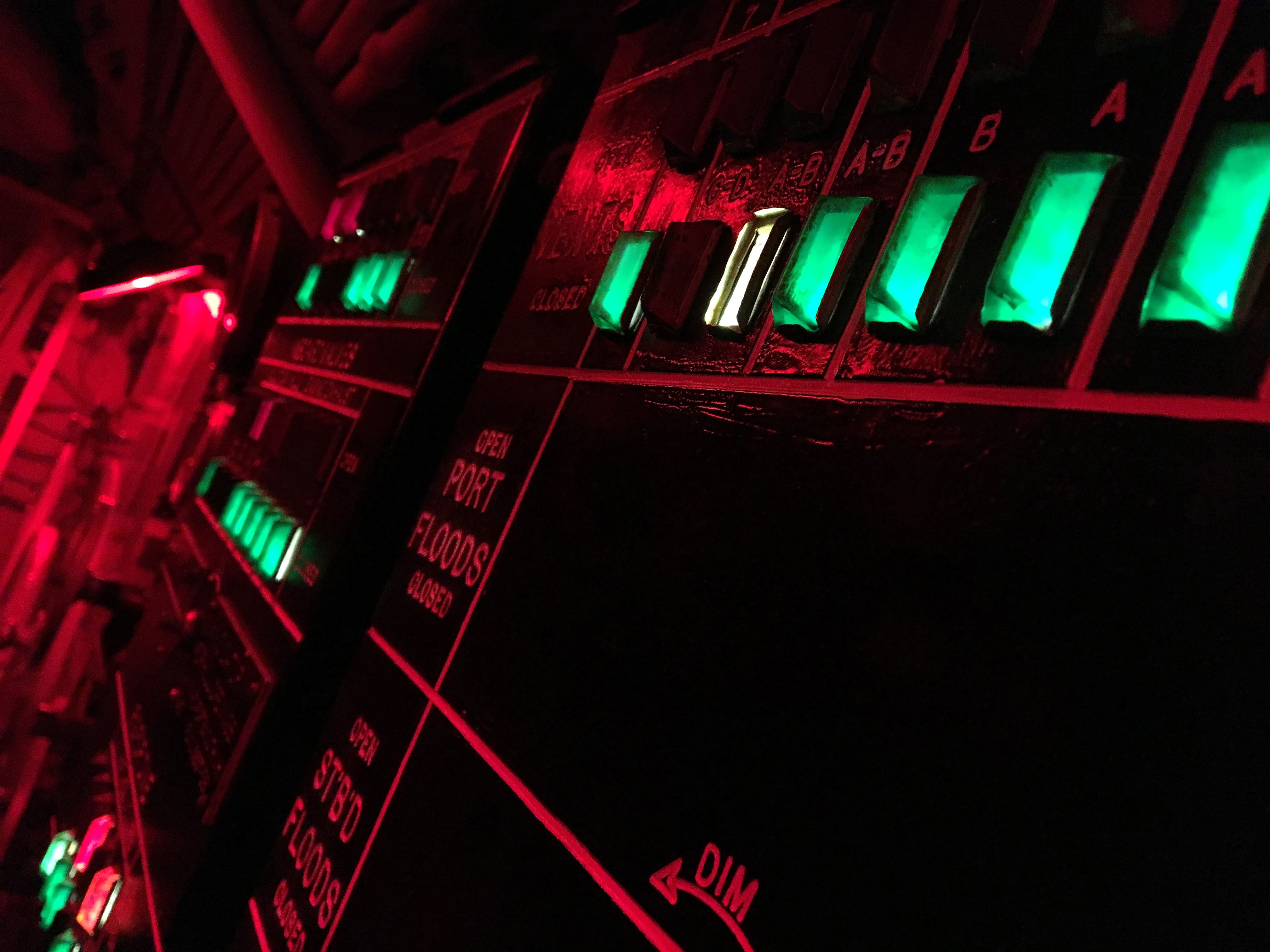
Today, Pampanito is moored at Pier 45 in San Francisco's Fisherman's Wharf, a National Historic Landmark since 1986. Her torpedo tube, periscope, engines, galley, and ice cream maker still work. Visitors can explore her cramped compartments and, on certain nights, organized groups can sleep in her 48 bunks. Amateur radio operators bring her radio room to life twice monthly. She played a Hollywood role too, appearing as the fictional USS Stingray in the 1996 comedy Down Periscope, with Kelsey Grammer in command. In May 2020, a four-alarm warehouse fire at Pier 45 threatened to destroy both Pampanito and the nearby Liberty ship Jeremiah O'Brien, but firefighters saved both vessels. The submarine that once hunted across the Pacific now sits in calm waters, her broom still flying.
From the Air
Moored at Pier 45, Fisherman's Wharf, at 37.810N, 122.416W. The submarine is visible alongside the pier near the fishing fleet. Nearest airports: KSFO (11nm south), KOAK (10nm east). Best viewed at 1,000-2,000 ft AGL.