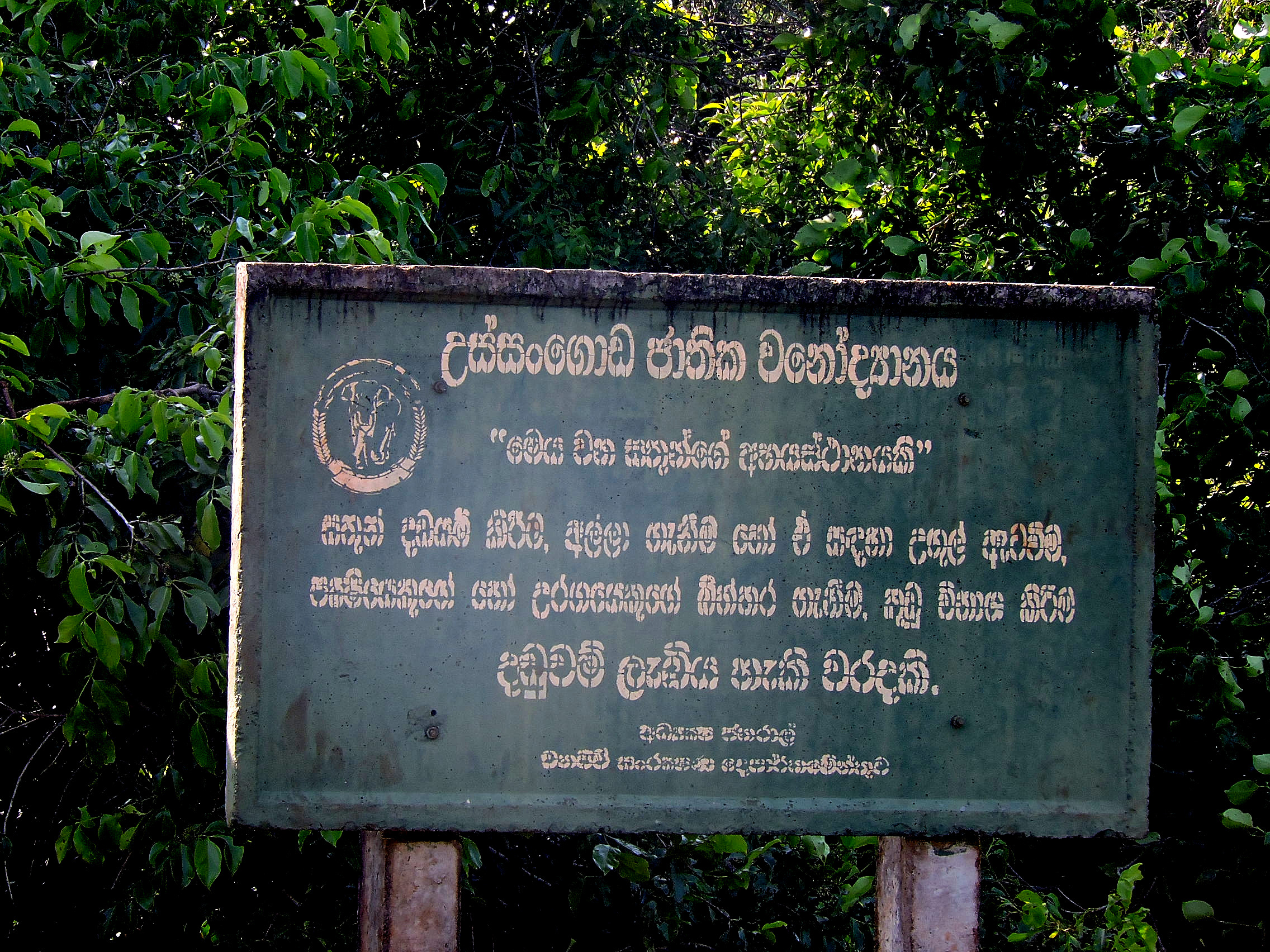
Ussangoda National Park
Pick up a handful of soil at Ussangoda and hold a magnet to it. The grains leap upward, clinging to the metal as if alive. This rust-red earth, brick-hard and utterly unlike the lush green terrain surrounding it, has puzzled locals and scientists for centuries. On Sri Lanka's southern coast, a barren plateau juts above the Indian Ocean like a wound in the landscape, its reddish ground supporting only sparse grass and pockets of stunted pygmy forest where the surrounding countryside bursts with tropical vegetation.
The Red Plateau
From the air, Ussangoda looks like a scar. The flat, treeless expanse of red laterite soil stretches along the coast near Ambalantota in Hambantota District, starkly different from the thick green canopy that borders it on every side. The soil is dense with iron and other heavy metals, which gives the ground its distinctive brick-red color and the rock debris its magnetic properties. Some geologists have speculated that extreme heat from a meteorite impact could account for the baked, hardened quality of the earth, though no definitive scientific study has confirmed this theory. What is clear is that the mineral composition prevents most vegetation from taking hold. Only grasses and hardy, low-growing shrubs survive on the plateau itself, creating an almost lunar landscape within an otherwise tropical environment.
Ravana's Landing Strip
Local lore treats Ussangoda as sacred and forbidden ground. One tradition holds that it belongs to Mangara, a demi-god revered in southern Sri Lankan folk religion. But the most dramatic legend connects Ussangoda to the Ramayana, the ancient Hindu epic. According to the puranas, this barren plateau served as a landing strip for Ravana's Pushpaka Vimana, the legendary flying chariot that carried the king of Lanka across the skies. The story offers a mythological explanation for the scorched earth: the heat of the divine vehicle burned the ground bare. Whether one reads Ussangoda through geology or through scripture, the same mystery presents itself. Something made this land different from everything around it, and people have been trying to explain it for as long as anyone can remember.
Turtles and Tides
Below the plateau, the beaches of Ussangoda serve as critical nesting habitat for sea turtles. Five of the world's seven sea turtle species visit Sri Lanka's coasts, and the protected shoreline here provides the kind of undisturbed sand that nesting females require. The park sits within the southern sea turtle breeding zone, and the relative remoteness of this stretch of coast, far from the resort developments further west, keeps light pollution and foot traffic low during nesting season. Nearby, the Kalametiya Wildlife Sanctuary extends the protected corridor eastward, creating a continuous stretch of coastal habitat that benefits both marine and terrestrial species.
A Park Born in 2010
Ussangoda National Park was officially established in 2010, making it one of Sri Lanka's newest protected areas. The designation recognized what locals had long understood: that this landscape required protection not for any single species, but for its layered significance. The park safeguards geological formations whose origins remain debated, archaeological connections to nearby sites like Miniha Gal Kanda where evidence of prehistoric human habitation has been found, and ecosystems that range from wind-blasted grassland to coastal scrub to active turtle nesting beaches. Standing on the plateau's edge, with the Indian Ocean stretching south toward Antarctica and the red earth underfoot pulling at any piece of metal you bring near it, the strangeness of the place becomes visceral. Ussangoda does not fit neatly into any category, and that is precisely what makes it worth protecting.
From the Air
Ussangoda National Park sits at 6.10N, 80.99E on the southern coast of Sri Lanka in Hambantota District, roughly 245 km southeast of Colombo. The red laterite plateau is strikingly visible from altitude, contrasting sharply with surrounding green vegetation. Look for the barren, rust-colored headland jutting into the Indian Ocean near Ambalantota. The Kalametiya Wildlife Sanctuary lies just to the east. Nearest major airport: Mattala Rajapaksa International (VCRI) approximately 30 km east. Best viewing altitude: 2,000-4,000 feet AGL on clear days for the dramatic color contrast.