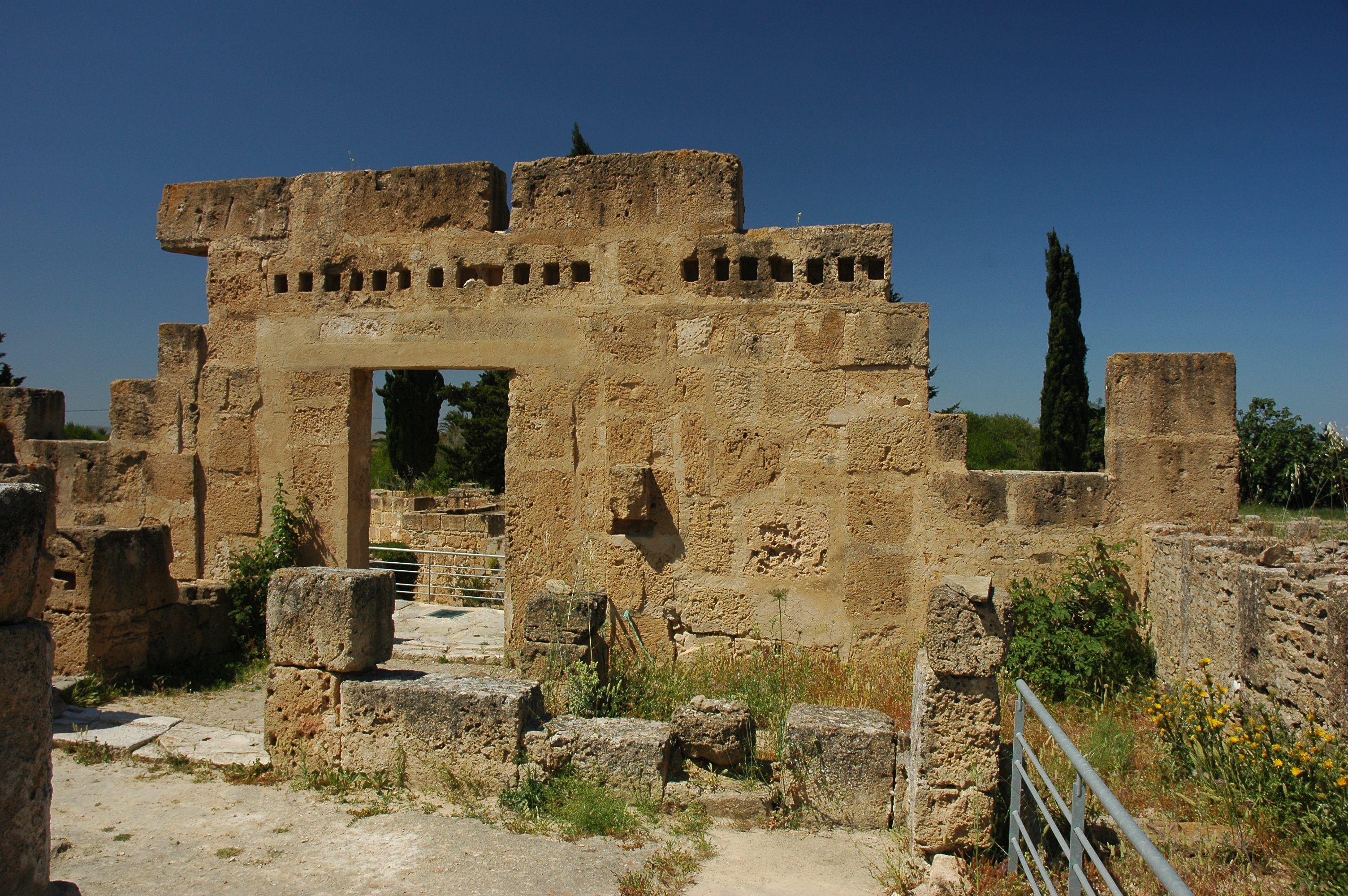
Utica, Tunisia
Carthage called itself the New Town. That name only makes sense if there was an Old one, and there was: Utica, founded by Phoenician traders from the eastern Mediterranean, possibly as early as 1100 BC, on a coastline that no longer exists. Traditionally considered the first Phoenician colony in North Africa, Utica predated its more famous neighbor by centuries. Today the ruins sit not on the shore where the city once thrived but kilometers inland, stranded by centuries of silt from the Medjerda River that slowly buried the harbor and pushed the sea away.
The Old City
The name itself tells the story. Utica derives from the Phoenician word meaning "old," cognate with the Arabic atiqah and the Hebrew atiq -- the same root found in the biblical title "Ancient of Days." The Phoenicians who sailed west from Tyre and Sidon needed waypoints along the trade route to the Straits of Gibraltar and the tin markets of the Atlantic. Utica was one of the first, positioned near the mouth of the Medjerda River between what would become Carthage to the south and Hippo Diarrhytus, modern Bizerte, to the north. Classical authors date the city's founding to around 1100 BC, though archaeological evidence has so far confirmed occupation no earlier than the eighth century BC.
In Carthage's Shadow
For its first centuries, Utica maintained political and economic autonomy from Carthage, which was founded roughly 40 kilometers to the south around 814 BC. But commercial rivalry eventually subordinated the older city to the newer one. During the First Punic War between Carthage and Rome, Utica remained loyal. When mercenaries who had fought for Carthage rebelled over unpaid wages, Utica initially refused to join the uprising, enduring a siege by rebel forces until Carthaginian generals Hanno and Hamilcar Barca relieved the city. But loyalty had its limits: Utica eventually defected to the rebels, a betrayal that the Carthaginians considered the most painful blow of the entire war.
Capital of Roman Africa
When the Third Punic War erupted in 149 BC, Utica made the pragmatic choice to surrender to Rome before the fighting began. Rome rewarded this calculated betrayal handsomely, granting Utica territory stretching from the ruins of Carthage to Hippo. The city became the capital of the new Roman province of Africa, the seat of the governor and home to a growing population of Roman merchants and settlers. It was here that Cato the Younger chose to die rather than surrender to Julius Caesar in 46 BC, earning the posthumous name "Uticensis" -- of Utica. The city received formal status as a municipium in 36 BC, and by the time of Septimius Severus, its inhabitants spoke Latin and practiced Christianity.
Where the Sea Retreated
Utica's decline was as much geological as political. Deforestation and agriculture upstream caused massive erosion along the Medjerda River, and the sediment gradually filled in the bay that had made Utica a viable port. The coastline advanced northward, leaving the city stranded. Vandals captured it in 439 AD, Byzantines retook it in 534 AD, and Arab conquerors destroyed what remained around 700 AD. Today the ruins sit on a low hill about 30 kilometers from both Tunis and Bizerte: Roman villas with mosaic floors, and below them, Punic sarcophagi buried 20 feet beneath the Roman level. The layers are literal here -- dig through Rome and you find Carthage, dig through Carthage and you find Phoenicia, each civilization built on the bones of the last.
From the Air
Located at 37.06N, 10.06E in the Bizerte Governorate of northern Tunisia. The archaeological site sits on a low hill in flat agricultural terrain, now several kilometers inland from the current coastline due to centuries of silting. Nearest airports are Tunis-Carthage International (DTTA) about 35 km southeast and Bizerte. The Medjerda River valley is a prominent geographic feature visible from altitude.