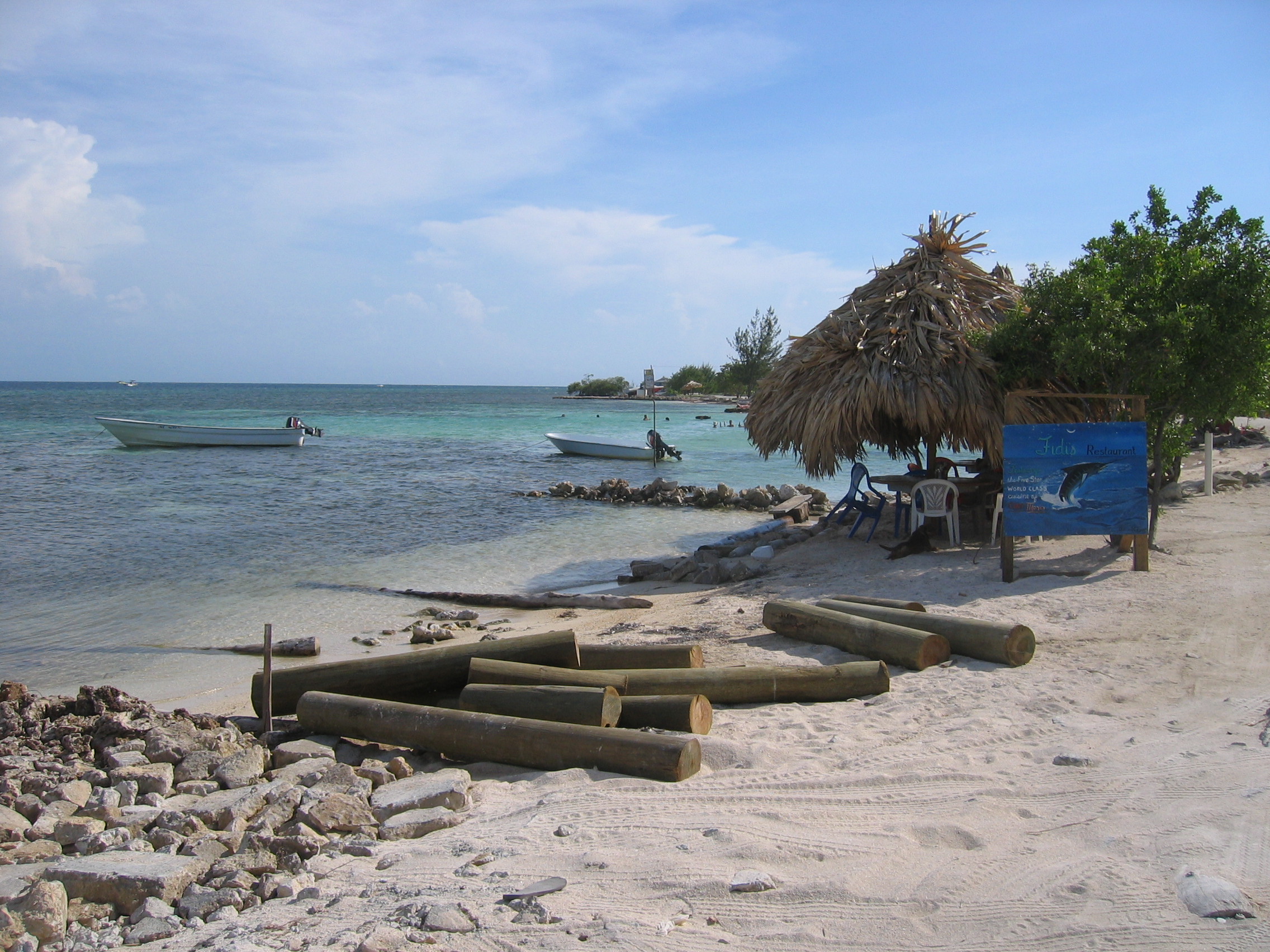
Utila
Somewhere in the western Caribbean, about 32 kilometers off the Honduran coast, there is an island where the ATMs run out of cash, the nightlife migrates from bar to bar on an unwritten schedule, and more new scuba divers earn their certification than anywhere else in the hemisphere. Utila, the smallest of the three major Bay Islands, has built its reputation not on luxury but on accessibility -- open-water PADI courses here cost as little as $225, often with a free hostel bed thrown in. The island runs on a backpacker economy where baleadas from street vendors cost pennies and the biggest decision of the day is which dive shop feels like the right fit.
Bubbles and Whale Sharks
Utila consistently ranks among the Caribbean's best diving destinations, and the numbers bear it out: the island certifies more new divers than any other location in the region. Dive shops line the waterfront, competing on atmosphere rather than price, since PADI standardizes both curriculum and quality. What draws experienced divers back is the macro life -- tiny creatures hiding in the reef that reward patience and precise buoyancy control. Stingrays glide along the sandy bottom, and between March and April and again from September to October, whale sharks pass through the surrounding waters. The Utila Dive Centre earned PADI's top instructor-training facility award for the Americas in both 2010 and 2011. For those who prefer to stay closer to the surface, the Blue Bayou area offers excellent snorkeling right offshore, and a canal splits the island east to west, perfect for kayaking through mangrove channels.
Island Time, Island Rules
Utila's main town is small enough to walk end to end without breaking a sweat. Tuk-tuks handle anything beyond foot range for a dollar or two. As a former British colony with a heavy expatriate presence, English is spoken almost universally -- unusual for Honduras, where Spanish dominates. The island economy operates on its own logic: credit cards carry transaction fees of eight to ten percent, so cash is king. But the two ATMs sometimes go dry, and the bank has long queues, and the maximum withdrawal hovers around $200. Vendors accept U.S. dollars but give change in Honduran lempiras. Torn bills and anything over a twenty are often refused. Goods arrive by ferry from the mainland and do not come every day, so shelves can go bare between shipments. It is an island in the truest sense -- isolated, self-reliant, and unapologetic about it.
When the Music Moves
Nightlife on Utila follows a rotation that everyone seems to know but no one publishes. On a given evening, one bar will be the place to be -- Coco Locos on the dock, Treetanic perched in a tree where the owner has spent over fifteen years building his vision, or La Pirata with its sunset views and Tuesday ladies' night. After 1 AM, the crowd funnels to whichever bar is still open, often until four or five in the morning. Every August, the annual SunJam festival draws over a thousand people from across Central America for the region's largest electronic music event, with DJs arriving from around the world. The week leading up to it fills the island with pre-parties and a buzz of anticipation that makes finding a place to sleep genuinely difficult.
The Things That Bite
For all its charms, Utila extracts a price from the unprepared. The island's real menace is not crime -- it is far safer than the Honduran mainland, with virtually no violent incidents. The threat comes in miniature: sand flies, worst at dawn and dusk or whenever the breeze dies. Mosquitoes are present but secondary. Veterans cover themselves in coconut oil thick enough to drown the insects before they can bite, though this is exactly as pleasant as it sounds. Local shops sell an organic repellent made on neighboring Roatan. The practical solution most divers adopt is to skip the beach entirely, accessing the water from docks instead of sand. Freshwater caves on the eastern shore offer another kind of danger altogether -- people have become lost and died inside them. Those who venture in are advised to carry two waterproof flashlights and stay close to the entrance.
From the Air
Located at 16.10N, 86.93W in the western Caribbean, roughly 32 km off the northern coast of Honduras. The island is low-lying and visible from altitude as a small green shape against turquoise water. Utila has a small airstrip serving domestic flights via SOSA airlines from La Ceiba and San Pedro Sula. Nearest major airport is La Ceiba (MHLC) on the mainland. The island sits west of the larger Roatan, and the surrounding reef system is visible from above in clear conditions. Best viewed at 2,000-3,000 feet AGL.